Automation and control engineering for modern industrial operations
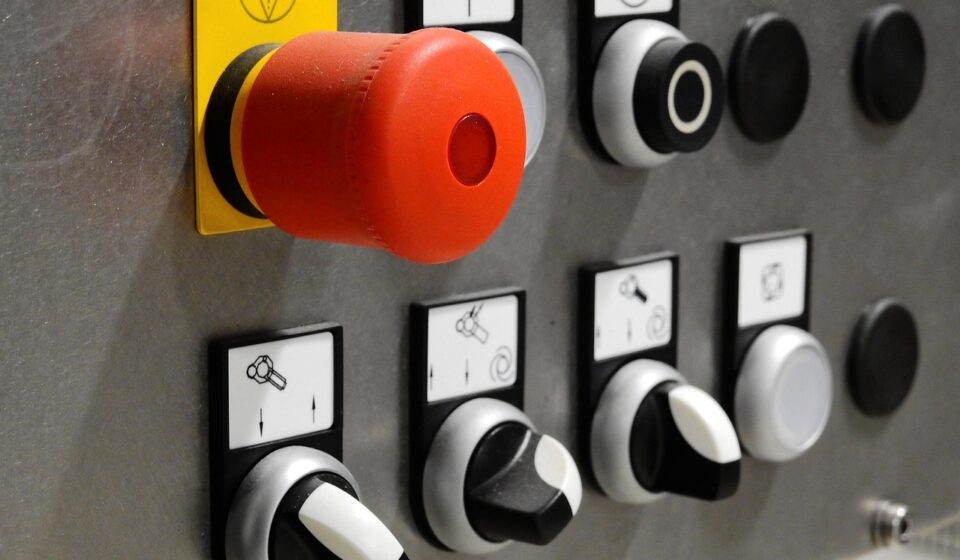
What automation and control engineering means in industry
Automation and control engineering is the discipline of designing, integrating, testing, and maintaining systems that help industrial processes run predictably with limited manual intervention. In a plant, that may mean a PLC controlling a packaging line, a DCS regulating a chemical process, a SCADA system monitoring utilities, or a safety instrumented system bringing equipment to a safe state.
The value is not limited to faster production. Well-engineered automation can improve repeatability, energy use, traceability, equipment availability, and operator decision-making. For readers following industrial automation and controls, the key point is that control engineering now sits at the intersection of physical machinery, software, data architecture, cybersecurity, and functional safety.
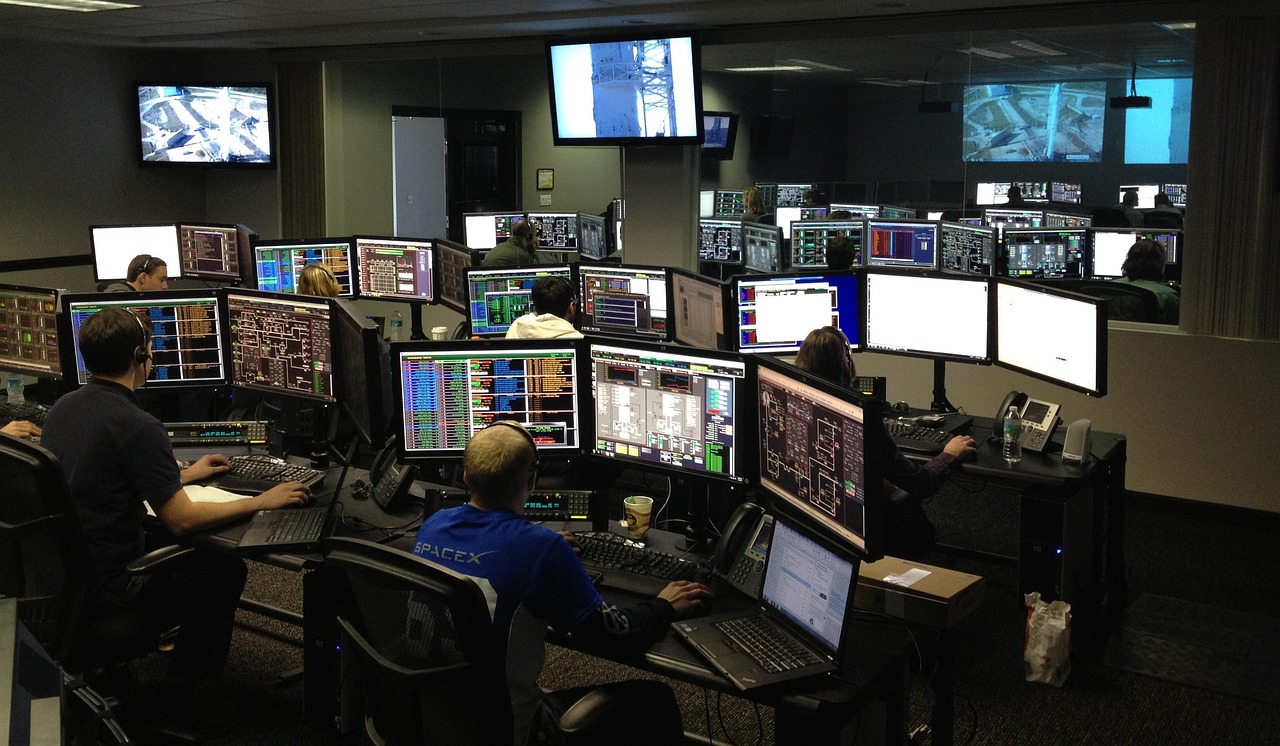
The field has also become more visible as industrial automation expands beyond traditional automotive applications. The International Federation of Robotics reported in its World Robotics 2025 executive summary that 542,076 industrial robots were installed globally in 2024, the second-highest annual count on record. That figure does not cover all automation, but it shows why factories increasingly need disciplined engineering methods for integration, control logic, safety, networks, and lifecycle support.
The core layers of an industrial control system
A practical way to understand automation and control engineering is to separate the system into layers. The ISA-95 and IEC 62264 framework is commonly used to describe the relationship between physical production, control, manufacturing operations, and business systems. It is not a mandatory architecture for every project, but it gives engineers and managers a shared vocabulary when a machine, production line, MES, historian, and ERP system must exchange information.
| Layer | Typical assets | Main engineering concern |
|---|---|---|
| Physical process | Motors, pumps, valves, conveyors, robots, heaters | Process behavior, mechanical limits, energy, and safety hazards |
| Sensing and actuation | Sensors, drives, actuators, instruments, I/O modules | Signal quality, calibration, response time, and failure detection |
| Control and supervision | PLCs, PACs, DCS controllers, HMIs, SCADA | Control logic, alarm handling, sequencing, and operator interaction |
| Manufacturing operations | MES, batch systems, historians, quality systems | Production records, recipes, traceability, and work execution |
| Business planning | ERP, maintenance systems, supply chain tools | Orders, inventory, planning, and business reporting |
In practice, many project issues appear at the boundaries between layers. A sensor may be accurate but poorly placed. A controller may run reliably but expose data in a format the MES cannot use. A cloud dashboard may look modern but depend on a data path that bypasses cybersecurity rules. Control engineering makes these boundaries explicit, testable, and maintainable.
Key technologies engineers must coordinate
Modern automation projects rarely depend on one technology. They combine field devices, controllers, networks, software platforms, and human interfaces. Each part has its own constraints, and a change in one layer can affect the others.
Controllers and control logic
PLCs and PACs are common in discrete manufacturing, packaging, material handling, and machine control. DCS platforms are common where continuous process control, redundancy, and plantwide operations are central. IEC 61131-3 remains a key reference for programmable controller languages, and the 2025 edition covers structured text, ladder diagram, function block diagram, and sequential function chart.
The engineering challenge is not simply choosing a language. It is creating logic that technicians can troubleshoot, that responds safely to abnormal conditions, and that can be modified without creating hidden side effects.
Networks and industrial data
Industrial Ethernet, fieldbus networks, wireless sensors, edge gateways, and OPC UA have increased the amount of data available from machines. IEC 62541 defines OPC Unified Architecture as a standard for industrial interoperability, with 2025 and 2026 IEC publications addressing overview concepts, services, and security models.
The practical lesson is that connectivity should be designed, not improvised. Naming conventions, tag structures, timestamps, alarm priorities, and data ownership all influence whether automation data becomes useful operational intelligence or simply more noise.
Human-machine interfaces and alarms
HMI design is often underestimated. A screen that shows every possible value may be technically complete but operationally weak. Operators need context, priorities, trends, and clear abnormal-condition cues. Alarm rationalization is especially important because nuisance alarms train people to ignore the system. Automation and control engineering therefore includes the human side of control: what should be automated, what should be presented to the operator, and what should require deliberate confirmation.
Standards that shape engineering decisions
Standards do not remove the need for engineering judgment, but they reduce ambiguity. They help teams define interfaces, programming practices, safety requirements, and cybersecurity responsibilities. For industrial sites with multiple vendors and long equipment lifecycles, standards can also make future upgrades less dependent on one person or one supplier.
- ISA-95 and IEC 62264 help describe enterprise-control integration, including the boundary between manufacturing operations and business systems.
- IEC 61131-3 defines programming languages and related elements for programmable controllers.
- IEC 62443 addresses cybersecurity for industrial automation and control systems across asset owners, integrators, service providers, and product suppliers.
- NIST SP 800-82 Revision 3, published in September 2023, provides guidance for securing operational technology while considering the performance, reliability, and safety requirements of OT environments.
- ISO 13849-1:2023 provides methodology and requirements for safety-related parts of machinery control systems in high-demand and continuous modes.
- IEC 61511 is a major reference for safety instrumented systems in the process industry sector.
The practical point is that standards apply to different questions. A cybersecurity standard is not a machine safety design method. A PLC programming standard does not define whether a production cell is acceptably safe. A manufacturing integration standard does not prove that a network is secure. Strong engineering uses the right reference for the right risk.
Cybersecurity is now part of control engineering
Industrial control systems were once often isolated by design or by assumption. That assumption is no longer safe. Remote access, vendor maintenance, cloud analytics, connected HMIs, historians, and enterprise reporting have increased the number of digital pathways into OT environments. As a result, cybersecurity needs to be considered during architecture, procurement, commissioning, and maintenance rather than added at the end.
NIST SP 800-82 Revision 3 describes OT as programmable systems and devices that interact with the physical environment or manage devices that do so. That definition matters because an OT cyber incident can affect equipment, product quality, environmental controls, or personnel safety. Industrial cybersecurity therefore cannot simply copy IT practices without adjustment. Patch timing, availability requirements, validated configurations, safety dependencies, and vendor support windows all need attention.
IEC 62443 is especially relevant because it divides responsibility across stakeholders. Asset owners, product suppliers, system integrators, and service providers all influence the security of an automation system. A plant can buy a secure component and still deploy it insecurely. A supplier can provide hardening features that remain unused. A remote-access tool can be convenient and still create unacceptable operational risk if credentials, segmentation, logging, and approval workflows are weak. See also: industrial safety.
How to plan an automation and control engineering project
A successful project usually begins with a process problem, not with a technology preference. The question should be specific: reduce changeover time, improve batch consistency, lower scrap, add traceability, stabilize a control loop, improve uptime, or support safe operation with fewer manual interventions. Once the business and process objectives are clear, the engineering team can define measurable requirements.
Start with requirements and constraints
Requirements should include throughput, accuracy, environmental conditions, availability, maintainability, operator roles, safety functions, cybersecurity constraints, and data needs. It is also important to capture what must not change. For example, a packaging upgrade may need to preserve existing maintenance practices, spare parts strategy, or upstream equipment timing.
Design for testing before installation
Factory acceptance testing and simulation can expose sequence errors, alarm issues, interlock gaps, and integration problems before equipment reaches the plant floor. For complex systems, software-in-the-loop or hardware-in-the-loop testing can reduce commissioning risk. The goal is not to eliminate all field changes; it is to make field changes controlled, documented, and easier to validate.
Plan the lifecycle, not only the startup
Automation systems often remain in service for many years. Documentation, backup procedures, version control, network diagrams, spare parts, training, and change management determine whether the system stays supportable. A project that starts quickly but leaves poor records can become expensive when the next modification is needed.
Common trade-offs and limitations
Automation does not automatically improve a process. If the process is unstable, poorly understood, or badly maintained, automation may only make defects faster and more consistent. Engineers should identify whether the root problem is mechanical, procedural, measurement-related, control-related, or organizational before selecting a solution.
There are also trade-offs between flexibility and standardization. Highly customized control logic can fit a unique process well, but it may be harder to support. Standard machine modules can simplify maintenance and training, but they may not fully match local production needs. Cloud analytics can improve visibility, but it depends on secure and reliable data movement. Robotics can improve repeatability, but end-of-arm tooling, guarding, part presentation, and maintenance skills often decide whether the cell performs as expected.
The labor impact also needs careful framing. Automation can reduce repetitive manual tasks, but it usually increases demand for technicians, controls engineers, reliability staff, and operators who can work with digital systems. Treating automation as a headcount exercise alone often leads to underinvestment in training and support.
Frequently asked questions
What is the difference between automation engineering and control engineering?
Automation engineering focuses on making processes operate with limited manual intervention, often by integrating machines, sensors, robotics, software, and production systems. Control engineering focuses more specifically on how system behavior is measured, adjusted, stabilized, and optimized. In industry, the two overlap heavily, which is why automation and control engineering is often treated as one combined discipline.
Which industries use automation and control engineering?
It is used in discrete manufacturing, process industries, utilities, food and beverage, pharmaceuticals, logistics, building systems, transportation, water treatment, and many other sectors. The equipment and standards vary, but the same core ideas apply: sensing, control, supervision, safety, data exchange, and maintenance.
Why are standards important in control system projects?
Standards provide common terminology and methods for interfaces, programming, safety, cybersecurity, and data exchange. They make projects easier to specify, review, maintain, and audit. They also reduce dependency on undocumented assumptions that may be lost when personnel or vendors change.
Is cybersecurity really part of automation design?
Yes. Connected control systems can affect physical operations, so cybersecurity decisions influence reliability and safety as well as data protection. Network segmentation, secure remote access, account management, logging, backups, and supplier responsibilities should be considered during design and commissioning.
What makes an automation project successful?
A successful project has clear process objectives, measurable requirements, realistic safety and cybersecurity planning, maintainable control logic, useful operator interfaces, verified testing, and lifecycle documentation. Technology matters, but disciplined engineering usually matters more than the newest device or platform.