SCADA and PLC explained for industrial automation teams
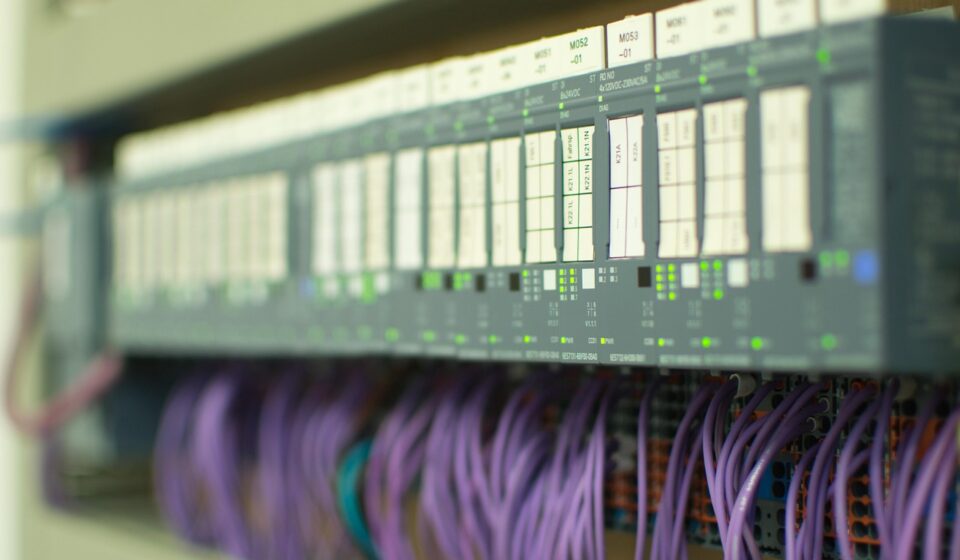
SCADA and PLC in one automation system
SCADA and PLC are complementary parts of industrial automation, not interchangeable technologies. A programmable logic controller, or PLC, handles real-time control close to machines, instruments, motors, valves, pumps, and production lines. A supervisory control and data acquisition system, or SCADA system, gives operators visibility through graphics, alarms, trends, historian data, and supervisory commands across one site or many distributed assets. In practical terms, PLCs keep the process running second by second, while SCADA helps people monitor, analyze, and coordinate that process over time.
For readers following broader automation and controls topics, the main point is straightforward: reliable industrial control depends on both layers being designed as one system. If the PLC logic is weak, a SCADA screen cannot correct the control problem. If the SCADA architecture is poorly designed, operators may not see the right alarms, context, or process history when they need it.
What a PLC does
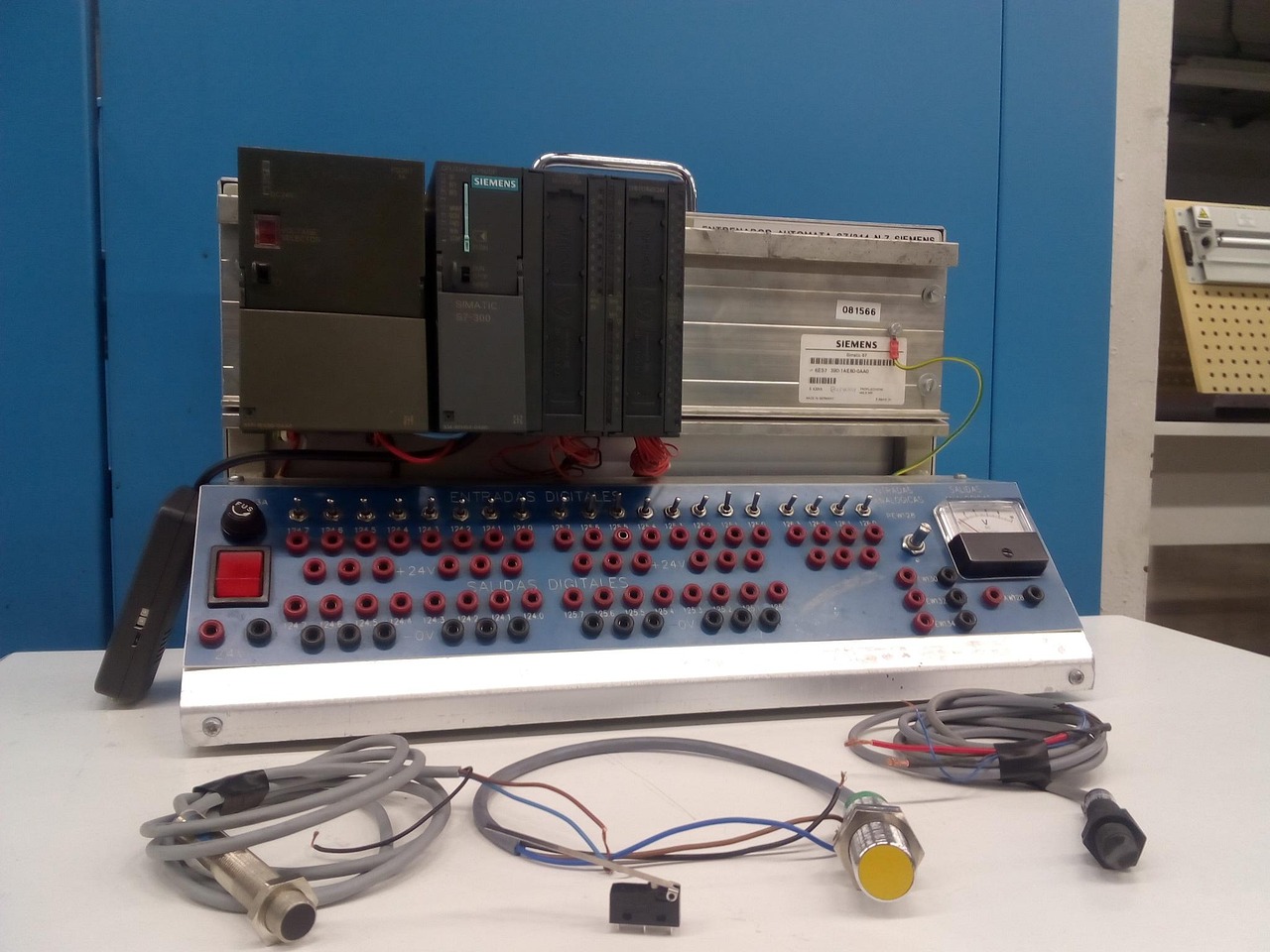
A PLC is an industrial controller built to read input signals, execute control logic, and drive output signals in a predictable cycle. Typical inputs include limit switches, pressure transmitters, temperature sensors, flow meters, photoelectric sensors, proximity sensors, and operator pushbuttons. Typical outputs include motor starters, variable frequency drives, solenoid valves, relays, stack lights, actuators, and safety-related interlocks where the design uses approved safety hardware.
The PLC is usually the automation component closest to the physical process. It must continue running even if the operator workstation, data historian, or business network is unavailable. For that reason, PLC logic is normally designed around deterministic behavior, scan time, fault handling, local interlocks, and safe states. IEC 61131-3, a widely referenced programmable controller standard, defines programming language concepts such as ladder diagram, function block diagram, and structured text. In the field, the exact implementation still depends on the PLC vendor, hardware family, firmware, I/O modules, and engineering software.
Common PLC responsibilities include:
- Starting and stopping equipment in the correct sequence.
- Maintaining interlocks so equipment cannot run under unsafe or invalid conditions.
- Executing PID loops or discrete logic for temperature, pressure, flow, speed, and position control.
- Collecting high-speed or time-sensitive signals that should not depend on a remote computer.
- Communicating selected status, alarms, and process values to HMI, SCADA, historian, or edge systems.
A PLC can operate with a local HMI and no plantwide SCADA system. SCADA becomes important when operators need consolidated alarms, multi-area visibility, historical trends, reporting, remote operations, or coordination across many controllers.
What a SCADA system does
SCADA is the supervisory layer used to monitor and manage industrial operations. It usually includes servers, operator clients, engineering workstations, communication drivers, alarm management, trend displays, historian integration, user accounts, reports, and sometimes web or mobile access. In geographically distributed industries such as water, wastewater, pipelines, power distribution, mining, and transportation, SCADA may connect remote terminal units, PLCs, and intelligent electronic devices across wide-area networks.
The word supervisory is important. SCADA normally does not replace the PLC control loop. Instead, it supervises the system by reading tags, displaying process graphics, logging values, generating alarms, storing events, and allowing authorized operators to issue commands such as setpoint changes, pump start requests, or mode changes. Good SCADA design does not show every available tag just because the data exists. It presents the right information at the right level of detail, with clear status, alarm priority, and navigation.
A modern SCADA environment may also exchange data with manufacturing execution systems, maintenance systems, energy dashboards, cloud analytics, or enterprise reporting tools. OPC UA is often used as an interoperability layer because the OPC Foundation defines it as a platform-independent architecture for secure and reliable industrial information exchange. Even so, protocol choice should be based on latency, security, vendor support, maintainability, and the actual control requirement rather than trend pressure.
Key differences between SCADA and PLC
The relationship is easier to understand when control execution is separated from supervisory visibility. The PLC is responsible for local, real-time automation logic. SCADA is responsible for operator interaction, monitoring, alarms, history, and coordination across assets. The two layers exchange data constantly, but their failure modes and design priorities are different.
| Area | PLC | SCADA |
|---|---|---|
| Main role | Executes control logic near equipment | Supervises, visualizes, alarms, and records operations |
| Typical location | Control panel, machine skid, process area, remote site | Server room, control room, operations center, virtualized environment |
| Time sensitivity | High, because logic may run in milliseconds or tightly controlled scan cycles | Lower for visualization and history, though alarm delivery and command handling still matter |
| Users | Controls engineers, maintenance technicians, commissioning teams | Operators, supervisors, engineers, maintenance planners, managers |
| Data handled | Inputs, outputs, internal logic states, setpoints, interlocks | Tags, alarms, events, trends, reports, operator commands, historian records |
| Failure impact | Can directly affect equipment operation and process safety | Can reduce visibility, alarm response, reporting, and remote control capability |
This separation also matters for risk management. If a SCADA workstation fails, the PLC should continue executing validated logic. If a network link to a remote SCADA server is lost, a local controller should continue protecting the process. If a PLC is compromised or incorrectly changed, the physical process itself may be affected. That is why change control, backups, segmentation, and tested recovery procedures matter at both layers.
How SCADA and PLC communicate
SCADA systems communicate with PLCs through industrial protocols, drivers, gateways, or OPC servers. Common approaches include direct vendor drivers, Modbus TCP, EtherNet/IP, PROFINET, DNP3, IEC 60870-5-104, OPC UA, and MQTT-based architectures for selected data publishing use cases. The right method depends on the industry, installed base, network quality, cybersecurity controls, vendor ecosystem, and whether the system is controlling local equipment or gathering telemetry from remote assets.
Tags and data models
In a SCADA project, PLC memory and process variables are exposed as tags. A tag may represent a motor running status, tank level, valve position, fault bit, analog setpoint, or alarm state. Naming conventions are not cosmetic. Consistent tag names reduce commissioning errors, simplify alarm rationalization, make historian data easier to use, and help future engineers understand the system. Where possible, teams should define naming rules before screens, reports, and historian structures are built.
Polling, events, and bandwidth
Not all data needs the same update rate. A high-speed packaging machine may need rapid local PLC logic, while a SCADA overview screen may only need selected values at slower intervals. Remote sites using radio, cellular, satellite, or constrained industrial networks require careful polling design. Over-polling can overload controllers, networks, or servers without improving operator decisions. Under-polling can delay alarms or hide fast-changing process conditions. Each data point should be tied to a real operational use.
Commands and write access
Reading data is usually less risky than writing commands. Any SCADA-to-PLC write operation should be deliberately designed, permissioned, logged, and tested. Examples include start commands, mode changes, alarm acknowledgements, recipe downloads, and setpoint edits. Strong systems use role-based access, operator confirmation for critical actions, range checking in the PLC, and audit trails in SCADA. The PLC should not blindly accept every write request just because it came from a SCADA server.
Design considerations before integration
A successful SCADA and PLC project starts with process requirements, not software screens. Teams should define the control philosophy, cause-and-effect logic, equipment states, alarm priorities, historian needs, reporting requirements, network architecture, backup strategy, and cybersecurity boundaries before detailed implementation. Retrofitting these decisions late in the project usually costs more and increases commissioning risk.
Useful design questions include: See also: industrial safety.
- Which functions must continue locally if SCADA or the network is unavailable?
- Which alarms require immediate operator action, and which are only maintenance events?
- Which tags must be historized, at what resolution, and for how long?
- Which users can issue commands, change setpoints, acknowledge alarms, or modify displays?
- How will PLC code, SCADA configuration, and historian settings be backed up and restored?
- How will integrator access be granted, monitored, limited, and removed after project work?
For brownfield facilities, discovery is often the most underestimated task. Existing PLC programs may include undocumented logic, bypasses, temporary changes, obsolete tag names, or abandoned communication paths. A SCADA upgrade can reveal these issues, but it should not become an uncontrolled rewrite of proven control logic. The safer path is usually to document the baseline, test changes in stages, and keep rollback options available.
Cybersecurity and operational risk
Industrial cybersecurity guidance increasingly treats SCADA and PLC environments as operational technology systems with consequences beyond data loss. NIST SP 800-82 Revision 3 describes operational technology security in terms of systems that monitor and control physical processes, including SCADA systems and programmable logic controllers. ISA/IEC 62443 provides a lifecycle-oriented framework for industrial automation and control system security, including risk assessment, zones, conduits, and security requirements.
Recent public advisories show why the distinction matters. On July 22, 2026, CISA, the FBI, EPA, and U.S. government partners updated warnings about Iranian-affiliated actors targeting PLCs across U.S. critical infrastructure. On August 19, 2026, the NSA and other agencies released an advisory about active threats to Siemens S7 Series PLCs, describing reconnaissance and capability development against U.S.-based PLC installations using AI-generated exploitation scripts disguised as legitimate monitoring tools. On September 23, 2026, CISA and the FBI released guidance for critical infrastructure operators working with third-party ICS integrators, emphasizing least privilege and caution when granting high levels of access to industrial environments.
These advisories do not mean every plant has the same exposure. They do show that PLCs and SCADA systems should not be treated like ordinary office IT assets. Practical risk reduction usually includes network segmentation, strong remote access controls, multi-factor authentication where technically feasible, asset inventories, offline backups, vendor account reviews, firmware and patch planning, monitoring for unusual protocol activity, and tested incident response procedures. Security controls should be introduced carefully so they do not interrupt validated production or safety functions.
Modernization trends and common mistakes
Many organizations are modernizing SCADA and PLC environments for better data access, easier maintenance, cybersecurity improvement, and integration with analytics. Typical projects include replacing obsolete PLC hardware, migrating from legacy HMI software to modern SCADA platforms, adding historians, standardizing remote site telemetry, virtualizing SCADA servers, or publishing selected OT data to enterprise systems.
The biggest mistake is assuming modernization is mainly a software upgrade. In reality, the project touches control philosophy, operator workflow, network design, cybersecurity, spare parts, training, licensing, backups, and maintenance practices. A technically successful migration can still disappoint users if alarm floods continue, screen navigation is confusing, historian tags are inconsistent, or operators lose familiar context during abnormal conditions.
Another mistake is pushing too much logic into SCADA because it is easier to edit on a server. Critical interlocks, permissives, sequencing, and fallback behavior normally belong in PLC logic where they can run independently of operator stations and business networks. SCADA can coordinate and visualize, but the local control layer should remain capable of protecting the process when supervisory services fail.
A balanced modernization plan should inventory what exists, define what must not change, identify obsolete or unsupported components, prioritize high-risk communication paths, and phase work around outages or low-risk operating windows. Factory acceptance testing and site acceptance testing should include communications loss, server failover, PLC restart behavior, alarm handling, command permissions, and backup restoration, not only normal operating screens.
Frequently asked questions
Can a PLC work without SCADA?
Yes. A PLC can run local control logic without SCADA, especially on a standalone machine or small process skid. The trade-off is reduced central visibility, limited historical data, fewer reporting options, and less convenient operation across multiple assets.
Can SCADA replace a PLC?
Usually no. SCADA is not the right place for most real-time equipment control, interlocking, and deterministic sequencing. It can send supervisory commands, but the PLC should execute the validated control logic close to the process.
Is an HMI the same as SCADA?
Not exactly. An HMI is an operator interface, often local to a machine or production cell. SCADA usually covers broader supervisory functions such as multi-controller visibility, alarm management, trends, historian integration, user management, and reporting. Some platforms blur the line, but the design role is still different.
Which should be designed first, the PLC logic or the SCADA screens?
The control philosophy should come first, followed by PLC logic, tag structure, alarm philosophy, and SCADA graphics. In practice, teams often develop these in parallel, but SCADA displays should reflect how the process actually operates rather than forcing the control design to match a screen layout.
What is the main takeaway for industrial teams?
SCADA and PLC systems work best when responsibilities are clearly separated. Put real-time control and protection in the PLC, put visibility and supervisory coordination in SCADA, and design the network, access controls, alarms, and backups around operational consequences rather than convenience alone.