Control systems and automation for industrial equipment reliability and security
Why control systems and automation matter now
Control systems and automation are no longer used only to run a machine faster or remove manual steps. In modern industrial equipment, they coordinate sensors, drives, PLCs, robots, safety devices, SCADA software, historians and plant networks so operations can be more consistent, measurable and maintainable. The trade-off is clear: the same connectivity that improves visibility also increases engineering, safety and cybersecurity responsibilities.
For plant managers, engineers and maintenance teams, the question is not whether automation has value. It is how to design automation so equipment remains reliable, safe, supportable and secure across its full life cycle. That requires looking beyond the controller cabinet to network architecture, data quality, functional safety, operator workflow, vendor support and change management. More related industrial automation topics are collected in our automation and controls section.
What belongs inside an industrial control system
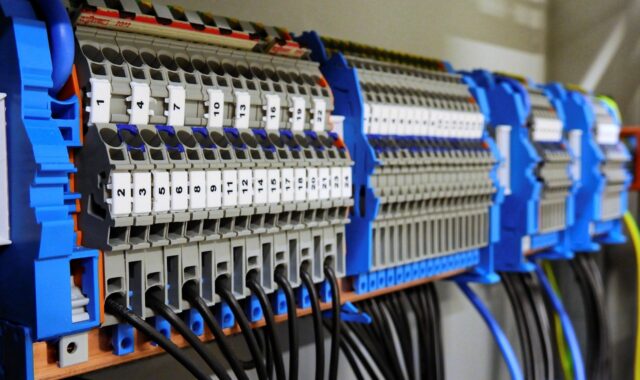
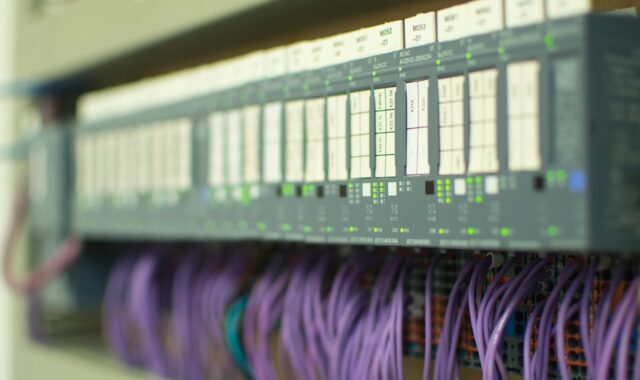
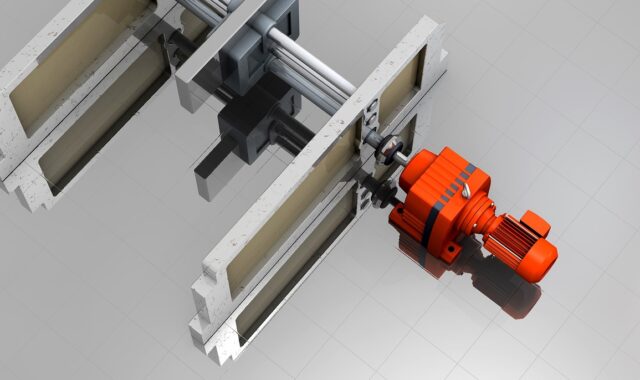
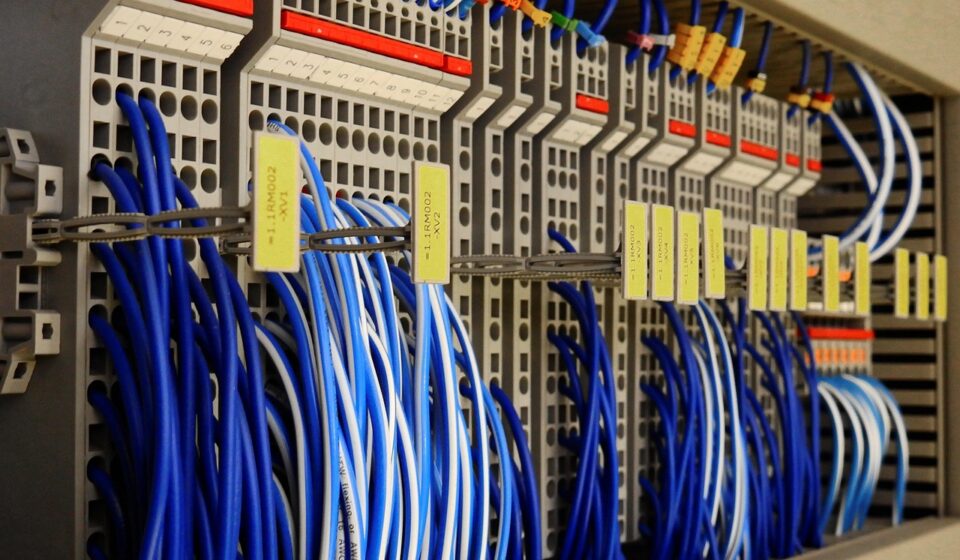
An industrial control system is usually a layered environment, not a single device. At the equipment level, sensors measure pressure, position, temperature, flow, vibration, speed or electrical values. Actuators, valves, motors, drives and robots turn control commands into physical movement or process change. PLCs, PACs, DCS controllers or embedded controllers run the logic that keeps the process within defined limits.
Above that layer, human-machine interfaces and SCADA systems give operators visibility and manual intervention capability. Historians and manufacturing operations systems collect time-series data, production events, alarms and quality information. Enterprise systems may use selected production data for scheduling, inventory, energy reporting or maintenance planning. ISA-95 is often used as a reference model for enterprise-control system integration because it helps define the interfaces between plant-floor control and business systems.
This layered view matters because automation performance depends on more than controller speed. A well-tuned PLC cannot compensate for poor sensor placement, noisy signals, unclear alarm priorities or unstable network design. Likewise, a modern dashboard has limited value if the underlying tags are inconsistent or the data does not reflect the real production state. Successful control systems and automation projects start with the physical process and then work outward to software, data and integration.
From isolated machines to connected OT architecture
Many older industrial machines were designed as isolated assets. They used local controls, stand-alone operator panels and limited data exchange. That model can still be appropriate for simple or safety-critical equipment, but it does not meet every modern production need. Manufacturers often want condition monitoring, remote diagnostics, recipe management, energy tracking, traceability and faster root-cause analysis.
This is driving a shift toward connected operational technology architecture. Equipment may communicate through industrial Ethernet, fieldbus networks, OPC UA, MQTT gateways or vendor-specific protocols. Edge computers may process data close to the machine before selected information moves to a plant server or cloud platform. The objective is usually not to move every control function to the cloud. Real-time control should remain close to the equipment, where latency, determinism and safety can be managed. Higher-level systems should receive the data they need without interfering with the basic control loop.
NIST Special Publication 800-82 Revision 3, published in September 2023, describes operational technology systems as environments that detect or cause direct changes in physical processes and therefore have performance, reliability and safety requirements that differ from ordinary IT systems. That distinction is important. In office IT, shutting down a vulnerable server may be inconvenient. In industrial automation, stopping a controller or delaying a control signal can affect production, equipment condition or safety.
Reliability starts with engineering discipline
Automation is often justified by labor efficiency or production consistency, but reliability is where good engineering usually becomes visible. A reliable control system behaves predictably during normal operation, abnormal operation and recovery. It also has documentation, backups and replacement strategies that allow maintenance teams to support it after the original project team has left.
Several engineering practices deserve attention before any major upgrade:
- Clear control narratives: The required machine states, interlocks, permissives, trips and recovery modes should be documented before programming begins.
- Consistent tag structure: Naming conventions help engineering, maintenance and data teams understand signals across PLC, HMI, historian and reporting layers.
- Alarm rationalization: Operators need alarms that support decisions, not a flood of repeated messages during every upset.
- Version control and backups: PLC programs, HMI projects, drive parameters and robot programs should be backed up and managed as engineering assets.
- Spare parts planning: Obsolete controllers, proprietary I/O cards and unsupported HMIs can become production risks long before the mechanical equipment wears out.
These practices may sound basic, but they often separate a system that performs well during commissioning from one that remains supportable for ten or fifteen years. Automation value is created over the operating life of the asset, not only during the installation window.
Cybersecurity is now part of automation design
Industrial cybersecurity should not be treated as a separate IT project added after the equipment is commissioned. It affects network segmentation, user access, remote support, patch planning, backup strategy, vendor accounts and asset inventory. The ISA/IEC 62443 series is widely used as a framework for industrial automation and control system security because it addresses both organizational and technical aspects of securing IACS environments. ISA announced ANSI/ISA-62443-2-1-2024 as an update to the series, reinforcing the continuing development of this standards family.
In practice, cybersecurity design should begin with asset knowledge. Teams need to know which PLCs, HMIs, engineering workstations, switches, servers and remote access tools exist, what software versions they run, and which connections are required for production. Without that inventory, risk assessment becomes guesswork.
NIST Cybersecurity Framework 2.0, released on February 26, 2024, also emphasizes governance as part of cybersecurity risk management. For industrial automation, governance means defining who owns OT risk decisions, who approves remote access, who can modify controller logic, how changes are tested, and how incidents are escalated when production equipment is involved.
| Automation design area | Reliability question | Security question |
|---|---|---|
| PLC and controller logic | Can the process recover safely from abnormal states? | Who can view, modify and download logic? |
| HMI and SCADA | Do screens support fast operator decisions? | Are accounts, roles and sessions controlled? |
| Remote access | Can vendors troubleshoot without disrupting production? | Is access approved, logged, time-limited and disabled when not needed? |
| Data collection | Are tags accurate and useful for maintenance or quality? | Is only necessary data shared outside the control network? |
| Patch management | Can updates be tested before deployment? | Are known vulnerabilities tracked against actual assets? |
Safety, robotics and automation boundaries
Control automation and safety automation are related, but they are not the same. A production PLC may sequence a machine, optimize cycle time and coordinate motion. A safety system is designed to reduce risk when a hazardous condition occurs. In process industries, IEC 61511 provides requirements for safety instrumented systems, including specification, design, installation, operation and maintenance. In machine and robotic systems, safety requirements may involve risk assessment, protective devices, safe motion functions, guarding and validated stop behavior.
Industrial robotics adds another layer because the boundary between the robot, end effector, workpiece, fixture, conveyor and human access area must be evaluated as a complete application. ISO 10218-1:2025 for industrial robot safety was published on February 5, 2025, and ISO 10218-2:2025 addresses robot applications and robot cells. For automation teams, the important point is that robot safety is not solved by buying a compliant robot arm alone. The cell integration, tooling, operating modes and maintenance tasks determine the real risk profile. See also: industrial safety.
Safety also affects data and cybersecurity decisions. A remote diagnostic connection may be useful, for example, but it should not allow an unverified user to bypass safety logic or restart equipment unexpectedly. Similarly, alarm and event data can improve analysis, but safety-critical functions should not depend on unreliable network paths or cloud availability unless the system has been specifically engineered and validated for that purpose.
How to evaluate an automation upgrade
A useful automation upgrade plan starts with business and operational outcomes, not with a preferred technology. The team should define what needs to improve: downtime, changeover time, quality variation, energy use, traceability, safety exposure, maintenance response or operator workload. Once the desired outcome is clear, the control system design can be evaluated against it.
A practical evaluation can follow six steps:
- Map the current system. Document controllers, I/O, drives, networks, HMIs, safety devices, software versions and data paths.
- Identify production constraints. Separate automation problems from mechanical, process, training or material issues.
- Define required data. Decide which signals are needed for operations, maintenance, quality and business reporting.
- Assess life-cycle risk. Review obsolescence, spare parts, vendor support, backup quality and internal maintenance capability.
- Review cybersecurity exposure. Check remote access, shared accounts, unmanaged switches, unsupported operating systems and unclear ownership.
- Plan phased implementation. Pilot changes where possible, preserve rollback options and train operators before full production use.
This approach helps avoid a common mistake: replacing hardware without improving system knowledge. A new PLC platform may be easier to support, but if old undocumented logic is copied without review, the project can carry the same operational weaknesses into a newer package.
Where the real value comes from
The strongest control systems and automation projects usually combine four forms of value. First, they stabilize production by reducing variation and making machine behavior more predictable. Second, they improve visibility by turning equipment signals into useful operational data. Third, they reduce risk by clarifying safety functions, access control and recovery procedures. Fourth, they extend asset life by making the system easier to maintain, troubleshoot and upgrade.
There are limits. Automation cannot fix an unstable process by itself. More sensors do not automatically lead to better decisions. Cloud dashboards do not replace a reliable field network. Predictive maintenance models are weak if the input data is incomplete or poorly labeled. The most effective projects treat automation as an engineering system that includes people, procedures, equipment, software and governance.
For industrial equipment owners, the priority should be balanced modernization. Keep real-time control dependable. Use standards-based architectures where possible. Document the system thoroughly. Apply cybersecurity from the beginning. Treat safety as a design requirement, not a commissioning checklist. When these disciplines work together, automation becomes more than a productivity tool; it becomes the operating structure that supports reliable industrial performance.
Frequently asked questions
What is the difference between control systems and automation?
A control system measures a process or machine condition and adjusts outputs to keep it within defined limits. Automation is the broader application of control logic, sensors, actuators, software and workflows to perform tasks with less manual intervention. In industrial equipment, the two are closely linked because automation depends on reliable control.
Are PLCs still important in modern automation?
Yes. PLCs remain widely used because they are durable, deterministic and designed for industrial environments. Newer systems may add edge computing, analytics or cloud reporting, but real-time machine control often still belongs close to the equipment in a PLC, PAC or embedded controller.
Why is OT cybersecurity different from IT cybersecurity?
OT cybersecurity must account for physical processes, safety, uptime and equipment constraints. Some industrial systems cannot be patched or restarted as easily as office IT systems. Security controls therefore need to be planned around production risk, maintenance windows, validated backups and safe operating requirements.
When should an industrial control system be upgraded?
An upgrade should be considered when support is ending, spare parts are difficult to obtain, cybersecurity exposure is increasing, documentation is poor, downtime is rising or the system cannot provide the data required for modern operations. The best timing is usually before obsolescence becomes an emergency.
Does more automation always improve reliability?
No. Automation improves reliability only when it is well designed, documented, tested and maintained. Poorly planned automation can add complexity, obscure root causes and create new failure points. Reliability depends on good process understanding as much as on technology.