Asia Pacific industrial safety equipment trends for risk-based worker protection
Why the market is shifting from PPE buying to risk-based protection
Asia Pacific industrial safety equipment is no longer just a purchasing category for gloves, helmets, safety shoes and masks. In manufacturing, construction, chemicals, mining, electronics, logistics and energy, buyers increasingly have to show that equipment choices are linked to a documented risk control process. The International Labour Organization has reported that work-related diseases accounted for 1.2 million deaths in Asia and the Pacific in 2016, while newer global ILO estimates put annual work-related deaths at about 2.93 million. These figures help explain why regulators, site operators and procurement teams are looking beyond unit price to fit, certification, training, maintenance and measurable hazard reduction. (ilo.org)
Market estimates vary because analysts define personal protective equipment, workplace safety systems and safety services in different ways. The overall direction is still consistent: demand is rising, and the more resilient suppliers will be those that can support compliance, documentation and task-specific protection rather than simply moving commodity stock.
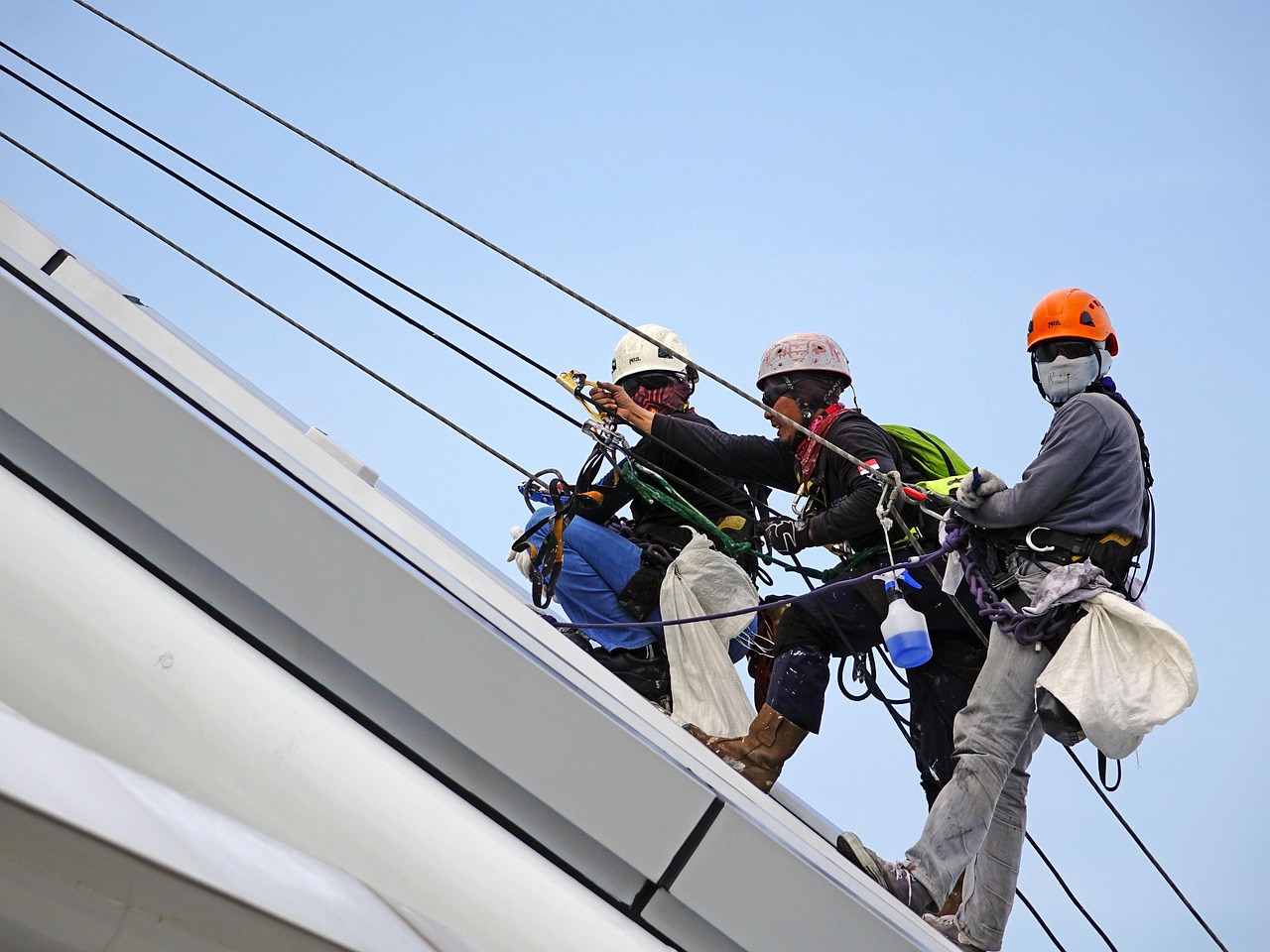
What counts as industrial safety equipment in Asia Pacific
In practical site terms, industrial safety equipment covers more than PPE. PPE remains highly visible and essential, but it is one layer in a broader control system. For Asia Pacific worksites, the category commonly includes:
- Personal protective equipment: hand and arm protection, protective clothing, safety footwear, helmets, eye and face protection, hearing protection, fall arrest equipment and respiratory protection.
- Engineering and machine safety equipment: guards, interlocks, emergency stops, light curtains, safety relays, lockout devices and machine access controls.
- Monitoring and detection: gas detectors, dust monitors, heat stress monitoring, noise dosimeters, confined-space meters and exposure sensors.
- Work-at-height and access safety: harnesses, lifelines, anchor systems, guardrails, ladder safety devices and rescue equipment.
- Emergency and site control equipment: eyewash stations, showers, spill kits, fire protection items, signage, barriers and evacuation tools.
The key distinction is that safety equipment should be selected after hazard identification and risk assessment. Safe Work Australia’s PPE guidance, for example, states that PPE should be issued only if other control measures have not removed or minimised the risk so far as reasonable. The guidance also emphasises suitability, comfort, compatibility, instruction and periodic assessment. (safeworkaustralia.gov.au)
Market signals and demand drivers
Publicly available market reports do not agree on a single size for the Asia Pacific PPE market. That difference is useful, because it shows how broad the safety equipment sector can become depending on whether the scope is limited to PPE or expanded to include workplace safety services and systems.
| Source measure | Reported figures | What it suggests | Limitation |
|---|---|---|---|
| Asia Pacific PPE market | MarketsandMarkets projected growth from USD 11.28 billion in 2025 to USD 15.30 billion by 2030, at a 6.29% CAGR. | Demand is linked to industrial and infrastructure activity across China, India, Southeast Asia and other manufacturing hubs. | PPE-only scope; categories and country coverage may differ from other reports. (marketsandmarkets.com) |
| Asia Pacific PPE market | Grand View Research estimated USD 19.30 billion in 2024 and projected an 8.5% CAGR from 2025 to 2030. | Manufacturing is identified as a major end-use segment, with smart PPE and employee safety awareness also cited as drivers. | Different methodology and segment definitions make it unsuitable for direct comparison with other forecasts. (grandviewresearch.com) |
| Asia Pacific workplace safety market | Grand View Horizon reported USD 4.58 billion in 2024 and projected USD 12.99 billion by 2030 for workplace safety, including PPE, services and safety systems. | Safety services and systems may grow faster than traditional equipment categories as companies formalise safety programs. | The scope is not the same as a broad PPE market, so the smaller base does not mean PPE demand is lower. (grandviewresearch.com) |
Several demand drivers are especially relevant in Asia Pacific. Industrial expansion continues to create demand for protection in fabrication, electronics, automotive, shipbuilding, chemicals, mining and energy. Infrastructure construction raises the need for fall protection, high-visibility apparel, head protection, respiratory protection and traffic control. Climate-related risks are also becoming harder to treat as a side issue. In its 2024 heat-at-work analysis, the ILO reported that Asia and the Pacific was above the global average for workforce exposure to excessive heat, with 74.7% of workers exposed. (ilo.org)
Regulations are making documentation as important as the equipment itself
Safety equipment decisions in Asia Pacific are shaped by national and local rules, not just product availability. Multinational buyers should not assume that one certificate, one user manual or one PPE specification will satisfy every jurisdiction. The common direction is clear: employers are expected to assess hazards, provide suitable protection, train workers and maintain safe systems of work.
| Jurisdiction | Regulatory signal | Procurement implication |
|---|---|---|
| Australia | Safe Work Australia says a PCBU must select suitable PPE, provide information and training, guide proper use and periodically assess effectiveness. | Buyers need evidence of fit, compatibility, worker instruction and maintenance, not only product purchase records. (safeworkaustralia.gov.au) |
| China | China’s Work Safety Law requires production and business units to meet safety conditions under laws, regulations and standards, and places duties on responsible persons for safety systems, training, funding and hazard control. | Safety equipment programs should align with national or industry standards and documented responsibility systems. (mem.gov.cn) |
| India | India’s Occupational Safety, Health and Working Conditions Code, 2020 consolidates multiple labour laws and includes provisions on employer duties, OSH standards, safety committees, safety officers and safety statistics. | Large employers and suppliers serving India need to monitor implementation rules and sector-specific obligations. (indiacode.nic.in) |
| Japan | Japan’s Industrial Safety and Health Act requires employers to take measures such as safety devices, protective equipment and adequate work instructions; it also requires safety and health training for new or reassigned workers. | Equipment selection must be connected to machine safety, work procedures and training records. (mhlw.go.jp) |
| Singapore | The Workplace Safety and Health Act places duties on employers to take reasonably practicable measures to ensure safety and health, and workers must not misuse protective equipment. | Procurement should be paired with enforcement, supervision and worker accountability. (sso.agc.gov.sg) |
For regional programs, ISO 45001 can provide a useful management-system framework. ISO describes ISO 45001:2018 as an occupational health and safety management system standard covering leadership commitment, worker participation, hazard identification, risk assessment, emergency planning, incident investigation and continual improvement. It is not a product certification for PPE, but it can help companies structure how equipment is selected, reviewed and improved. (iso.org)
Procurement priorities for buyers and distributors
For distributors, factory buyers and safety managers, the next stage of competition is likely to depend less on catalogue breadth and more on suitability for the task. The following priorities are becoming more important across Asia Pacific industrial safety equipment programs:
- Match equipment to the hazard, not the job title. Two workers with the same title may face different exposure levels depending on process, location, shift and maintenance activity.
- Check compatibility between items. Goggles, respirators, hard hats and hearing protection can interfere with one another if they are tested only as separate products.
- Document standards and certificates. Buyers should keep certificates, declarations of conformity, batch data and user instructions accessible for audits and incident investigations.
- Prioritise fit and comfort. Poorly fitting gloves, footwear, respirators or harnesses create non-compliance because workers are less likely to use them correctly for a full shift.
- Plan the lifecycle cost. Replacement filters, inspection tags, calibration gas, batteries, laundering, repair and disposal can matter more than the initial purchase price.
- Localise training. Multilingual instructions, pictograms and supervisor briefings are critical on worksites with migrant, contract or temporary labour.
These priorities also affect content, sourcing and distribution strategy. A safety buyer looking for a low-cost glove may still need abrasion, cut, chemical or heat performance data. A contractor buying fall protection may need rescue planning. A factory adopting gas detection may need calibration and alarm-response procedures. For broader coverage of related topics, visit our industrial safety section.
Smart safety equipment has potential, but it is not a shortcut
Smart PPE, connected gas detection, wearable heat sensors, proximity alerts, fatigue monitoring and machine-safety data systems are gaining attention because they can make hazards more visible. The U.S. National Institute for Occupational Safety and Health has described wearable sensors as tools that can monitor workplace environments, worker location, movement, proximity to hazards or physiological state, while also noting that deployment introduces practical risks. (cdc.gov) See also: automation and controls.
That caution matters for industrial adoption. Recent research on wearable occupational safety technologies has found strong potential for real-time monitoring and risk detection, but it also notes limits around sustained accident-reduction evidence, interoperability, privacy, user acceptance and data governance. (mdpi.com)
For Asia Pacific worksites, smart devices should support the hierarchy of controls, not replace it. A heat sensor can warn of physiological stress, but the employer still needs shade, ventilation, rest breaks, hydration, task rotation and emergency response. A proximity alert can reduce collision risk, but it does not remove the need for traffic separation, visibility controls and trained operators. Digital safety equipment is most valuable when it is integrated into a practical safety management system.
A practical checklist for safer equipment programs
- Start with a written task-based hazard assessment for each site or production line.
- Identify whether elimination, substitution, engineering controls or administrative controls can reduce the risk before relying on PPE.
- Select equipment based on recognised standards, local regulations and actual exposure conditions.
- Test fit, comfort and compatibility with workers before full rollout.
- Keep procurement records, certificates, inspection logs and maintenance schedules together.
- Train workers and supervisors on correct use, storage, cleaning, inspection and replacement.
- Review incidents, near misses, heat events, exposure readings and worker feedback to improve the program.
- Audit suppliers for consistent quality, traceability and the ability to support regional compliance needs.
Equipment matters, but it performs best when it sits inside a disciplined system. In Asia Pacific, industrial growth, climate pressure and stronger safety expectations are pushing buyers toward equipment programs that are evidence-based, documented and adaptable to local conditions.
Frequently asked questions
What is the main search intent behind Asia Pacific industrial safety equipment?
Most readers are looking for a practical view of market direction, equipment categories, compliance requirements and procurement priorities across Asia Pacific. The intent is not only to find products, but to understand how safety equipment fits into risk management.
Is PPE the same as industrial safety equipment?
No. PPE is one major part of industrial safety equipment, but the wider category also includes machine guards, gas detection, fall protection systems, emergency equipment, safety signage, monitoring tools and other controls used to reduce workplace risk.
Which industries are driving demand in Asia Pacific?
Manufacturing, construction, chemicals, mining, energy, logistics, electronics and infrastructure projects are key demand areas. The exact product mix depends on the hazard profile: cut protection in fabrication, respiratory protection in dusty or chemical environments, fall protection in construction and gas detection in confined spaces or process industries.
Should buyers adopt smart PPE now?
Smart PPE can be useful where real-time monitoring solves a defined problem, such as heat stress, gas exposure or proximity risk. However, buyers should check durability, data privacy, worker acceptance, calibration needs and whether the device improves decisions on the worksite. It should not replace engineering controls, training or supervision.