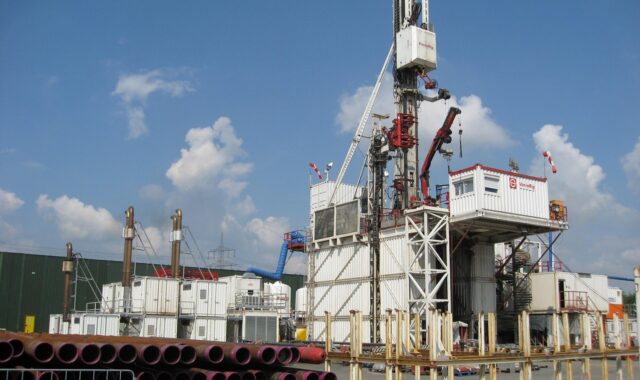
Industrial fire and safety planning for manufacturing facilities
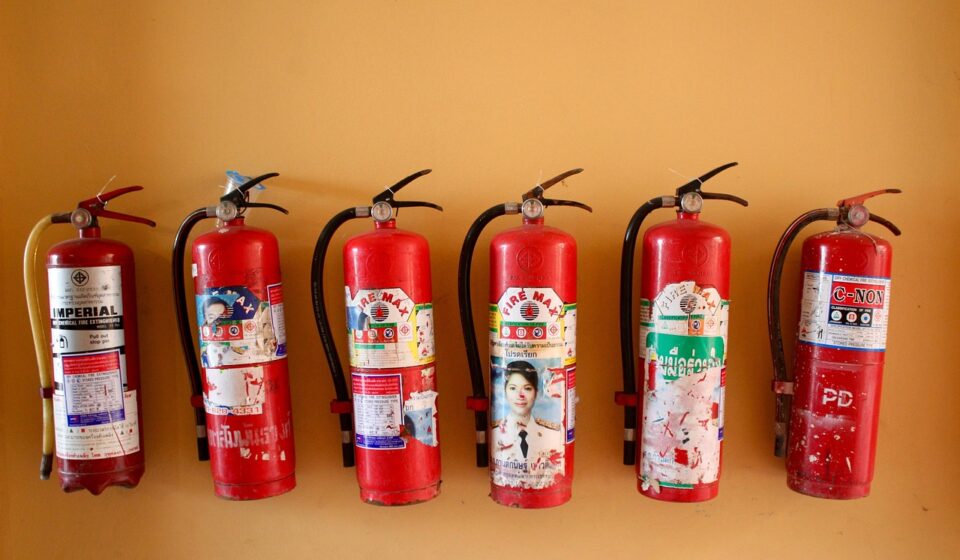
Why industrial fire and safety planning needs a systems view
Industrial fire and safety planning is more than an extinguisher program or an evacuation map. In a manufacturing or processing facility, it is a working system for identifying fuels and ignition sources, controlling routine and non-routine work, managing changes, maintaining protection equipment, and preparing people to respond when alarms, smoke, vapors, dust, or abnormal heat indicate danger. The practical order matters: prevent ignition first, limit fire spread second, and treat emergency response as the final layer of protection rather than the primary safeguard.
The scale of the risk supports that approach. NFPA Research reported in September 2023 that U.S. fire departments responded to an estimated annual average of 36,784 fires at industrial or manufacturing properties from 2017 to 2021. Those fires were associated with 22 civilian deaths, 211 civilian injuries, and $1.5 billion in direct property damage per year. Structure fires represented about 22 percent of those incidents but accounted for the largest share of civilian injuries and property damage. For more facility-risk topics, see the industrial safety section.
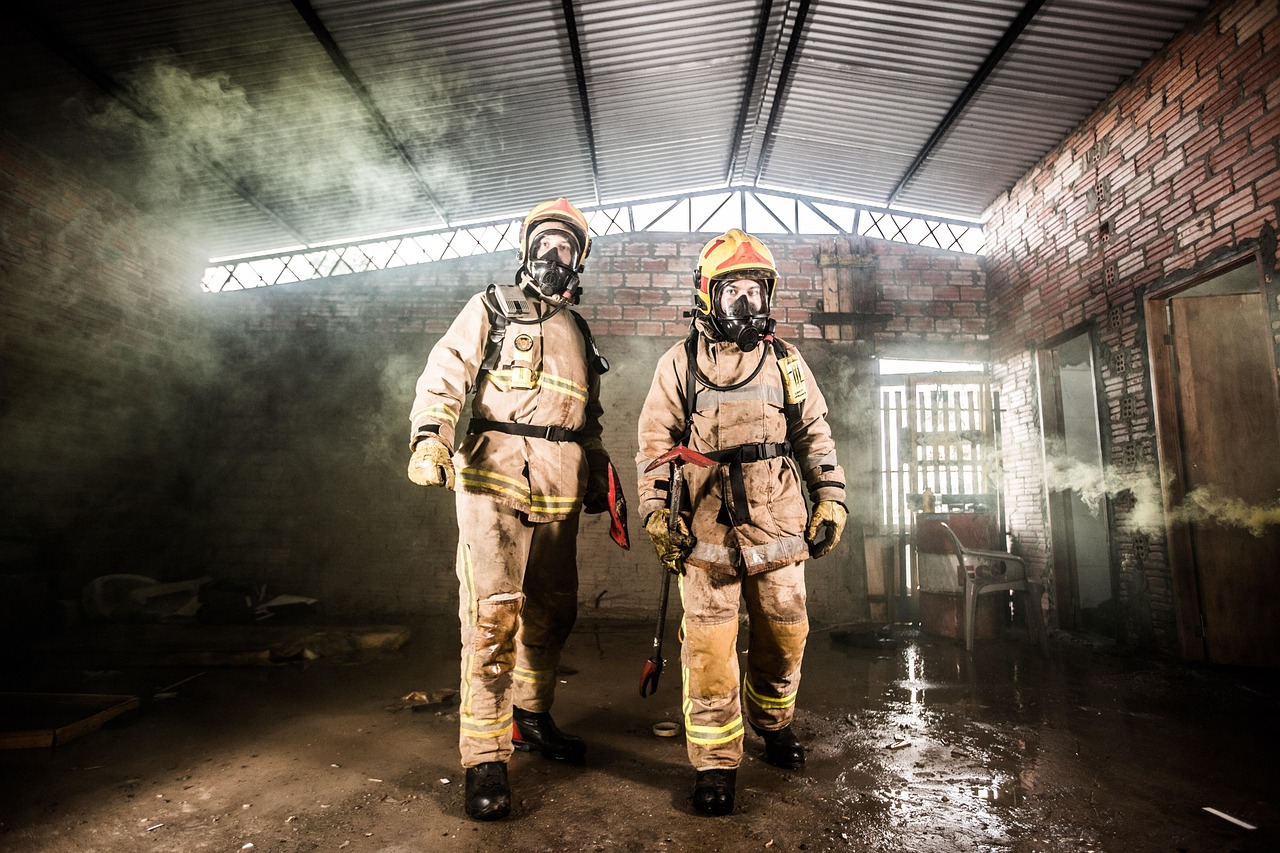
The fire hazards facilities should rank first
A useful fire risk review starts with three practical questions: what can burn, what can ignite it, and what could allow the event to spread before people can intervene. In industrial settings, the answer is rarely a single item. A small leak, weak housekeeping, open electrical equipment, delayed maintenance, and a rushed hot-work job can combine into one serious event.
Electrical and heat-producing equipment
NFPA Research identified equipment or heat source failure as a leading cause of structure fires in industrial and manufacturing properties. Electrical distribution, lighting, and power-transfer equipment were noted as leading equipment involved in ignition in industrial properties, while shop tools were a leading equipment category in manufacturing property fires. Preventive maintenance, infrared inspections where appropriate, clean electrical rooms, correct overload protection, and prompt repair of damaged cords or panels are therefore not just housekeeping tasks. They are fire controls.
Flammable liquids, gases, and hazardous chemicals
Flammable liquids and gases need controls across receiving, storage, transfer, use, waste handling, and spill response. OSHA addresses flammable liquids in 29 CFR 1910.106, while hazard communication requirements in 29 CFR 1910.1200 require employers to communicate chemical physical hazards such as flammability, oxidizing potential, self-heating behavior, pyrophoric behavior, and combustible dust hazards where applicable. Facilities that handle highly hazardous chemicals may also have process safety management duties under 29 CFR 1910.119. The main point is that fire prevention depends on process knowledge, not only on container labels.
Combustible dust and particulate solids
Combustible dust is often underestimated because many powders look ordinary until they are dispersed in air and exposed to an ignition source. Food ingredients, wood dust, metal powders, plastics, agricultural materials, and some chemical dusts can present fire, flash-fire, or explosion hazards depending on particle size, concentration, moisture, confinement, and ignition energy. The U.S. Chemical Safety and Hazard Investigation Board has repeatedly recommended stronger combustible-dust management after serious incidents. NFPA 660, the 2025 Standard for Combustible Dusts and Particulate Solids, consolidated multiple NFPA combustible-dust standards into a single framework, reflecting the need for a more unified approach to dust hazard analysis, engineering controls, housekeeping, management of change, and training.
Hot work and maintenance changes
Welding, cutting, grinding, brazing, and other spark-producing work should not be treated as routine simply because the task is common. OSHA 29 CFR 1910.252 requires basic fire prevention precautions for welding and cutting, including moving fire hazards where possible or protecting combustibles when they cannot be moved. NFPA 51B, with a 2024 edition, is a widely used hot-work fire prevention standard. A permit system should confirm that the area has been made fire safe, affected equipment is isolated, gas testing is performed where needed, fire protection remains available, and fire watch duties are clearly assigned.
What compliance requires and what it does not solve
OSHA rules establish important minimum duties, but compliance language should not be mistaken for a complete facility-specific fire strategy. OSHA 29 CFR 1910.39 requires a fire prevention plan when another OSHA standard requires one. That plan must include major fire hazards, handling and storage procedures for hazardous materials, ignition source controls, necessary fire protection equipment, combustible waste controls, maintenance procedures for heat-producing equipment safeguards, and the names or job titles of employees responsible for ignition-control equipment and fuel-source hazards. Employers must also inform employees of fire hazards to which they are exposed when initially assigned.
Emergency action planning is related but separate. OSHA 29 CFR 1910.38 addresses emergency action plans where required. At minimum, an emergency action plan should define how fires and other emergencies are reported, emergency escape procedures and route assignments, procedures for accounting for employees after evacuation, duties for employees who remain to operate critical plant systems before evacuation, rescue or medical duties where assigned, and contacts for plan information. Employers with 10 or fewer employees may communicate certain plans orally under OSHA provisions, but larger or more complex operations should not rely on informal instructions.
Portable fire extinguishers show the difference between having equipment and having a program. OSHA 29 CFR 1910.157 addresses placement, access, inspection, maintenance, testing, and training where extinguishers are provided for employee use. If employees are expected to use them, they need training on the general principles of extinguisher use and the hazards of incipient-stage firefighting. If the facility policy is immediate and total evacuation, the policy, emergency action plan, and fire prevention plan should align so employees do not receive mixed signals.
A control framework that works across departments
The hierarchy of controls is a practical way to move fire prevention beyond reminders and posters. OSHA and NIOSH describe the hierarchy as elimination, substitution, engineering controls, administrative controls, and personal protective equipment. For industrial fire prevention, the same logic applies: remove unnecessary fuel or ignition sources where possible, isolate hazards through engineering design, control work with procedures and permits, and use PPE for residual risk rather than as the main defense.
| Risk area | Higher-value controls | Program owner |
|---|---|---|
| Flammable liquid storage | Minimize quantities at point of use, bond and ground transfers where required, ventilate storage areas, segregate incompatibles, control ignition sources, and inspect containers. | EHS, maintenance, production, and warehouse teams |
| Combustible dust | Complete a dust hazard analysis where applicable, control dust at the source, use rated equipment in classified areas, prevent fugitive accumulation, and verify housekeeping effectiveness. | Engineering, operations, EHS, and sanitation teams |
| Hot work | Use designated hot-work areas where possible, require permits outside those areas, remove or shield combustibles, isolate equipment, test atmospheres when needed, and assign fire watch duties. | Maintenance, contractors, supervisors, and EHS |
| Electrical ignition | Keep panels closed and accessible, prevent overloads, maintain enclosures, investigate nuisance trips, clean electrical rooms, and document corrective actions. | Maintenance, electrical staff, and facility management |
| Emergency response | Maintain alarms and detection systems, keep exits clear, train employees by role, account for personnel, and coordinate with local responders on site-specific hazards. | Facility leadership, EHS, security, and supervisors |
This table is not a substitute for a code review or engineering assessment. Its value is that it assigns fire prevention to the people who can actually control the hazard. A fire risk owned only by the safety department is likely to become paperwork. A fire risk built into purchasing, maintenance planning, contractor control, housekeeping, and change management becomes part of operating discipline.
Inspection, maintenance, and emergency readiness
Inspection programs should be designed around credible failure modes, not only calendar reminders. A monthly visual check may confirm that an extinguisher is present and accessible, but it will not identify recurring overloads on temporary power, dust migration above ceiling structures, or poor isolation during maintenance. A stronger program combines routine operator observations, supervisor walks, documented preventive maintenance, contractor oversight, and periodic audits by people who are not responsible for the area being audited. See also: automation and controls.
Alarm, detection, sprinkler, suppression, ventilation, and emergency lighting systems should be maintained according to the applicable adopted codes, manufacturer instructions, insurer requirements, and local authority having jurisdiction. NFPA 72, current 2025 edition, is a major U.S. benchmark for fire alarm and signaling systems, but legal requirements depend on the edition adopted by the jurisdiction and the design approved for the facility. The same principle applies to sprinkler, special-hazard suppression, and storage configurations: what is safe for one layout may become inadequate after a mezzanine, rack change, new material, or production-line modification.
Emergency drills should test real decisions. Can employees hear or see the alarm in high-noise areas? Do temporary workers know the assembly point? Are supervisors able to account for people who were in restrooms, labs, maintenance shops, or loading areas? Can responders identify shutoffs, hazardous materials, and blocked access routes? The goal is not to create a perfect drill; it is to expose confusion before an actual fire does.
How to turn a fire plan into daily management
The most useful industrial fire and safety programs connect planning to management of change. Any new raw material, packaging material, solvent, powder, gas cylinder, battery system, oven, dust collector, process temperature, ventilation change, storage height, or contractor task should trigger a fire-risk question before installation or use. If the change can alter fuel load, ignition potential, detection coverage, suppression demand, evacuation routes, or emergency response access, it deserves review.
- Before purchase, confirm whether the material or equipment changes fire, explosion, electrical, or storage hazards.
- Before installation, check spacing, ventilation, electrical classification, suppression coverage, drainage, and emergency access.
- Before startup, train affected employees and update emergency, maintenance, inspection, and housekeeping procedures.
- After startup, verify that controls work under real operating conditions and capture corrective actions.
- After incidents or near misses, review whether the plan failed, the control failed, or the hazard was not recognized.
This approach also supports clearer communication with insurers, local fire officials, and emergency responders. When a facility can explain its hazards, controls, inspection records, and change-review process, the discussion moves from generic compliance to actual risk reduction.
Frequently asked questions
What is the difference between a fire prevention plan and an emergency action plan?
A fire prevention plan focuses on preventing ignition and controlling fuel and hazard sources. An emergency action plan focuses on what employees do during an emergency, including reporting, evacuation, accountability, and assigned duties. Many facilities need both because preventing a fire and responding to one require different decisions.
Does OSHA require every workplace to have a written fire prevention plan?
OSHA 29 CFR 1910.39 requires a fire prevention plan when another OSHA standard requires one. When required, the plan generally must be written, kept in the workplace, and made available for employee review, with an oral communication option for employers with 10 or fewer employees. Facilities should confirm which OSHA standards, state-plan rules, local fire codes, and insurer requirements apply to their operations.
Is combustible dust only a woodworking or grain-processing issue?
No. Wood and grain are common examples, but combustible dust concerns can also involve metals, plastics, chemicals, food ingredients, agricultural products, pharmaceuticals, and other particulate solids. The key question is whether the material can form a combustible dust cloud or hazardous accumulation under the facility’s actual processing and housekeeping conditions.
Should employees fight small fires or evacuate immediately?
The answer depends on the employer’s written policy, the emergency action plan, extinguisher availability, employee training, and the type of hazard. Employees should not improvise. If the policy is evacuation, training should reinforce evacuation. If employees are expected to use extinguishers for incipient-stage fires, they need training and clear limits on when to stop and leave.
How often should an industrial fire and safety program be reviewed?
Review the program whenever hazards change, after drills, after incidents or near misses, after code or insurance reviews, and during scheduled management reviews. A calendar review is useful, but change-driven review is more important in facilities where materials, equipment, storage, contractors, and production schedules shift throughout the year.