Industrial washing machines and workplace safety in laundry operations
What makes industrial washing machines a safety issue?
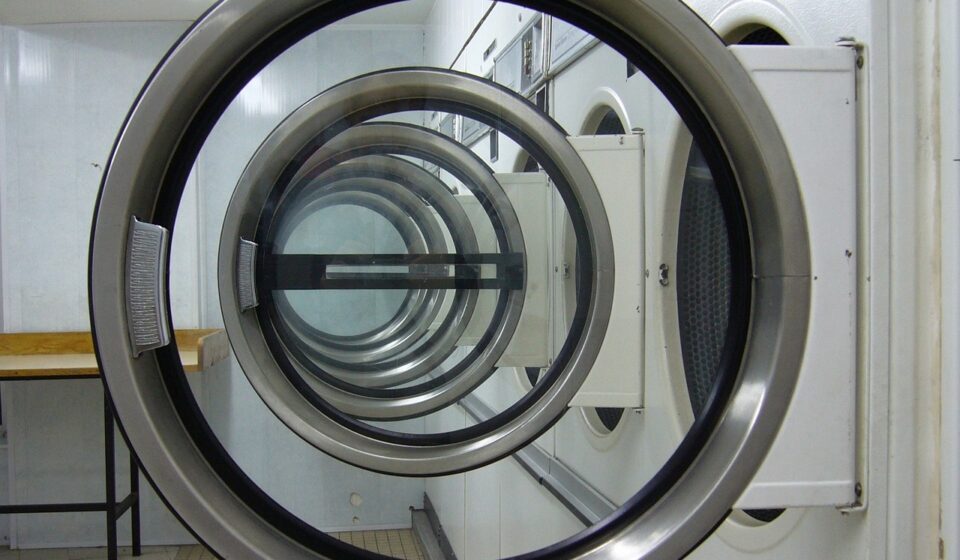
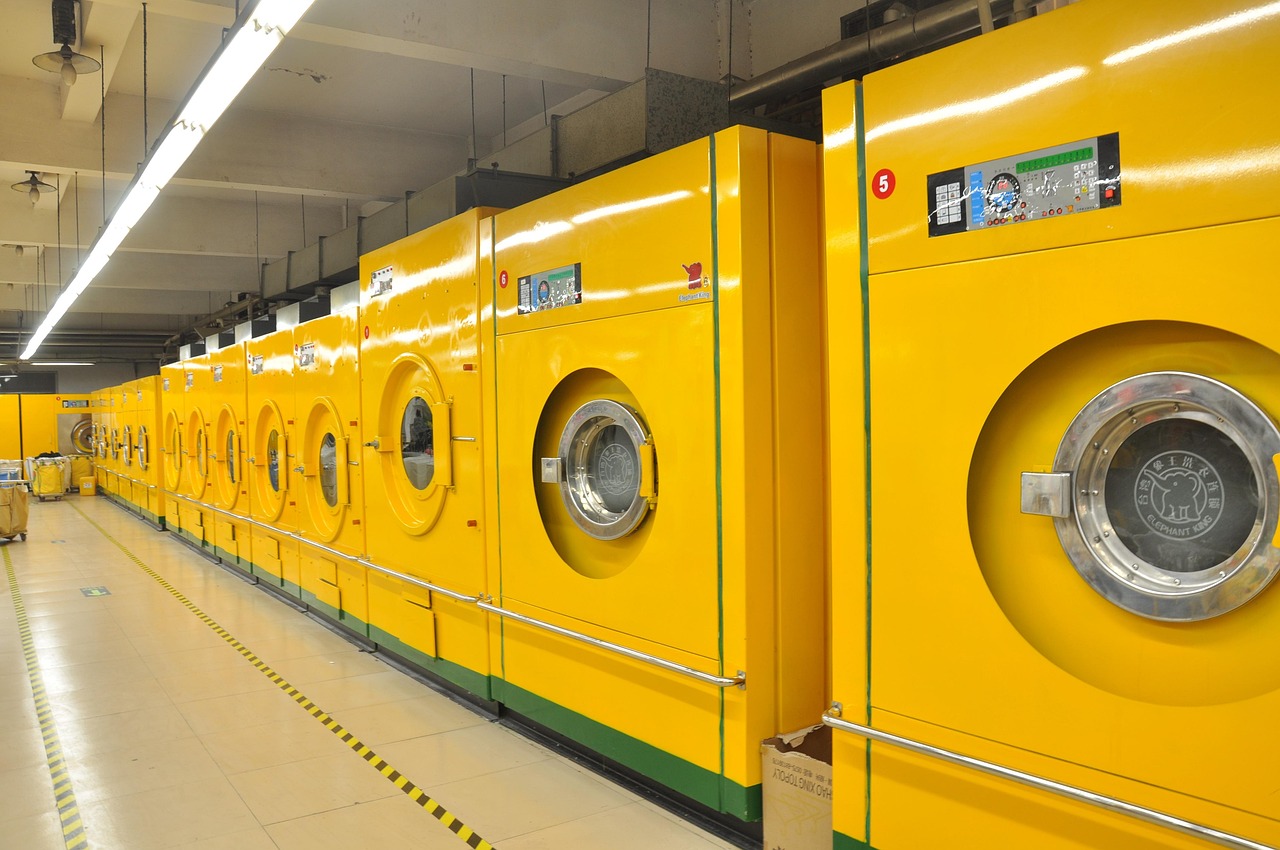
Industrial washing machines are not simply larger domestic washers. In commercial, healthcare, hospitality, food-service, and textile operations, they combine rotating drums, high extraction speeds, hot water, detergents, disinfecting chemicals, heavy wet loads, powered doors, steam or hot surfaces, and frequent manual handling. The safety question is therefore broader than whether a washer cleans well. It is whether employees can load, unload, maintain, and work around the equipment without exposure to preventable hazards.
A practical safety review should connect three areas: machine design, laundry workflow, and the hygiene purpose of the wash process. OSHA standards and guidance point safety teams toward machine guarding, lockout/tagout, walking-working surfaces, chemical communication, noise, and bloodborne-pathogen controls where relevant. CDC healthcare laundry guidance adds process expectations for contaminated textiles, hot-water or low-temperature laundering, and clean textile storage. Together, these references support a layered program rather than a single checklist.
The regulatory map safety teams usually check
In the United States, laundry operations may be affected by several OSHA standards depending on the workplace, the textiles handled, and the tasks employees perform. OSHA’s laundry machinery rule at 29 CFR 1910.264 addresses moving parts and conditions specific to laundries, with emphasis on points of operation. It includes requirements such as providing means to hold washing machine doors or covers open during loading and unloading, and not removing or defeating safeguards except for immediate repair or adjustment.
General machine guarding rules also apply where employees may be exposed to machine hazards. OSHA 29 CFR 1910.212 requires one or more guarding methods to protect operators and nearby employees from hazards such as points of operation, rotating parts, and ingoing nip points. For industrial washing machines and washer-extractors, that review should include door security, access panels, drive components, belts, pulleys, powered loading systems, and any conveyor or shuttle equipment around the washer.
Maintenance brings a different risk profile. OSHA’s control of hazardous energy standard, 29 CFR 1910.147, applies when servicing or maintenance exposes employees to unexpected energization, startup, or release of stored energy. In laundry rooms, that can include electrical energy, rotating mechanical energy, pneumatic or hydraulic systems, steam, hot water, gravity-fed loads, and chemical feed systems.
Other common references include OSHA’s walking-working surfaces rule for wet floors and blocked aisles, the Hazard Communication Standard for detergents and disinfecting chemistry, emergency eyewash or shower requirements where corrosive materials may contact eyes or skin, occupational noise rules where exposures are high, and the Bloodborne Pathogens Standard when laundry is contaminated with blood or other potentially infectious materials.
Main hazards and controls around washer-extractors
The most useful safety reviews are task-based. A washer may look compliant while idle, but the hazard profile changes when employees pull wet textiles from the drum, clear a jam, refill chemical containers, or enter a service area. The table below summarizes hazard paths that should be reviewed before a machine is installed, restarted after maintenance, or added to a higher-volume workflow.
| Hazard area | Where it appears | Control focus | Records to keep |
|---|---|---|---|
| Moving parts and extraction | Drums, belts, pulleys, powered doors, shuttles, and loading systems | Fixed guards, interlocked access where appropriate, secure doors, emergency stops, and no bypassing of safeguards | Guarding inspections, corrective actions, maintenance logs, operator training |
| Unexpected startup or stored energy | Jam clearing, service work, chemical pump maintenance, drum access, steam or hot-water systems | Machine-specific lockout/tagout procedures, energy isolation points, verification before work begins | Energy-control procedures, authorized employee training, periodic inspections |
| Chemical exposure | Detergent, alkali, bleach, sour, sanitizer, and chemical feed systems | Labels, safety data sheets, closed transfer where possible, PPE, spill response, eyewash or shower evaluation | Chemical inventory, SDS access, training records, spill reports |
| Wet floors and traffic | Loading areas, drain points, cart routes, sorting zones, and washer discharge areas | Drainage, housekeeping, slip-resistant surfaces, clear aisles, prompt spill cleanup, cart route design | Housekeeping schedule, floor inspection notes, incident reports |
| Ergonomic strain | Manual unloading, lifting wet loads, pushing carts, repeated reaching into deep drums | Load limits, spring-loaded platforms, automatic dumping where justified, cart maintenance, job rotation | Ergonomic assessments, injury trend reviews, equipment maintenance logs |
| Biological contamination | Healthcare, laboratory, long-term care, or similar contaminated textile streams | Bagging at point of use, minimal agitation, leak-resistant containment when wet, PPE, separation of clean and soiled routes | Exposure-control plan, training records, laundry handling procedures |
| Noise | Extraction cycles, adjacent dryers, compressed air, conveyors, and multiple machines running together | Noise assessment, engineering controls, maintenance, hearing protection, hearing conservation where required | Noise measurements, audiometric program records where applicable, training |
Machine safety starts before production begins
Many laundry risks are set by the layout before the first load is processed. A safety review should start with the machine specification, installation plan, utility connections, workflow direction, and maintenance access. A high-speed washer-extractor needs enough space for loading and unloading without forcing workers to stand in cart traffic or reach around obstacles. Drainage should be designed so normal operation does not leave standing water in walkways. Chemical injection points should be accessible without awkward posture or unnecessary splash exposure.
Door and drum controls deserve close attention. Operators should not be able to access a moving cylinder, and the machine should not restart unexpectedly after a stop, power interruption, or door event. Where interlocks, presence-sensing devices, emergency stops, or control-reliable systems are part of the design, the facility should verify that they are included in preventive maintenance and not treated as optional convenience features.
Standards can help structure the review. ISO 10472-1 covers common safety requirements for industrial laundry machinery, and ISO 10472-2 addresses washing machines and washer-extractors. ISO lists these 1997 standards as confirmed in 2022, which means they remain current in ISO’s catalogue as of that review. They do not replace applicable law, but they give designers, purchasers, and safety teams a useful reference point for significant hazards associated with industrial laundry machinery.
Procurement documents should therefore ask for more than capacity, cycle time, and utility consumption. They should request the machine’s applicable conformity information, guarding details, emergency stop layout, lockout points, control descriptions, maintenance access requirements, and operator manual. If ancillary systems are supplied separately, such as chemical pumps, steam valves, ventilation, conveyors, or loading equipment, they should be assessed as part of the installed system rather than as unrelated accessories.
Hygienic laundering is not the same as worker safety
Industrial washing machines often serve a hygiene function, especially in healthcare and long-term care environments. CDC environmental infection-control guidance for healthcare facilities states that contaminated textiles should be handled with minimum agitation, contained at the point of use, and not sorted or prerinsed in patient-care areas. For hot-water laundry cycles, CDC guidance identifies detergent washing at at least 160 degrees Fahrenheit, or 71 degrees Celsius, for at least 25 minutes. For low-temperature cycles, CDC points to the need for suitable chemicals at proper use concentrations.
Those process controls are important, but they do not automatically resolve worker-safety risks. A washer may meet a hygiene target while staff are still exposed to chemical splashes, heavy wet loads, slips, sharps hidden in linen, or unguarded mechanical parts. Conversely, a safe machine layout does not prove that textiles are being processed in a way that meets healthcare policy or customer requirements. Laundry managers should keep two questions separate: does the process clean and decontaminate as required, and can employees perform the process safely?
Clean-textile handling also affects both hygiene and workflow safety. CDC guidance recommends packaging, transporting, and storing clean textiles in ways that protect them from dust and soil during loading, transport, and unloading. In operational terms, clean and soiled routes should not cross unnecessarily, carts should be identifiable, and storage areas should be protected from splash, lint, pests, and construction dust. A well-designed clean side also reduces rework, rushed handling, and congestion around washer discharge points.
Maintenance and lockout are where programs are tested
The gap between a written procedure and real-world safety is often exposed during maintenance. Operators may understand the normal wash cycle but still improvise when a load is tangled, a drain is blocked, a door fault occurs, or chemical feed tubing needs replacement. These are the situations where facilities need clear task rules. See also: automation and controls.
A machine-specific lockout/tagout procedure should identify each energy source, the method of isolation, the steps for applying locks or tags, how stored energy is relieved or restrained, and how isolation is verified. For industrial washing machines, the procedure may need to address electrical disconnects, drum movement, hot water, steam, pneumatic doors, hydraulic tilt or lift systems, chemical feed pressure, and gravity hazards from suspended or elevated loads.
Routine cleaning can also cross into servicing. If an employee must remove or bypass a guard, place a hand or tool into a danger zone, open a service panel, clear a jam, or work where unexpected motion could cause injury, the task should be reviewed under hazardous-energy procedures rather than treated as ordinary housekeeping. The same principle applies after outside contractors perform work. Before returning the washer to production, the facility should verify that guards are reinstalled, interlocks function, tools are removed, affected employees are clear, and the machine is tested under controlled conditions.
Preventive maintenance should include safety devices, not only production components. Door seals, latches, brake performance, vibration sensors, anchoring, drain valves, guards, emergency stops, and chemical tubing can all degrade over time. A machine that shakes more than usual, leaves water on the floor, requires repeated resets, or generates unusual noise is providing operational warning signs that should be recorded and investigated.
How to build a practical washer safety review
A useful review does not need to be complicated, but it should be systematic. Start with a walk-through during active production, because many hazards only appear when carts, wet floors, noise, and time pressure are present. Interview operators and maintenance staff separately. Operators often know where loads snag or floors become wet, while maintenance personnel know which guards are inconvenient, which valves are hard to isolate, and which alarms are frequently reset.
- Map the textile flow. Mark soiled receiving, sorting, loading, washing, unloading, drying, folding, clean storage, and dispatch routes. Look for cross-traffic, blind corners, and places where wet loads are lifted manually.
- List the tasks. Include normal operation, startup, shutdown, chemical changeout, jam clearing, cleaning, preventive maintenance, contractor work, and emergency response.
- Match controls to tasks. Do not rely on PPE where guarding, layout, mechanical aids, drainage, or closed chemical transfer can reduce exposure more reliably.
- Check training against reality. Training should cover the actual model, control panel, alarms, door behavior, lockout points, and local spill or exposure procedures.
- Track small incidents. Near misses, recurring slips, chemical splashes, cart collisions, and repeated machine faults often reveal design or workflow issues before a serious injury occurs.
Documentation should be concise enough for supervisors to use. A one-page daily check can confirm floor condition, guards, emergency stops, visible leaks, chemical containers, cart condition, and unusual vibration or noise. A deeper monthly or quarterly review can check lockout points, interlocks, preventive maintenance findings, noise changes, training gaps, and incident trends.
Key takeaways for industrial laundry managers
Industrial washing machines should be managed as part of a safety-critical laundry system. The machine, the operator, the wet textile load, the chemical feed, the floor, the cart route, and the maintenance procedure all interact. Treating each item separately can leave gaps that only become visible during a jam, spill, rush period, or service call.
The strongest programs use a layered approach: specify safer equipment, install it with enough space and drainage, guard moving parts, control hazardous energy, reduce manual handling of wet loads, separate clean and soiled workflows, communicate chemical hazards, and review contaminated laundry procedures where biological exposure is possible. For more workplace risk-control topics, visit our industrial safety section.
Frequently asked questions
Are industrial washing machines covered by OSHA rules?
Yes, depending on the workplace and task. OSHA’s laundry machinery rule, general machine guarding standard, lockout/tagout standard, hazard communication requirements, walking-working surfaces rules, noise standard, and Bloodborne Pathogens Standard may all be relevant. The exact requirements depend on the equipment, chemicals, maintenance activities, and textile stream.
What is the most important safety feature on a washer-extractor?
No single feature is enough. Door security, guarding, interlocks where appropriate, emergency stops, stable anchoring, controlled braking, safe access for maintenance, and clear lockout points all matter. The priority is preventing contact with moving parts and preventing unexpected startup during service or jam-clearing tasks.
Do hot-water wash temperatures replace the need for chemical safety controls?
No. Hot-water or low-temperature laundering parameters address hygiene and textile processing goals. Chemical safety controls address worker exposure to detergents, alkalis, bleach, sanitizers, souring agents, and other products. Facilities still need labeling, safety data sheets, training, PPE selection, spill response, and eyewash or shower evaluation where corrosive exposure may occur.
How often should a laundry inspect washer safety controls?
Daily visual checks are useful for obvious issues such as leaks, blocked aisles, missing guards, unusual vibration, and damaged carts. Formal preventive maintenance and safety-device checks should follow manufacturer instructions, risk assessment findings, and facility policy. Lockout/tagout procedures also require periodic review under OSHA rules when the standard applies.
What should be reviewed before buying a used industrial washer?
Review guarding, door condition, controls, emergency stops, brake performance, vibration history, anchoring requirements, utility needs, manuals, parts availability, and whether the machine can be locked out safely. Used equipment should not be accepted simply because it runs; it must be suitable for the intended workflow and capable of being operated and maintained safely.