Roller conveyor selection for production systems
What a roller conveyor does in a production system
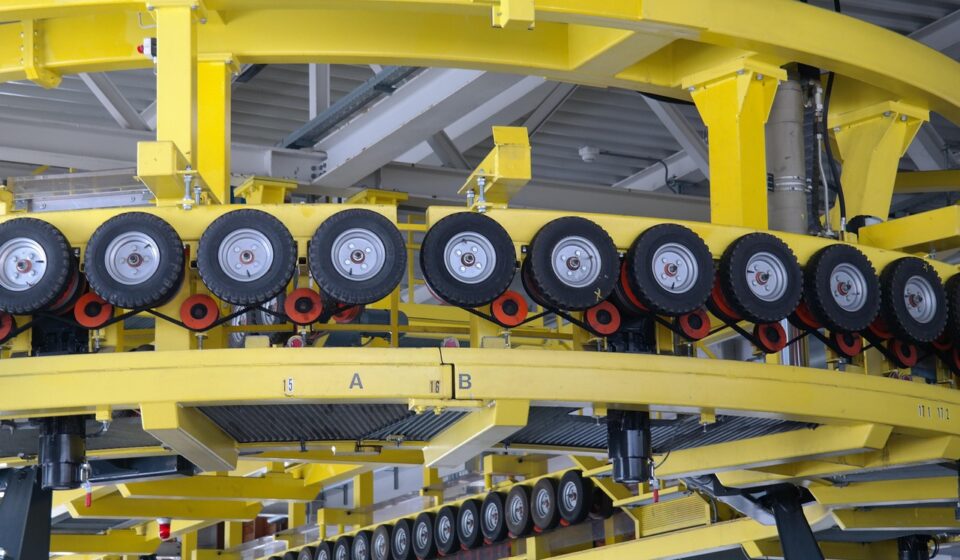
A roller conveyor moves loads across a line of parallel rollers, either by gravity or with powered drives. In production systems, its role is broader than transport. It can reduce non-value-added walking, create controlled buffers between workstations, support repeatable inspection or packing points, and make material flow easier to measure.
The right roller conveyor depends on the load, underside condition, transfer points, throughput target, available floor space and safety requirements. A light carton line and a heavy pallet line may both use rollers, but their frames, drives, controls and guarding can be very different. For broader context on line design, see the production systems section.
Main roller conveyor types and where they fit
The term roller conveyor covers several designs. Selection should start with the material flow problem, not the lowest equipment price. A low-cost conveyor that cannot handle product variation, required accumulation or safe maintenance access can become expensive after installation.
Gravity roller conveyor
Gravity roller conveyors use a slight decline, manual push or external movement to carry the load. They are common for simple carton handling, staging, packing benches, manual assembly cells and short transfer runs.
Their strengths are low energy use, straightforward maintenance and simple operation. Their limits are just as important. Loads must roll consistently, the bottom surface must be flat enough to bridge multiple rollers, and speed must be controlled so products do not collide, rotate or fall at the discharge end.
Powered roller conveyor
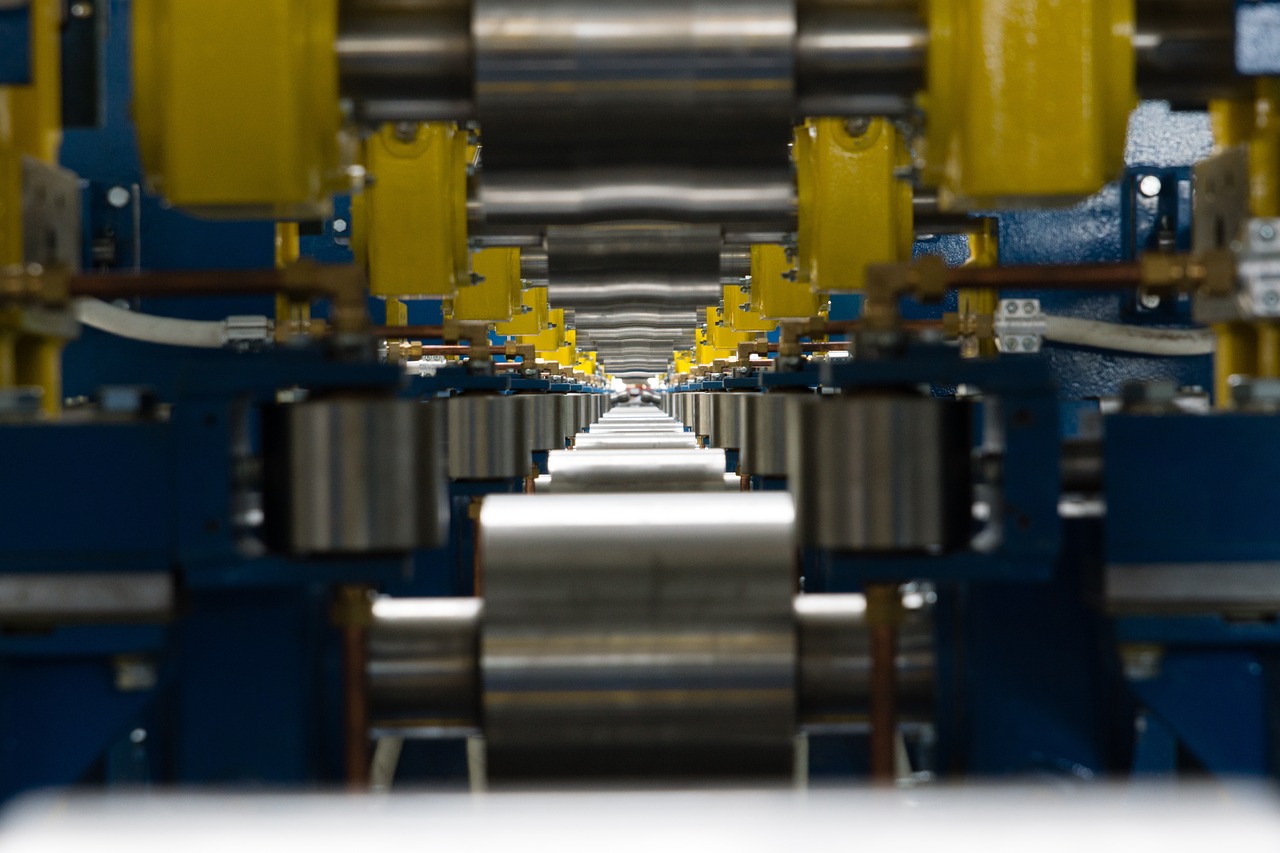
Powered roller conveyors use motors, belts, chains, O-rings, line shafts or motorized rollers to drive the load. They fit production areas that require controlled speed, repeated start-stop motion, longer travel distances or integration with sensors and controls.
Compared with gravity conveyor, powered conveyor can support more predictable takt and routing. It also adds drives, electrical components, maintenance points and safeguarding requirements, so the control and maintenance scope should be defined early.
Accumulation conveyor
Accumulation conveyor allows products to queue before the next operation. Basic accumulation may allow contact between loads. More advanced zero-pressure accumulation creates zones that prevent products from pushing into each other.
This can matter for finished cartons, delicate packaging, traceable assemblies, electronic components or any item that should not be compressed during a downstream stoppage.
Chain-driven and heavy-duty live roller conveyor
For pallets, drums, heavy fixtures and rugged containers, chain-driven live roller conveyor is often used because it can transmit more force than light-duty driven roller designs. These conveyors are common around palletizers, stretch wrappers, warehouses, machining cells and end-of-line shipping areas.
The tradeoff is higher mechanical complexity, more exposed energy sources to control during maintenance, and a greater need for robust guarding around chains, sprockets and transfer points.
Selection factors that matter before price
A useful specification begins with the load. Engineers and buyers should define the minimum, average and maximum load weight; the dimensions; the bottom surface; the load stability; and whether the item is wet, oily, hot, dusty or fragile. A conveyor designed only around an average carton can fail when a short carton, soft bag, damaged pallet or off-center load appears in daily production.
Roller pitch is one of the most common selection errors. In practice, the load should be supported by enough rollers to remain stable across the whole conveyor path, including curves, transfers and stops. A very small product may need closer roller spacing than a large tote. A pallet with inconsistent bottom boards may need a different roller pattern, heavier bearings or additional support at transfer points.
Conveyor width should provide side clearance without encouraging uncontrolled skewing. Frames should be strong enough for the load, the impact at loading points and the real behavior of operators. If workers place loads onto the conveyor by hand, the design should consider ergonomic height, reach distance and the possibility of dropped or tilted loads. If a robot, lift table, palletizer or automatic guided vehicle feeds the conveyor, alignment and repeatability become more important than manual convenience.
Speed is another area where more is not always better. A faster roller conveyor may increase collisions, sensor errors, noise and stopping distance. The better question is whether the conveyor can support required throughput at a stable rhythm. For many production lines, controlled flow and reliable accumulation are more valuable than maximum conveyor speed.
Layout and integration decisions
A roller conveyor layout should follow the product route through the facility. Straight runs are efficient, but real plants also need curves, transfers, merges, sort points, lifts, inspection stations and reject lanes. Each of these locations changes the risk profile because loads can rotate, gap, jam or transfer unevenly.
In a manual production area, the conveyor should support the operator rather than force awkward work. A practical layout keeps materials within comfortable reach, leaves space for maintenance access, and avoids blocking pedestrian routes, emergency exits or forklift aisles. Where people must cross a conveyor path, the design should use approved crossovers, gates or alternate routing rather than informal stepping over equipment.
In an automated area, controls become as important as mechanical design. Sensors must detect the load reliably. Photoeyes, zone controls, programmable logic controllers and higher-level software should agree on where each product is located. If a line uses barcode reading, weighing, scanning or quality inspection, the roller conveyor must provide the right spacing and stability for those operations. A conveyor that moves the product but cannot present it correctly to a scanner or workstation is not fully integrated. See also: automation and controls.
Buffers should be designed intentionally. Too little accumulation can starve downstream machines whenever an upstream process pauses. Too much accumulation can hide quality problems, increase work-in-process and make line status harder to understand. A practical layout balances flow, visibility and recovery time after stoppages.
Safety, standards and guarding considerations
Roller conveyors look simple, but they can create pinch points, nip points, shear points, caught-in hazards and falling-load hazards. OSHA materials handling guidance identifies roller conveyors as equipment that can expose workers to moving rollers, drive chains, sprockets and other moving components. OSHA also emphasizes keeping loading and unloading areas clear, using lockout practices for maintenance, and guarding danger zones around conveyors.
For U.S. projects, ASME B20.1-2024 is a key safety standard for conveyors and related equipment. Public summaries from ASME and ANSI describe its scope as covering design, construction, installation, maintenance, inspection and operation of conveyors in relation to hazards. It is not a substitute for site-specific legal review, but it is a useful reference when specifying a new roller conveyor or auditing an existing system.
CEMA, the Conveyor Equipment Manufacturers Association, also publishes technical and safety resources for the conveyor industry. Its materials are often used by manufacturers, integrators and end users when considering safety labels, guarding, emergency-stop applications and other design practices. The practical point for plant teams is to include conveyor safety at the design stage, not after operators report a near miss.
Common protective measures include fixed guards at chains and sprockets, guarding or safe distance at nip points, emergency stop devices where appropriate, clear start-up warnings, controlled access to elevated conveyors, and lockout/tagout capability for maintenance. Operators should also be trained not to ride conveyors, reach into moving equipment, bypass guards or clear jams while power is available to moving parts.
Maintenance and lifecycle costs
The purchase price of a roller conveyor is only one part of its cost. Maintenance access, spare parts, downtime risk and cleaning time can have a larger effect over the life of the system. A production line that handles cardboard dust, metal chips, food residue or abrasive packaging will place different demands on rollers, bearings, frames and drives.
Gravity conveyor maintenance is usually simpler, but rollers can still seize, frames can bend and side guides can loosen. Powered conveyor adds belts, chains, motors, gearboxes, motorized rollers, sensors and electrical enclosures. Preventive maintenance should include roller rotation checks, bearing noise, drive tension, chain lubrication where applicable, sensor alignment, fastener condition, guard condition and emergency-stop testing.
Maintenance planning should also include jam recovery. A system that requires tools, two technicians and a long shutdown to clear a common jam is not production-friendly. Where jams are likely, the design should allow safe access, visible fault indication and a controlled restart process. This is especially important in automated cells where workers may not be standing next to the conveyor when the fault occurs.
Energy use is another lifecycle factor. Motorized roller zones can reduce unnecessary running because zones operate only when needed. Continuously running conveyor may be simpler, but it can be less efficient in some applications. The right choice depends on duty cycle, throughput, controls capability and maintenance skill level.
Practical specification checklist
| Specification question | Why it matters | What to verify |
|---|---|---|
| What is the load range? | Weight and size determine roller diameter, frame strength and drive selection. | Minimum, average and maximum load, including unusual products. |
| What does the bottom surface look like? | Uneven pallets, soft bags and small cartons may not roll or transfer reliably. | Flatness, stiffness, contact points and ability to bridge several rollers. |
| Is accumulation required? | Buffering affects controls, spacing and product protection. | Contact accumulation, zero-pressure zones or no accumulation. |
| How will products enter and leave? | Most failures occur at transfers, curves, stops and merges. | Height match, product orientation, side guides and stopping method. |
| Who works near the conveyor? | Operator access changes guarding, emergency stops and ergonomics. | Loading tasks, maintenance tasks, pedestrian routes and jam-clearing needs. |
| Which standards apply? | Safety obligations depend on location, equipment type and use case. | Applicable OSHA requirements, ASME B20.1 guidance, company rules and local regulations. |
This checklist is not a complete engineering specification, but it helps prevent vague purchasing language. A request that says only roller conveyor needed leaves too many assumptions open. A stronger request describes the product, operating environment, required flow, controls interface, safety expectations and maintenance constraints.
Frequently asked questions
What is the difference between a roller conveyor and a belt conveyor?
A roller conveyor supports the load on rotating rollers, while a belt conveyor carries the load on a continuous belt. Roller conveyors are often preferred for cartons, totes, pallets and rigid-bottom loads. Belt conveyors can be better for very small items, irregular shapes, loose products or goods that need continuous surface support.
How do I know whether to choose gravity or powered roller conveyor?
Choose gravity conveyor when the route is short, the load rolls consistently and manual or slope-driven movement is acceptable. Choose powered roller conveyor when the line needs controlled speed, longer travel, automated stops, accumulation, sensor integration or more predictable throughput.
What roller pitch should be used?
Roller pitch depends on product length, weight, bottom condition and stability. As a practical principle, the load should be supported by multiple rollers at all times, including transfer points and curves. The final pitch should be confirmed by the conveyor manufacturer or integrator using actual product data.
Is a roller conveyor safe around workers?
It can be safe when it is properly designed, guarded, installed, maintained and operated. Safety depends on controlling nip points, drive hazards, falling objects, pedestrian access, emergency stops and lockout procedures. The risk assessment should reflect the actual work people perform near the conveyor.
Can roller conveyors be used in automated production lines?
Yes. Roller conveyors are widely used with scanners, packing equipment, palletizers, lift tables, robots and warehouse automation. The key is to specify stable product presentation, reliable sensing, correct spacing and a control strategy that handles stops, jams and recovery without confusing the rest of the line.