Industrial cooling systems guide for efficient plant operations
The role of cooling in production systems
Industrial cooling systems remove unwanted heat from processes, equipment, products and production areas so a plant can keep quality, throughput and safety within operating limits. Cooling is therefore more than a utility cost. It can influence line speed, equipment reliability, water consumption, maintenance workload and the risk profile of the whole facility. For industrial managers reviewing production systems, the practical question is not which cooling technology is most common, but which heat-removal strategy matches the process temperature, uptime requirement, site conditions and regulatory constraints.
The U.S. Department of Energy describes process cooling as commonly using air-cooled heat exchangers, cooling towers and chillers to remove heat from water, glycol or air for industrial applications. That broad definition is important because many plants rely on more than one cooling method: a chiller for precise temperature control, a cooling tower for condenser heat rejection, air coolers where water is limited, and refrigeration systems where temperatures must remain below what chilled water can economically provide. (betterbuildingssolutioncenter.energy.gov)
Main types of industrial cooling systems and where they fit
Most facilities should start with the required heat load and temperature level, then compare equipment options. One production site may need high-temperature process water cooling, low-temperature brine, condenser water, equipment jacket cooling and conditioned air. Treating all of these as one generic cooling problem often leads to oversized equipment, unstable controls, or avoidable water and power use.
| Cooling approach | Typical role | Where it fits well | Main limitation |
|---|---|---|---|
| Cooling towers and evaporative loops | Reject heat from recirculating water to ambient air | Large condenser-water or process-water loads where water use is acceptable | Water treatment, drift, scaling, biological control and plume concerns |
| Air-cooled heat exchangers and dry coolers | Transfer heat to air without evaporating water | Water-constrained sites, remote plants or processes with moderate temperature requirements | Higher approach temperatures in hot weather and fan energy demand |
| Chilled water or glycol systems | Provide controlled cooling below ambient conditions | Precision processes, plastics, food processing, pharmaceuticals and controlled environments | Compressor energy, refrigerant choice and part-load control |
| Industrial refrigeration | Maintain low-temperature production, storage or freezing conditions | Cold storage, food and beverage, chemical processing and low-temperature manufacturing | Refrigerant safety, pressure design, operator training and compliance requirements |
| Hybrid and free-cooling systems | Use ambient conditions when available and mechanical cooling when needed | Sites with seasonal temperature swings or variable production loads | Requires careful controls and realistic weather-based analysis |
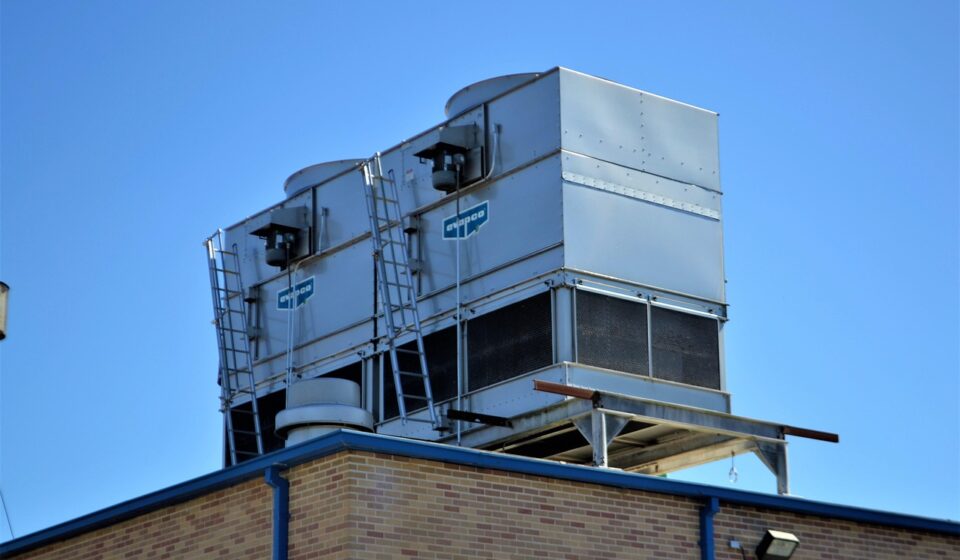
Cooling towers are widely used because evaporation can reject heat efficiently, but they require disciplined water management. DOE guidance notes that cooling towers dissipate heat from recirculating water used to cool chillers, air conditioners or process equipment, and that newer designs and improved materials can reduce water and energy requirements. (energy.gov)
Selection criteria that matter more than the equipment label
Heat load and temperature lift
The first design input is the heat load over time, not only the peak tonnage. A system serving a batch process may see sharp load spikes, while a continuous production line may run near a steady load for long periods. Engineers also need the required supply temperature, return temperature and acceptable variation. A small change in target temperature can affect the economics of chillers, cooling towers and heat recovery.
Temperature lift is often the hidden cost driver. Removing heat at 55°F chilled water is very different from removing heat at 34°F glycol or from rejecting condenser heat at high outdoor wet-bulb temperatures. The lower the process temperature and the higher the heat rejection temperature, the more work the refrigeration or chiller system must do. For that reason, some upgrades focus less on buying larger machines and more on raising process setpoints where product quality allows.
Ambient conditions and water availability
Local climate changes the balance between evaporative and dry cooling. In hot, dry climates, evaporative systems may perform well but consume water. In humid climates, wet-bulb temperature limits how low condenser water can realistically go. In water-stressed locations, dry coolers or hybrid systems may justify higher power consumption when water risk, discharge limits or permitting constraints dominate the decision.
Redundancy and maintenance access
Cooling system reliability should be designed around production consequences. A comfort-cooling outage is inconvenient; a process-cooling failure can stop a line, scrap product or create a safety hazard. Redundancy may include N+1 chillers, multiple pumps, isolated tower cells, bypasses, standby controls and spare heat-exchanger capacity. Maintenance access matters as well. Teams need safe ways to clean strainers, inspect tower fill, service compressors and verify sensors without shutting down the entire plant.
Efficiency and water management are connected
Energy and water should be evaluated together. For example, a fouled condenser or poorly controlled chilled-water loop can increase compressor power and add heat to the condenser side, which then increases cooling tower load. DOE notes that increased load on a chilled-water system raises electrical consumption and also increases the load on the evaporative cooling process, which uses more water. (energy.gov)
Useful efficiency work usually starts with measurement. Plants should track supply and return temperatures, flow, pressure drop, compressor power, fan power, pump power, makeup water, blowdown and ambient conditions. These data points help show whether the system is limited by heat-transfer surfaces, water chemistry, incorrect setpoints, simultaneous heating and cooling, valve positions or part-load operation.
- Clean heat-transfer surfaces. Scaling, biofilm and fouling reduce heat transfer and force compressors, pumps or fans to work harder.
- Review setpoints. Overly cold chilled water or unnecessarily low condenser-water targets can add energy use without improving production quality.
- Use variable-speed control carefully. Variable-speed pumps and fans can reduce power at part load, but only if sensors and control logic are stable.
- Separate process loops where needed. A dirty process loop may be better isolated with a heat exchanger instead of contaminating the primary cooling loop.
- Manage tower cycles and blowdown. Water treatment should balance corrosion, scale, biological growth and water consumption rather than maximizing one metric alone.
Refrigerant and safety planning shape lifecycle risk
Refrigerant decisions are now long-term business decisions. In the United States, the AIM Act framework directs the EPA to phase down production and consumption of hydrofluorocarbons by 85% from historical baseline levels by 2036. EPA also describes sector-based transitions for refrigeration, air conditioning and heat pump equipment, with restrictions that vary by equipment type and date. Plant teams should verify current requirements before specifying new equipment or replacing major components. (epa.gov) (epa.gov)
This does not mean every facility should choose the same refrigerant. Ammonia can be efficient and is common in industrial refrigeration, but it requires strong safety management. Carbon dioxide systems can reduce direct greenhouse-warming impact, but they operate at higher pressures and require appropriate design expertise. Hydrocarbons and A2L refrigerants may fit some applications but introduce flammability considerations. HFO and HFO-blend refrigerants may reduce global warming potential but still require attention to availability, compatibility and service practices.
For ammonia refrigeration in the United States, OSHA states that its Process Safety Management standard applies to systems containing 10,000 pounds of ammonia or greater. Even facilities below that threshold should not treat ammonia as a casual utility; OSHA’s ammonia refrigeration materials describe hazard recognition, process hazard analysis concepts and control practices that remain useful for safer operation. (osha.gov) (osha.gov)
Cooling towers also carry a biological risk-management obligation. ASHRAE’s water system risk management guidance addresses microbial control and hazards in building water systems, including cooling towers and condensers. For industrial sites, this means water treatment, cleaning, inspection, drift control and shutdown or startup procedures should be part of operating discipline, not only vendor service tasks. (ashrae.org) See also: automation and controls.
Heat recovery and controls are changing the cooling conversation
Many plants still view cooling as a one-way path from process heat to the atmosphere. That approach can miss a useful opportunity: some rejected heat may be recovered for wash water, space heating, boiler feedwater preheating or low-temperature process needs. DOE estimates that 20% to 50% of industrial energy input is lost as waste heat through exhaust gases, cooling water, hot equipment surfaces and heated products. Not all of that heat is recoverable at a practical cost, but the size of the range explains why heat mapping is worth doing before a major cooling upgrade. (energy.gov)
Industrial heat pumps can make some recovery projects more practical by upgrading a waste-heat stream to a more useful temperature. DOE describes industrial heat pumps as active heat-recovery equipment that can raise the temperature of a waste-heat stream for uses such as space heating, hot water and other applications. The best candidates usually have steady waste heat, a nearby heat user and energy prices that make recovered heat worth more than the electricity consumed by the heat pump. (betterbuildingssolutioncenter.energy.gov)
Digital controls can also improve industrial cooling systems, but only when they are tied to clear operating goals. Dashboards, alarms and optimization software should help operators see whether a plant is meeting required temperatures at the lowest reasonable combined cost of power, water, chemicals and maintenance. A control system that chases minimum energy without protecting process temperature, condenser pressure limits or water chemistry can create new risks.
A practical audit checklist before an upgrade
Before replacing major cooling equipment, plant teams should complete a structured audit. The aim is to avoid solving a control, fouling or process problem with oversized capital equipment.
- Define the process requirement. Confirm the actual temperature, flow and uptime needs for each production area.
- Measure current performance. Collect representative operating data across production levels and weather conditions.
- Identify constraints. List limits related to water, discharge, floor space, roof loading, noise, electrical capacity, refrigerant rules and maintenance staffing.
- Separate peak load from normal load. Design for reliability at peak conditions, but optimize controls for the hours when the system usually operates.
- Check low-cost improvements first. Clean heat exchangers, repair valves, correct sensors, tune setpoints and balance flows before assuming equipment capacity is insufficient.
- Model lifecycle cost. Include energy, water, treatment chemicals, refrigerant, maintenance, downtime exposure and likely compliance work.
- Review safety and training. Confirm operator competence, emergency procedures, ventilation, detection, lockout practices and documentation before startup.
The most resilient industrial cooling systems are usually not the most complex systems. They are the systems whose design assumptions match the process, whose controls are understandable to operators and whose maintenance requirements are realistic for the facility.
Frequently asked questions
What is the difference between process cooling and comfort cooling?
Process cooling removes heat to maintain product quality, equipment conditions or manufacturing temperatures. Comfort cooling is primarily for people and occupied spaces. Some plants need both, but process cooling usually has tighter uptime requirements and more direct production consequences.
Are cooling towers always more efficient than air-cooled systems?
Not always. Cooling towers can reject heat efficiently through evaporation, but they use water and require treatment. Air-cooled systems avoid evaporative water use but may consume more fan or compressor energy in hot weather. The better choice depends on climate, water cost, discharge rules, process temperature and reliability needs.
When should a plant consider heat recovery from cooling systems?
Heat recovery deserves review when the facility has a steady cooling load and a nearby need for low- or medium-temperature heat. It is less attractive when waste heat is intermittent, too low in temperature, far from the heat user or available only when there is no matching demand.
What should be checked before changing refrigerants?
Before changing refrigerants, confirm equipment compatibility, pressure ratings, oil compatibility, controls, safety classification, leak detection, ventilation, technician training, code requirements and supply availability. A refrigerant retrofit should be treated as an engineering and safety project, not only a purchasing decision.
How often should industrial cooling performance be reviewed?
Critical systems should be monitored continuously, with formal reviews at least seasonally or whenever production loads, water chemistry, refrigerant regulations, equipment condition or utility prices change. A yearly review is often too slow for plants where cooling directly limits output.