How to choose a conveyor belt for industrial production systems
A conveyor belt should be specified for the work it has to do, not simply chosen from a catalog description. The right choice depends on the conveyed product or bulk material, required throughput, belt width and speed, incline angle, pulley size, impact at loading points, operating environment, cleaning requirements, and safety obligations. In industrial production systems, a belt that is too light, too narrow, hard to track, or difficult to clean can lead to downtime, product loss, premature wear, and serious guarding risks. A better specification starts with application data, then matches belt construction, cover material, drive design, controls, and maintenance practices to the actual duty cycle.
What a conveyor belt does in a production system
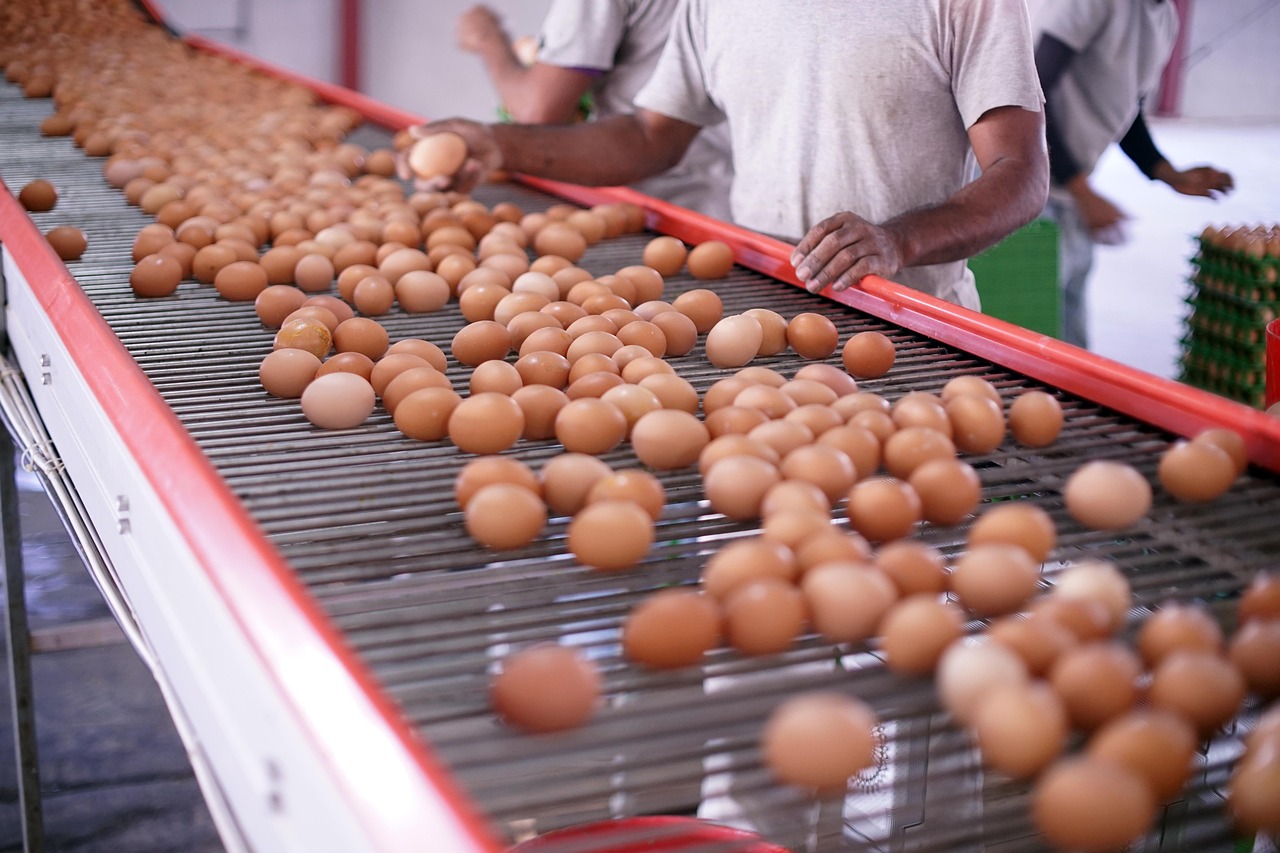
A conveyor belt is a continuous moving surface used to transport products, packages, components, or bulk materials between process steps. In factories and warehouses, belt conveyors often move unit loads such as cartons, trays, parts, food products, or assemblies. In bulk handling, they carry loose materials such as aggregates, grain, coal, minerals, recyclables, pellets, or powders.
The belt itself is only one part of the system. A working conveyor also includes pulleys, idlers or slider beds, a drive unit, take-up or tensioning equipment, skirting, cleaners, guards, sensors, emergency stops, and supporting structure. Because these components interact, a belt change can affect tracking, power demand, sanitation, noise, belt life, and operator access.
For broader equipment context, see the site’s production systems section, which covers industrial handling and process equipment topics.
Start with the application data before selecting a belt
Good conveyor belt selection begins with measurable requirements. A supplier or engineer will usually ask for the product or material, weight, dimensions, throughput target, conveyor length, elevation change, loading method, duty cycle, and operating environment. Without these inputs, the selection becomes guesswork.
For unit handling, product stability can matter as much as weight. Small, tall, round, wet, oily, fragile, or irregular items may require a specific belt surface, side guides, lower transfer gaps, or gentler acceleration. For bulk materials, the key inputs include lump size, bulk density, abrasiveness, moisture, temperature, angle of repose, and whether the material is sticky, dusty, corrosive, or sharp.
The usual early design questions include:
- What is being conveyed? Define size, weight, shape, temperature, moisture, abrasiveness, and contamination limits.
- How much must move per hour? Throughput determines belt width, belt speed, loading profile, and motor power.
- Is the conveyor flat, inclined, declined, curved, or reversible? Geometry affects belt surface, tension, tracking, and hold-down needs.
- How is material loaded? Impact and off-center loading can shorten belt life and cause mistracking.
- What cleaning or sanitation is required? Food, pharmaceutical, recycling, and dusty bulk applications have very different cleaning priorities.
- Where can maintenance safely access the conveyor? Guarding, lockout points, crossovers, and working space should be planned before installation.
Key conveyor belt types and where they fit
No single belt type suits every production system. The right construction depends on the load, environment, pulley layout, and performance expectations.
| Belt type | Common use | Selection notes |
|---|---|---|
| Fabric reinforced rubber belt | Bulk materials, aggregates, recycling, cement, mining, agriculture | Often chosen for abrasion resistance, impact resistance, and long conveyor runs. Cover grade and carcass strength are critical. |
| PVC or PU belt | Packaging, light manufacturing, food handling, electronics, general unit loads | Can offer smooth, textured, or food-suitable surfaces. Check chemical exposure, oil resistance, and cleaning method. |
| Modular plastic belt | Food processing, wet areas, cooling lines, curved conveyors, frequent washdown | Useful where open area, positive tracking, replaceable modules, or drainage is important. Transfer design needs attention. |
| Metal mesh or steel belt | High-temperature processes, baking, heat treatment, drying, cooling, heavy industrial duties | Selected for temperature, strength, drainage, or heat transfer. Noise, fatigue, and sprocket or pulley compatibility matter. |
| Cleated or profiled belt | Inclined conveying, loose products, small parts, agricultural goods, packaged items on slopes | Cleat height, spacing, sidewalls, and cleaning access must match the product and incline angle. |
For many applications, the best belt is not the strongest available belt. Overspecifying can increase pulley size, energy use, cost, and maintenance difficulty. Underspecifying can lead to stretching, cover damage, splice failure, tracking problems, and unscheduled stops. The practical target is adequate strength, compatible surface properties, clean transfer behavior, and predictable service life.
Width, speed, tension, and loading are connected
Belt width and speed should be selected together. In bulk handling, capacity depends on the cross-sectional area of material on the belt, belt speed, material density, and incline conditions. In unit handling, width must support the product and leave enough edge clearance for tracking, guides, and normal variation in product position.
Running a belt faster can increase throughput, but it can also increase wear, noise, dust, product instability, impact at transfers, and stopping distance. A wider belt at a moderate speed may be more stable than a narrow belt running too fast. Conversely, a belt that is much wider than the product may waste energy and space.
Tension is another critical variable. Too little tension can cause drive slip and tracking instability. Too much tension can overload bearings, pulleys, shafts, splices, and the belt carcass. Pulley diameter also matters because some belts cannot bend around small pulleys without fatigue or delamination. A reliable specification should consider the belt manufacturer’s minimum pulley diameter, expected loaded tension, take-up range, and splice method.
Loading design often determines belt life. A belt that receives heavy material from a height may need impact beds, correct chute design, skirting, or a cover compound with better cut and gouge resistance. Off-center loading should be avoided because it is a common cause of mistracking, uneven cover wear, and material spillage.
Safety and compliance cannot be added as an afterthought
Conveyors appear simple, but moving belts, rollers, pulleys, chains, gears, and transfer points can create nip, entanglement, crushing, and shear hazards. Public guidance from OSHA emphasizes guarding for nip points and moving parts, lockout or tagout during hazardous maintenance, accessible stop controls, and warning before start-up in relevant conveyor applications. HSE guidance in the United Kingdom similarly highlights guarding, prevention of access to dangerous moving parts, and the need to control spillage and maintenance hazards.
Safety design should cover the full conveyor route, not only the drive end. Review tail pulleys, return rollers, underside access, transfer points, loading zones, take-up areas, elevated sections, and places where people may cross over or pass beneath the conveyor. Crossovers, guardrails, emergency stop devices, warning signals, and safe cleaning procedures should be part of the original layout.
Lockout and maintenance access deserve special attention. Many incidents happen when personnel clear jams, adjust tracking, clean spillage, or replace belts while stored energy or unexpected start-up remains possible. A safe system should define isolation points, test-for-zero-energy steps, blocked or lowered gravity loads where applicable, and clear responsibility for authorized maintenance personnel.
Standards and regulations vary by country, industry, and application. In North America, designers often refer to OSHA requirements and recognized conveyor design practices such as ANSI/CEMA guidance where applicable. In food, pharmaceutical, mining, ports, quarries, and construction, additional rules or buyer specifications may apply. The safest approach is to verify the specific jurisdiction and industry standard before procurement.
Maintenance factors that affect belt life
A conveyor belt usually fails early for a reason. Common causes include mistracking, poor loading, wrong cover material, inadequate cleaning, seized rollers, pulley lagging problems, excessive tension, undersized pulleys, chemical attack, heat exposure, or damaged splices. See also: automation and controls.
Tracking should be treated as a system issue, not just a belt issue. Check whether the frame is square, pulleys are aligned, idlers rotate freely, loading is centered, build-up is removed, and return rollers are clean. Adjustments should be small and documented. Repeated aggressive tracking adjustments can hide the original cause and create new stress points.
Cleaning is equally important. Carryback on bulk conveyors can build up on return idlers, cause belt wander, create spillage piles, and increase housekeeping risk. In food or wet processing, trapped debris can become a sanitation problem. The belt surface, scraper type, washdown method, drainage, and access panels should be chosen together.
A practical maintenance plan should include:
- Routine inspection of belt edges, top cover, underside, splices, cleats, and sidewalls.
- Checks for unusual noise, heat, vibration, roller seizure, or pulley lagging wear.
- Scheduled cleaning of pulleys, idlers, belt cleaners, chutes, and return paths.
- Verification that guards, emergency stops, pull cords, and warning devices remain functional.
- Review of downtime records to identify repeat failures rather than replacing the same parts again.
Condition monitoring is becoming more common on higher-value conveyors. Sensors for belt drift, speed, blocked chute conditions, motor current, bearing temperature, vibration, and belt damage can help maintenance teams respond before a minor defect becomes a production stop. The business case is strongest where downtime is expensive, the conveyor is long, or access is difficult.
Total cost is more useful than purchase price
The cheapest belt is not always the lowest-cost belt. A low initial price can be misleading if the belt requires frequent replacement, causes product damage, consumes more power, needs excessive cleaning, or increases downtime. Total cost includes belt price, installation labor, splicing, spare inventory, energy use, maintenance hours, cleaning time, lost production, and safety risk.
Energy use is influenced by belt weight, rolling resistance, drive efficiency, conveyor alignment, idler condition, tension, loading, and speed control. Variable frequency drives can help some systems start smoothly, reduce mechanical shock, and match speed to production demand. However, speed control should be engineered carefully because too low a speed can increase material loading depth, spillage, or transfer problems in some applications.
It is also worth considering standardization. Plants with many conveyors may reduce spare parts complexity by standardizing belt widths, pulley sizes, cleaners, bearings, and sensors where the duty allows. Standardization should not override application needs, but it can simplify maintenance and reduce emergency purchasing.
A practical specification checklist
Before purchasing or replacing a conveyor belt, prepare a short written specification. This reduces ambiguity between operations, engineering, maintenance, purchasing, and suppliers.
- Conveyed material or product details, including weight, size, temperature, moisture, oil, chemicals, abrasiveness, and fragility.
- Required capacity, line speed, duty cycle, start-stop frequency, and whether accumulation is needed.
- Conveyor geometry, including length, width, incline or decline angle, transfer height, curve requirements, and available floor space.
- Belt construction requirements, including carcass type, cover material, surface texture, cleats, sidewalls, tracking features, and splice method.
- Drive and pulley data, including pulley diameters, take-up type, motor power, speed control, and reversing needs.
- Safety requirements, including guarding, emergency stops, lockout points, crossovers, warning signals, and maintenance access.
- Cleaning and environmental requirements, including washdown, dust control, corrosion exposure, outdoor weather, sanitation, and drainage.
- Maintenance expectations, including inspection intervals, spare belt length, spare rollers, cleaners, and downtime limits.
The main lesson is straightforward: a conveyor belt is a production asset, not a disposable accessory. When selection is based on real application data and supported by safe design, good loading, proper cleaning, and planned maintenance, the conveyor is more likely to deliver stable throughput with fewer surprises.
Frequently asked questions
What is the most important factor when choosing a conveyor belt?
The most important factor is the actual duty of the conveyor. That includes the material being moved, required capacity, belt speed, load, incline, environment, cleaning needs, and safety requirements. Belt material alone is not enough to make a reliable selection.
How do I know what conveyor belt width I need?
For unit loads, the belt must support the product with enough edge clearance for stable tracking and guides. For bulk materials, width is typically selected with capacity, material density, belt speed, troughing, lump size, and loading profile in mind. If capacity is uncertain, confirm it before ordering the belt.
Why does a conveyor belt keep mistracking?
Common causes include off-center loading, dirty pulleys, seized rollers, misaligned pulleys, an out-of-square frame, uneven belt tension, damaged splices, or material build-up on the return side. Tracking should be corrected by finding the root cause, not only by adjusting idlers repeatedly.
When should a conveyor belt be replaced instead of repaired?
Replacement is usually more practical when the belt has widespread carcass damage, repeated splice failures, severe edge wear, chemical or heat degradation, loss of tracking stability, or cover damage that affects product quality or safety. Minor localized cover damage may be repairable if the belt structure remains sound.
Are conveyor belts regulated?
Conveyor systems are subject to workplace safety rules and industry standards that depend on location and application. Requirements may cover guarding, emergency stops, warning signals, lockout or tagout, safe access, and maintenance procedures. Always verify the rules that apply to the specific facility and industry.