How to evaluate conveyor systems manufacturers for industrial production lines

Why manufacturer selection affects the whole production line
Conveyor systems manufacturers should not be compared only by catalog models, quoted price, or delivery lead time. In an industrial production line, a conveyor is part of a wider material flow that includes labor, controls, safety systems, maintenance routines, and floor-space limits. A capable manufacturer helps define the load, speed, transfer points, guarding, controls architecture, documentation, and service model before equipment is purchased.
The wrong fit can create bottlenecks, poor maintenance access, product damage, safety exposure, or costly retrofits after installation. For manufacturers, warehouses, packaging plants, food operations, mining suppliers, and other industrial facilities, the question is not simply who can sell a conveyor. It is who can engineer a system that matches the process.
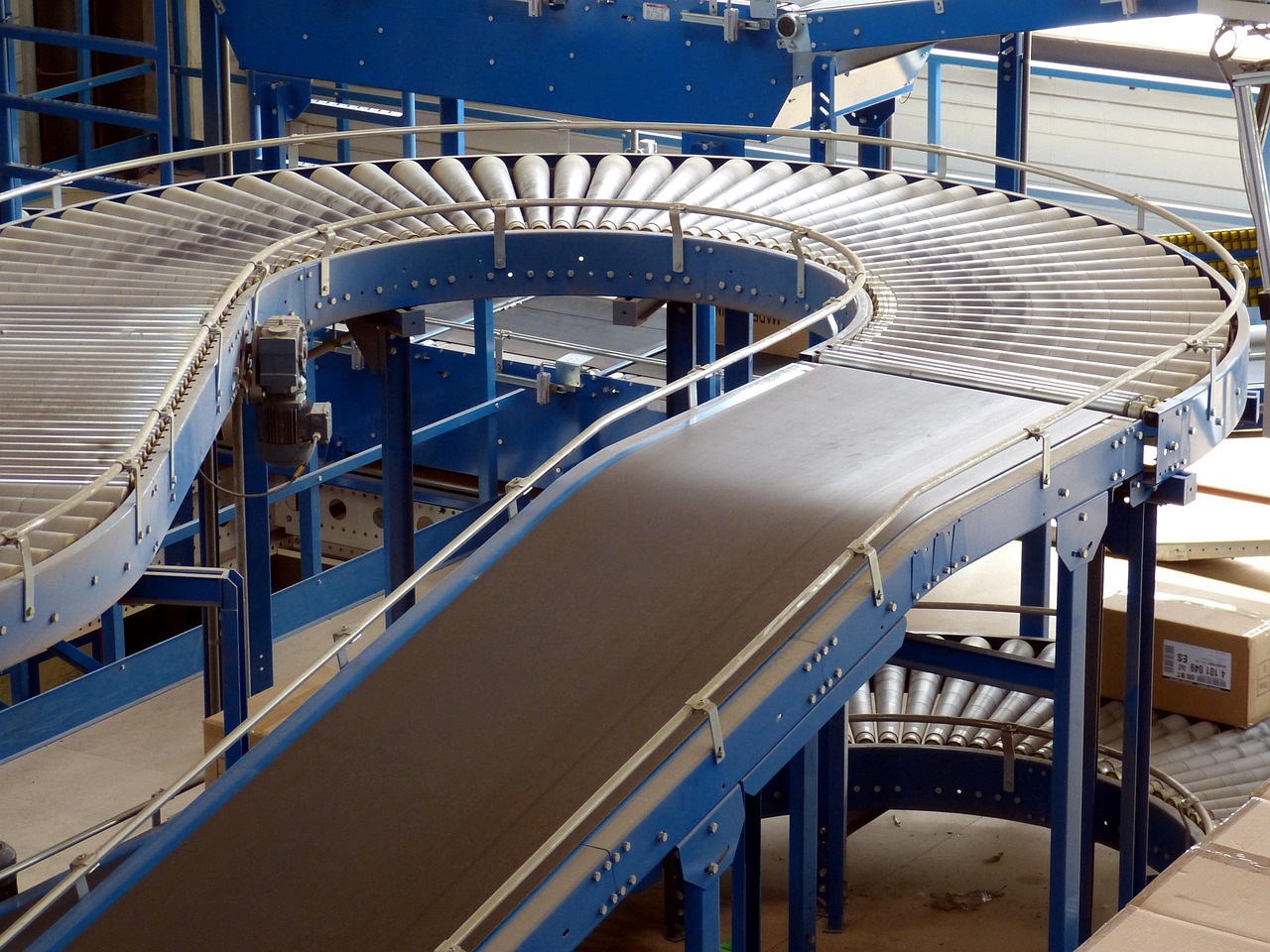
This becomes more important when conveyors connect multiple machines within broader production systems. A conveyor that works well as a standalone device may still fail the project if it does not match upstream and downstream equipment, product variability, cleaning requirements, or future automation plans.
Start with the application before comparing suppliers
A useful comparison starts with the application, not the manufacturer list. Conveyor systems are built around load behavior, throughput, plant layout, duty cycle, environmental limits, and the level of automation required. A supplier with strong parcel-handling experience may not be the right choice for abrasive bulk materials. A company experienced in sanitary food production may use very different design assumptions from one focused on automotive assembly or mining transfer points.
Before contacting manufacturers, buyers should define the product or material, load dimensions, weight range, surface condition, fragility, accumulation needs, target throughput, operating hours, washdown or dust exposure, temperature range, and available floor or overhead space. These facts help determine whether a belt, roller, chain, screw, slat, overhead, vertical, or motor-driven roller design is realistic.
Unit load and bulk handling are different design problems
Unit-load conveyors move discrete items such as cartons, totes, pallets, trays, or workpieces. Their design often focuses on accumulation, sorting, singulation, barcode or vision integration, gentle transfer, and ergonomic access. Bulk-handling conveyors move loose materials such as grain, aggregates, powders, pellets, ore, or scrap. Their design depends more heavily on flow properties, dust control, spillage, belt loading, chute design, incline angle, wear resistance, and cleanup access.
CEMA’s published ANSI/CEMA standards reflect this difference by covering areas such as conveyor terminology, roller conveyors, belt conveyors, screw conveyors, live roller conveyors, motor-driven roller conveyors, welded steel pulleys, and bulk material classification. This does not mean every project requires the same documents, but it shows why manufacturer specialization matters.
Environment and duty cycle narrow the field quickly
The same throughput requirement can lead to very different conveyor choices in a dry packaging room, a cold-storage warehouse, a foundry, a clean pharmaceutical area, or a wet food-processing line. Cleaning methods, corrosion resistance, guarding style, belt material, bearing selection, and electrical protection should be discussed early.
Duty cycle is just as important. A conveyor that runs one shift per day has different motor, belt, roller, and maintenance demands than a line that runs nearly continuously. Buyers should ask manufacturers to explain the assumptions behind the design. If the proposal does not document operating hours, start-stop frequency, incline, load variation, speed, allowable downtime, and environmental exposure, the quote may be incomplete rather than inexpensive.
Safety and standards should be part of the engineering discussion
Safety is not an accessory added after layout approval. It affects conveyor geometry, access points, transfers, walkways, emergency stops, control zones, lockout procedures, signage, and maintenance methods. In the United States, OSHA rules and general machine-guarding obligations are relevant to many conveyor applications, while exact requirements depend on the industry, workplace conditions, and applicable standard. OSHA’s construction conveyor rule, for example, addresses emergency stop switches and requires that a conveyor cannot be restarted until an actuated stop switch has been reset. Other OSHA provisions address guarding, employee exposure, and safe operation in specific contexts.
CEMA also publishes safety resources, labels, placement guidance, and technical guidance developed for conveyor manufacturers and users. These materials are not a substitute for a site-specific safety program, but they are useful indicators of the safety language and design practices a manufacturer should understand.
Ask for evidence, not only assurances
A credible manufacturer should be able to discuss applicable standards, risk points, and documentation without relying on vague assurances. Useful evidence may include layout drawings showing guarded areas, emergency-stop locations, access points, pinch-point controls, crossover provisions, lockout considerations, warning labels, operator manuals, and maintenance instructions.
For projects involving integrators, the buyer should clarify who is responsible for the final risk assessment: the equipment manufacturer, the system integrator, the owner, or a combination of parties. Conveyors often become more hazardous when they are connected to adjacent equipment, so interface risks should not be left undefined.
Engineering depth is a stronger signal than a long product list
Many conveyor systems manufacturers publish broad product families, but product range alone does not prove engineering fit. The stronger signal is how the manufacturer approaches layout, flow, controls, and lifecycle constraints. A serious proposal should show that the supplier understands where the conveyor starts and ends, what happens at transfer points, how products accumulate or separate, how jams are cleared, and how maintenance teams will access wear components.
For high-throughput systems, buyers should ask whether the manufacturer can support throughput calculations, product spacing assumptions, accumulation logic, drive zoning, and line-balancing discussions. For plants where the product mix changes often, modularity and adjustment range may matter more than maximum rated speed. For heavy industrial service, the focus may shift to structure, wear surfaces, spillage control, and component replacement time.
Controls integration is now a central buying factor
Modern conveyor projects often require more than mechanical movement. Controls may need to communicate with production equipment, warehouse management systems, scanners, sensors, safety circuits, variable-frequency drives, programmable logic controllers, or data collection tools. The Material Handling Industry’s conveyor and sortation resources describe these systems as part of the movement and routing of materials across retail, wholesale, distribution, and manufacturing operations. In practical terms, the conveyor is increasingly a data and coordination asset, not only a mechanical transport device.
Manufacturers should be clear about what they supply directly and what requires a controls integrator. Buyers should ask about control panel scope, network protocols, sensor locations, fault reporting, speed control, zone logic, safety interlocks, and troubleshooting documentation. If uptime is critical, it is also reasonable to ask how common faults are diagnosed and whether maintenance teams can reset or replace components without waiting for specialized outside support.
Documentation affects commissioning and maintenance
Poor documentation can make a well-built conveyor difficult to own. At minimum, industrial buyers should expect drawings, a bill of materials, installation guidance, operating instructions, preventive maintenance tasks, spare-parts lists, electrical schematics where applicable, and safety information. Documentation should match the delivered equipment, not a generic product family. This becomes especially important when conveyors are modified during installation or integrated with equipment from multiple suppliers. See also: automation and controls.
Compare total cost instead of purchase price alone
A low initial quote can become expensive if the conveyor requires frequent adjustment, causes product damage, consumes excessive maintenance labor, limits future layout changes, or lacks readily available spare parts. Total cost should include engineering time, installation complexity, floor-space impact, energy use, cleaning time, expected wear, spare parts, controls support, downtime risk, and the ease of adding future sections or sensors.
The following framework helps buyers separate price from value.
| Evaluation area | What to ask conveyor systems manufacturers | Why it matters |
|---|---|---|
| Application fit | What load data, duty cycle, speed, and environment assumptions are used? | Prevents under-designed or over-designed equipment. |
| Safety | How are guarding, emergency stops, access, warning labels, and lockout needs addressed? | Reduces hazards and avoids late redesign. |
| Integration | Who is responsible for PLC logic, sensors, drives, data signals, and upstream or downstream interfaces? | Prevents scope gaps during commissioning. |
| Maintenance | Which wear parts are expected to be replaced, and how quickly can they be accessed? | Controls downtime and labor cost. |
| Documentation | Will final drawings, manuals, schematics, and spare-parts lists match the installed system? | Supports training, troubleshooting, and audits. |
| Scalability | Can the design support additional zones, sensors, curves, transfers, or capacity changes? | Protects the investment as production changes. |
Questions to ask before shortlisting manufacturers
The strongest supplier conversations are specific. Instead of asking whether a manufacturer can provide a conveyor, buyers should ask questions that reveal design discipline and project fit.
- Which conveyor types do you build most often for this application, and which types would you rule out?
- What product, load, speed, duty cycle, and environmental data do you need before quoting?
- How do you handle transfers, accumulation, incline sections, product orientation, and jam clearing?
- Which standards, safety resources, or internal design rules guide your guarding and emergency-stop approach?
- Do you provide mechanical design only, or also controls, panels, programming, installation, and commissioning?
- How are spare parts identified, stocked, and documented after installation?
- What information will be included in the final documentation package?
- How would the design change if throughput increases, product dimensions change, or another machine is added later?
These questions also help separate manufacturers from integrators. A manufacturer may build the conveyor hardware, while an integrator may combine conveyors, robots, packaging machines, inspection systems, sorters, and software into one operating line. Some firms perform both roles, but the buyer should confirm the boundary of responsibility in writing.
Common mistakes when choosing conveyor systems manufacturers
One common mistake is comparing quotes that are not based on the same scope. One proposal may include controls, guarding, installation support, and detailed documentation, while another includes only mechanical equipment. Without a scope matrix, the lower price may simply reflect missing responsibilities.
A second mistake is treating throughput as a single number. Real throughput depends on product spacing, accumulation, operator behavior, machine cycle times, stoppages, inspection points, and transfer reliability. A conveyor rated for a certain speed may not achieve the required line performance if upstream or downstream equipment creates interruptions.
A third mistake is ignoring maintenance access. Compact layouts can save floor space, but they may make belts, rollers, bearings, drives, or sensors hard to reach. Maintenance time should be considered during layout review, not after production starts.
A fourth mistake is buying for today’s product only. If product sizes, packaging formats, pallet patterns, or inspection requirements may change, the conveyor design should allow reasonable adjustment. Modularity, standard components, and clear documentation can reduce the cost of later changes.
Frequently asked questions
What is the difference between a conveyor manufacturer and a conveyor integrator?
A conveyor manufacturer designs and builds conveyor equipment or modules. A conveyor integrator combines conveyors with controls, sensors, machines, safety systems, and software to create a complete operating line. Some companies do both, but buyers should confirm the exact scope before comparing proposals.
Which conveyor type is suitable for a production line?
The answer depends on the load, process, environment, and control requirements. Belt conveyors are common for continuous movement and varied item shapes. Roller conveyors are common for cartons, totes, and pallets. Chain, slat, screw, overhead, and vertical conveyors are used when the material, route, or duty cycle requires them. A manufacturer should explain why a type fits the application instead of simply quoting a familiar product.
How many manufacturers should a buyer compare?
For a simple replacement conveyor, two or three qualified quotes may be enough. For a new production line, high-throughput warehouse, sanitary application, or heavy-duty bulk-handling project, a deeper technical comparison is usually justified. The goal is not to collect the largest number of quotes, but to compare suppliers with relevant experience and a clearly defined scope.
What information should be prepared before requesting a quote?
Prepare product dimensions, weight range, throughput target, operating schedule, layout constraints, floor conditions, cleaning requirements, environmental exposure, power and controls expectations, safety constraints, and any future expansion needs. Photos, drawings, and process descriptions help manufacturers identify transfer and access issues earlier.
Is the lowest conveyor quote usually the best choice?
Not necessarily. A lower quote may be appropriate if the scope is clear and the application is simple. However, buyers should check whether controls, guarding, documentation, installation support, commissioning, spare parts, and maintenance access are included. The better comparison is total lifecycle value, not only purchase price.
Final selection should be based on fit, responsibility, and support
Choosing among conveyor systems manufacturers is ultimately a risk-management decision. The preferred supplier should understand the material flow, provide a design that matches the operating environment, address safety and documentation clearly, define integration responsibilities, and support the equipment after startup. Price still matters, but it should be evaluated alongside engineering evidence, maintainability, controls compatibility, and future flexibility.
For industrial buyers, the most reliable process is to define the application first, compare proposals against the same scope, and ask each manufacturer to explain the assumptions behind the design. That approach makes the selection more transparent and reduces the chance of costly surprises after installation.