Bulk material flow problems and design checks for reliable handling systems
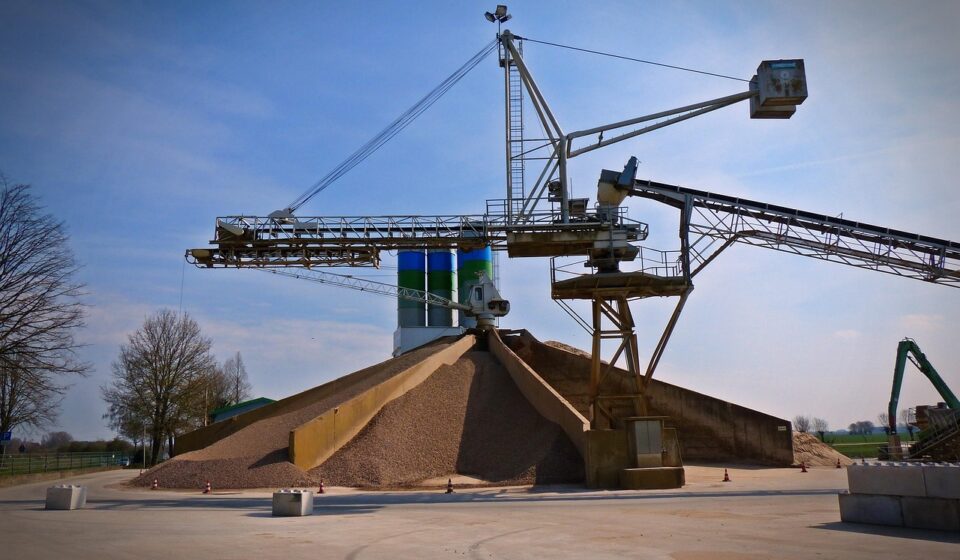
Bulk material flow describes how powders, granules, pellets, ores, biomass, cementitious products and other loose solids move through storage, feeding, conveying and transfer equipment. Reliable flow is not only a matter of motor power or conveyor capacity. It depends on particle size distribution, moisture, cohesion, wall friction, hopper geometry, feeder interface, air movement, dust control and operating discipline. When these factors are not matched, a plant can see arching, ratholing, segregation, flooding, belt spillage or unsafe cleanup work. For a broader context on industrial material flow, the key lesson is straightforward: bulk solids should be treated as engineered materials, not as fluids that will automatically drain from any vessel.
What bulk material flow means in a plant
In industrial equipment discussions, bulk material flow usually means the controlled movement of unpackaged solids from one process step to another. The route may include a receiving hopper, storage silo, bin activator, screw feeder, belt feeder, rotary valve, bucket elevator, pneumatic conveying line, troughed belt conveyor, transfer chute, screen, crusher, mixer or loadout spout. Each component affects the next one. A well-designed silo can still perform poorly if the feeder draws material from only a narrow part of the outlet. A correctly sized conveyor can still create dust if the upstream chute loads the belt off center or at the wrong trajectory.
Bulk solids do not behave like liquids. They can carry shear strength, and their stress state changes during filling, storage and discharge. Fine powders may aerate and flood. Wet or cohesive materials may gain strength after resting under compression. Granular mixtures may segregate by size or density as they fall, pile or vibrate. Abrasive materials can wear liners and change wall friction over time. These behaviors explain why the same hopper angle or belt speed cannot be assumed to work for every material.
Public technical references and guidance from AIChE, ASTM, CEMA, OSHA, NIOSH, MSHA, ASME and NFPA all support the same practical approach: flow reliability, dust control and safety should be evaluated together during design, operation and troubleshooting. The exact standard or regulation that applies depends on jurisdiction, commodity, facility type and the authority having jurisdiction.
The flow patterns that determine discharge behavior
Most bin and hopper problems begin with the discharge pattern. Technical literature commonly distinguishes mass flow, funnel flow and expanded flow. In mass flow, the stored bulk solid is generally in motion during discharge, including material at the walls. This gives a more uniform residence time and reduces stagnant regions. In funnel flow, material moves through a central channel while solids remain stagnant near the vessel walls. Expanded flow combines a mass-flow lower section with a larger upper section that may behave more like funnel flow.
Mass flow is often preferred for materials that degrade, cake, segregate, spoil or require first-in/first-out handling. It usually requires a sufficiently steep and smooth hopper, a correctly sized outlet, and a feeder that withdraws material across the full outlet. Funnel flow can be acceptable for coarse, free-flowing and non-degrading materials, but it increases the importance of outlet sizing and rathole collapse control. Expanded flow may be useful where storage volume is large and full mass-flow construction would be impractical.
The preferred flow pattern is not selected by appearance alone. It is selected by comparing material flow properties with vessel geometry, wall surface, outlet dimension, feeder design and process requirements.
Common bulk material flow failures
Arching or bridging
Arching, also called bridging, occurs when a stable obstruction forms over the outlet and prevents discharge. It is common with cohesive powders, wet materials, compacted fines and some irregular particles. Operators may respond by hammering the bin, adding vibration or using air cannons. These methods can work in specific applications, but they can also compact material, damage equipment, create dust clouds or hide the real design issue. A better first question is whether the outlet is large enough for the measured material strength under actual storage conditions.
Ratholing and stagnant capacity
Ratholing occurs when a narrow flow channel empties above the outlet while material remains standing around it. The bin may appear to have inventory, but live capacity is much lower than expected. This can lead to erratic feeding, sudden material collapses, aged product, caking and dangerous manual intervention. Ratholing is strongly associated with funnel-flow behavior and cohesive solids. Corrective options may include changing the outlet, modifying the hopper section, adding an insert, improving wall lining or changing the feeder interface. The right choice depends on measured material properties and available headroom.
Segregation, flooding and uncontrolled discharge
Bulk solids can segregate when particles differ by size, density or shape. A falling stream may form a pile with coarse particles rolling outward while fines stay near the center. Vibration during transport can also separate fractions. The result may be quality variation, changing bulk density and unstable feed rates. Fine powders can create a different problem: if they retain or entrain air, they may flood through feeders or behave more like a fluid than expected. Discharge-rate calculations for fine powders should therefore account for air effects instead of treating the material as a simple dry granular solid.
Dust and carryback at transfer points
Conveyors often reveal flow problems that started upstream. Poor loading can overload one side of a belt, generate spillage, create carryback and increase airborne dust. NIOSH dust-control guidance for industrial minerals emphasizes enclosure, proper belt loading, skirting, local exhaust ventilation and control of carryback around transfer locations. In practical terms, the transfer point should be treated as a flow-control device, not just a steel box between two conveyors.
A practical design check from sample to discharge point
A useful bulk material flow review starts with the material, not the equipment catalog. Samples should represent the expected operating range, including moisture changes, fines content, temperature, particle degradation and storage time. A dry startup sample may not represent a rainy-season ore, a warm resin, a hygroscopic powder or a product that sits in a silo over a weekend.
ASTM D6773-22 describes a standard method for measuring bulk-solids properties with a Schulze ring shear tester, including unconfined yield strength, internal friction, bulk density and wall friction. These properties are used to evaluate hopper outlet size, wall slope, wall surface selection and flowability. The standard is not a complete equipment design manual, but it shows why laboratory flow testing is often more reliable than design decisions based on angle of repose alone.
A practical design or retrofit checklist should include:
- Material state: particle size distribution, fines percentage, shape, moisture, temperature, abrasiveness, corrosiveness and sensitivity to degradation.
- Storage condition: fill method, consolidation pressure, storage time, deaeration behavior and whether the material cakes or gains strength at rest.
- Flow pattern target: mass flow, funnel flow or expanded flow, selected according to product stability, segregation risk and required live capacity.
- Outlet geometry: opening size and shape, hopper half-angle, transition shape and risk of cohesive arching or ratholing.
- Wall surface: steel finish, liner type, wear condition and the wall friction expected after aging or abrasion.
- Feeder interface: whether the feeder withdraws material uniformly from the full outlet or creates preferential draw at one end.
- Downstream capacity: whether the conveyor, chute, valve or process vessel can accept the peak and average flow without backup.
This sequence helps prevent a common mistake: trying to solve a bin problem only at the outlet while ignoring the feeder or transfer point that controls the actual discharge behavior. See also: automation and controls.
Where conveyors and transfer points change the problem
Belt conveyors are widely used because they can move large volumes continuously over fixed routes. CEMA belt conveyor references are commonly used in North America for bulk belt design, including capacity, idlers, belt selection, loading and related engineering considerations. One practical rule from conveyor design practice is that the conveyor should receive material at a controlled rate and trajectory. If a chute drops material too far, too fast or off center, the belt may mistrack, spill, abrade or create dust even when its theoretical capacity is adequate.
Transfer chutes deserve close attention because they connect gravity flow with moving equipment. A good transfer should guide the material stream, reduce unnecessary impact, limit free fall, avoid dead pockets, keep material centered on the receiving belt and allow inspection and maintenance without unsafe entry. For sticky materials, self-cleaning geometry and accessible liners may matter more than initial steel thickness. For abrasive materials, liner selection and replacement access should be part of the flow strategy.
Instrumentation can help, but it should not be used to compensate for weak fundamentals. Level sensors, plugged-chute switches, belt scales, speed sensors, misalignment switches and motor current monitoring can provide early warning. They cannot, by themselves, make a cohesive material discharge from an undersized outlet or correct a chute that throws material against a skirtboard.
Safety and compliance considerations
Bulk material flow problems often create safety exposure because workers are asked to clear blockages, clean spillage, enter bins, adjust skirting or work near moving conveyors. Safety requirements vary by industry and location, but several public references are especially relevant. ASME B20.1-2024 addresses conveyor and conveying-system hazards for design, construction, installation, maintenance, inspection and operation. MSHA guidance and regulations for mining environments emphasize guarding of exposed moving parts that may be contacted. OSHA guidance on combustible dust warns that dust clouds can form during loading of silos, bins, hoppers and other bulk-storage areas, and that ignition sources can include hot bearings, overheated motors and misaligned belts.
Combustible dust requires particular care. NFPA 660, issued as a 2025 combustible dust standard, consolidates several earlier NFPA combustible-dust documents into one standard organized by material and facility type. Facilities should verify the applicable edition, local adoption status and authority requirements before relying on any single document. From an engineering perspective, dust generation, dust accumulation, ignition control, ventilation and housekeeping are part of material-flow reliability, not separate housekeeping details.
| Topic | Public reference commonly used | Why it matters to bulk material flow |
|---|---|---|
| Flow testing | ASTM D6773-22 | Supports measured design inputs for hopper outlets, wall friction and cohesive flow behavior. |
| Belt conveyor design | CEMA bulk belt conveyor publications | Supports capacity, loading, belt selection and transfer-point engineering decisions. |
| Conveyor safety | ASME B20.1-2024 | Addresses hazards in conveyor design, installation, operation, inspection and maintenance. |
| Dust control | NIOSH industrial minerals dust-control guidance | Highlights enclosure, ventilation, skirting and carryback control around conveying and transfer points. |
| Combustible dust | NFPA 660 2025 and OSHA guidance | Connects dust generation and accumulation with fire and deflagration risk. |
Troubleshooting matrix for existing equipment
When a plant already has a flow issue, the fastest useful review is often a symptom-to-cause matrix. The table below is not a substitute for engineering analysis, but it helps teams avoid treating every blockage as the same problem.
| Observed symptom | Likely areas to investigate | Useful first checks |
|---|---|---|
| No flow from hopper | Arching, outlet too small, excessive consolidation, high wall friction | Review material moisture and storage time; compare outlet with flow-test results; inspect liner condition. |
| Flow starts then stops | Ratholing, funnel flow, feeder starvation, collapsing channel | Check live capacity, draw pattern, feeder opening and whether stagnant material remains at the walls. |
| Erratic feed rate | Segregation, aeration, inconsistent feeder draw, upstream surging | Trend feeder speed, belt scale data, level changes and particle-size variation at discharge. |
| Belt spillage at loading zone | Off-center loading, excess impact, poor skirting, mistracking, chute plugging | Observe trajectory, loading angle, belt support, skirt wear and transfer enclosure condition. |
| High dust at transfer | Free fall, displaced air, poor enclosure, dry fines, carryback | Review drop height, enclosure volume, ventilation, belt cleaning and housekeeping frequency. |
| Frequent manual cleanout | Design mismatch, unsafe access, inadequate inspection points | Identify why buildup forms; review lockout, guarding, access platforms and cleanout method. |
The best troubleshooting reports separate facts from assumptions. Photographs, operating logs, material test results, moisture records, belt-scale trends and maintenance history are more useful than a general statement that the material is difficult. A material that flows well in one season, supplier lot or particle-size distribution may not behave the same way after a process change.
Frequently asked questions
Is angle of repose enough to design a hopper?
No. Angle of repose can help describe how a material piles, but it does not fully define cohesive strength, wall friction, consolidation behavior or discharge pattern. For difficult powders and cohesive solids, shear testing and wall-friction data provide more useful design inputs.
What is the difference between mass flow and funnel flow?
In mass flow, the bulk solid generally moves throughout the vessel during discharge, including near the walls. In funnel flow, material moves through a central channel while stagnant zones remain. Mass flow is often preferred for materials that segregate, cake, degrade or require first-in/first-out handling.
Can vibration solve poor bulk material flow?
Sometimes, but it is not a universal fix. Vibration may help some coarse or slightly sluggish materials, yet it can compact cohesive powders, increase segregation or fatigue equipment. The cause of the flow problem should be identified before adding flow aids.
Why do transfer points create so many dust and spillage problems?
Transfer points combine falling material, displaced air, changing velocity, belt impact and enclosure limits. If the chute does not control trajectory and loading, material can strike the belt or skirts poorly, generating dust, spillage, carryback and maintenance exposure.
When should a facility request detailed flow testing?
Testing is worth considering when a material is cohesive, fine, moist, variable, abrasive, temperature-sensitive, prone to caking, safety-critical or expensive to shut down. It is also useful before a major silo, hopper, feeder or transfer-point retrofit.