Machinery safety for industrial workplaces with risk assessment, guarding, and lockout/tagout
What machinery safety must achieve
Machinery safety is not a single guard, checklist, or training session. It is a managed system for identifying where people may be exposed to hazardous motion, hazardous energy, sharp tooling, hot surfaces, ejected material, or unstable loads, and then reducing that risk through design, safeguarding, energy control, procedures, training, and verification. In U.S. general industry, OSHA’s machine guarding rule requires protection for operators and other employees in the machine area from hazards such as the point of operation, ingoing nip points, rotating parts, flying chips, and sparks. OSHA’s lockout/tagout rule separately addresses unexpected energization, startup, or release of stored energy during servicing and maintenance. A practical program therefore starts with task-based risk assessment, not with buying devices after an incident. For related workplace context, see the site’s industrial safety section. (osha.gov)
Why machinery safety still deserves senior attention
Machine hazards remain visible in both enforcement and injury data. OSHA’s final Top 10 most frequently cited standards for fiscal year 2025, covering October 1, 2024 through September 30, 2025, listed control of hazardous energy at number four and machine guarding for general industry at number ten. This does not make them the only machinery safety issues that matter, but it does show that basic controls around hazardous motion and hazardous energy continue to fail in many workplaces. (osha.gov)
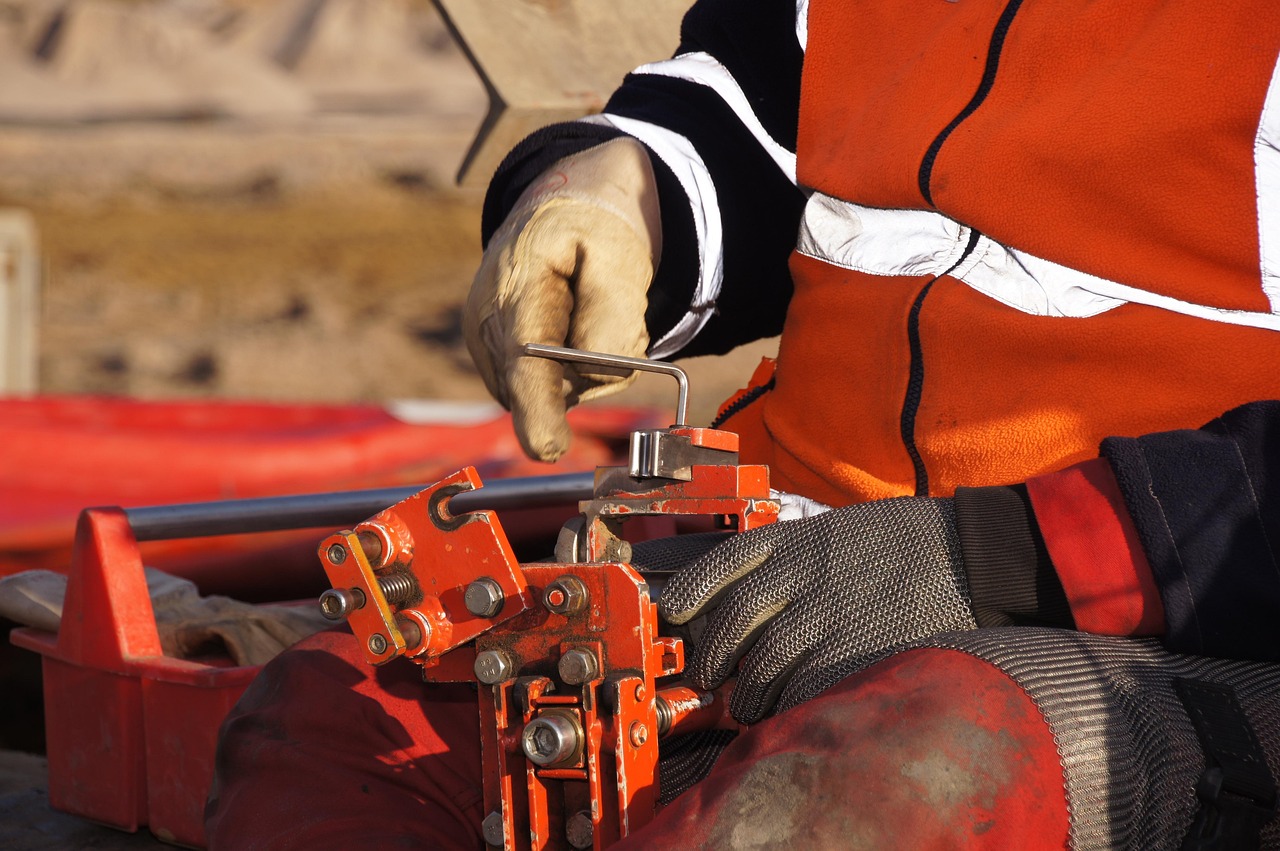
The human impact is severe. The U.S. Bureau of Labor Statistics fatal injury table for 2023 includes 226 fatal occupational injuries in the category of workers struck, caught, or compressed by running powered equipment. OSHA also notes that moving machine parts can cause crushed hands or fingers, amputations, burns, and blindness. These outcomes are rarely caused by a single paperwork gap. More often, they reflect a chain of design limitations, access needs, production pressure, maintenance work, bypassed safeguards, missing verification, or unclear responsibility. (bls.gov)
The people most exposed are not always the primary machine operators. Set-up technicians, maintenance mechanics, electricians, sanitation crews, quality inspectors, temporary workers, and contractors may interact with equipment when guards are open, jams are being cleared, tools are being changed, or stored energy remains in the system. A mature machinery safety program treats these non-routine tasks as central, not exceptional.
Start with a task-based risk assessment
ISO 12100:2010 describes a general method for machinery risk assessment and risk reduction, including hazard identification, risk estimation, risk evaluation, elimination of hazards where possible, and documentation of the process. ANSI B11 standards use a similar machinery safety framework in the United States, with B11.0 as a broad type-A standard and machine-specific type-C standards for particular equipment. In practice, the assessment should follow how people actually use, clean, adjust, inspect, maintain, and troubleshoot the machine across its life cycle. (iso.org)
| Machine life-cycle stage | Risk assessment questions | Typical evidence to review |
|---|---|---|
| Design or purchase | Can the hazard be eliminated or reduced before the machine arrives? | Specifications, drawings, safety function descriptions, standards declared by the supplier |
| Installation and integration | Do conveyors, robots, tooling, utilities, and access platforms create new hazards? | Layout drawings, interface controls, stop-time measurements, acceptance tests |
| Production | Can operators reach hazardous motion during normal feed, discharge, adjustment, or inspection? | Job observations, near-miss reports, guard condition checks, operator feedback |
| Clearing jams and changeover | Can the task be done without reaching into the danger zone or defeating safeguards? | Task procedures, energy isolation points, tooling, frequency data |
| Maintenance and sanitation | What hazardous energy remains after shutdown, and who verifies isolation? | Lockout/tagout procedures, stored-energy controls, training records, periodic inspections |
| Modification or relocation | Does the change invalidate the earlier risk assessment or safety function? | Management-of-change records, validation tests, revised drawings |
Good risk assessment is not a one-time engineering exercise. It should be updated when a machine is modified, when tooling changes, when automation is added, when a guard is repeatedly removed, after an incident or near miss, and when workers identify a task that differs from the documented method.
Design and verify safeguards before relying on behavior
The hierarchy of controls is especially important in machinery safety. Elimination and inherently safer design come first, followed by engineering controls such as fixed guards, interlocked guards, presence-sensing devices, two-hand controls, safe-speed functions, and mechanical restraints. Awareness devices, procedures, training, and personal protective equipment have a role, but they should not be used to justify avoidable exposure to hazardous motion.
Fixed and adjustable guards
Fixed guards are often the most robust option when routine access is not required. They should prevent access to the danger zone, stay securely in place, withstand expected operating conditions, and avoid creating new cutting, crushing, trapping, or visibility hazards. Adjustable guards may be appropriate where material size varies, but they need clear set-up rules and inspection. An incorrectly adjusted guard can create a false sense of protection.
Interlocked guards and presence-sensing devices
Where access is needed for loading, clearing, or inspection, interlocked guards or presence-sensing devices may be suitable. ISO 14119:2024 addresses principles for designing and selecting interlocking devices associated with guards, including measures to reduce reasonably foreseeable defeat. ISO 13849-1:2023 and IEC 62061:2021 address the design and validation of safety-related control systems and safety functions. These standards reinforce an important point: the protective device, logic, actuator, reset method, and verification test have to work as one system. (iso.org)
Emergency stops are not primary safeguards
An emergency stop is essential on many machines, but it is not a substitute for guarding or energy control. It depends on a person recognizing danger and acting in time. It may not stop hazardous motion quickly enough, and it usually does not remove stored mechanical, pneumatic, hydraulic, gravitational, thermal, or electrical energy. Treat emergency stops as a complementary protective function, not as the main risk reduction measure.
Control hazardous energy during non-routine work
Many serious machinery incidents occur when people clean, repair, unblock, set up, lubricate, or adjust equipment. OSHA’s lockout/tagout standard requires an energy control program with energy control procedures, employee training, and periodic inspections when unexpected energization, startup, or release of stored energy could cause injury during servicing or maintenance. If an energy isolating device is capable of being locked out, OSHA’s rule generally requires lockout unless a tagout system can provide full employee protection under the standard. (osha.gov)
A reliable hazardous energy control process should identify every energy source, including electrical, mechanical, hydraulic, pneumatic, chemical, thermal, gravitational, and stored energy. NIOSH guidance emphasizes shutting down and de-energizing all sources, applying locks and tags, releasing or blocking stored energy, and performing a tryout to verify that the equipment will not start. This verification step is where many weak programs fail: a lock is not proof of isolation unless the correct isolation point, stored energy, and restart path have been checked. (cdc.gov)
Some production tasks are frequent and short, which can tempt teams to rely on informal methods. That is risky. If an alternative method is proposed for minor servicing, it should be documented, risk-assessed, validated, limited to defined tasks, and understood by every affected worker. Production convenience should never become an undocumented exception to hazardous energy control. See also: automation and controls.
Manage modifications, automation, and procurement
Modern machinery often combines conveyors, robots, vision systems, programmable controllers, pneumatic actuators, servo drives, and networked diagnostics. These integrations can improve productivity and reduce exposure, but they can also introduce new hazards if safety functions are not specified, validated, and maintained. A robot cell, for example, may need perimeter guarding, safe access points, mode selection, enabling devices, reset logic, trapped-key systems, and clear responsibilities between the machine builder, integrator, and user.
Procurement is one of the best opportunities to improve machinery safety. A purchase specification should require the supplier to identify applicable standards, provide a risk assessment or safety design file where appropriate, list residual risks, define safety functions, supply lockout information, and document validation tests. The user should not wait until commissioning to discover that routine cleaning requires reaching past a guard, or that the only isolation point is hidden behind another hazard.
For companies selling, importing, or integrating machinery into the European market, Regulation (EU) 2023/1230 is also important because it replaces the Machinery Directive framework and applies from January 20, 2027, with some provisions applying earlier. This article is not legal advice, but globally operating teams should track which regulatory framework applies to the specific machine, market, and date of placing on the market. (eur-lex.europa.eu)
A practical machinery safety checklist for industrial sites
- Build an equipment inventory. Include machine type, location, age, supplier, controls platform, guarding type, energy sources, and responsible owner.
- Prioritize high-risk machines. Start with equipment involving cutting, shearing, crushing, forming, rotating parts, automated motion, frequent jams, or repeated guard removal.
- Observe real tasks. Compare written procedures with how operators, mechanics, sanitation staff, and contractors actually interact with the equipment.
- Verify guard effectiveness. Check reach distance, openings, fasteners, interlocks, bypass possibilities, stop time, reset location, visibility, and maintenance access.
- Review hazardous energy procedures. Confirm that procedures are machine-specific, identify all energy sources, address stored energy, and include tryout verification.
- Train by role and task. Operators, authorized lockout employees, affected employees, supervisors, engineers, and contractors need different levels of detail.
- Track defects and bypasses. A bypassed interlock or removed guard should trigger immediate control, root-cause review, and management follow-up.
- Control change. Any tooling, speed, product, guarding, software, robot path, or layout change should prompt a documented safety review.
- Measure leading indicators. Use completed risk assessments, overdue corrective actions, guard defects closed, lockout audits, and near-miss learning instead of waiting for injuries.
The most effective programs make safe work the easiest normal work. If operators must defeat a guard to clear a predictable jam, the system is telling management that the design, tooling, procedure, or production process needs attention. If maintenance staff avoid lockout because isolation points are poorly labeled or difficult to reach, that is a design and management problem, not simply a training problem.
Frequently asked questions
Is machine guarding the same as machinery safety?
No. Machine guarding is one part of machinery safety. A complete program also includes risk assessment, safe design, hazardous energy control, safety-related control systems, training, inspection, maintenance, management of change, and incident learning.
How often should a machinery risk assessment be updated?
There is no single interval that fits every site. Update it when equipment is installed, modified, automated, relocated, or repurposed; when production tasks change; when a safeguard is bypassed; after an incident or near miss; and during planned periodic reviews for high-risk machinery.
Can personal protective equipment replace a machine guard?
PPE may reduce residual exposure, such as eye injury from flying particles, but it should not replace feasible engineering controls for points of operation, nip points, rotating parts, or other direct contact hazards. PPE depends heavily on correct selection, fit, condition, and behavior.
What is the most common weakness in lockout/tagout programs?
A common weakness is treating lockout as a lock-and-tag activity rather than an energy-control system. The procedure must identify all energy sources, isolate them correctly, release or block stored energy, and verify isolation before work starts.
Do voluntary standards matter if OSHA rules already apply?
Yes. OSHA regulations set enforceable duties, while standards such as ISO 12100, ISO 13849-1, IEC 62061, ISO 14119, and ANSI B11 documents provide detailed methods that engineers, integrators, and users often rely on to design, assess, and verify machinery risk reduction measures.