SS Automation & Packaging Machines and the buyer checklist for filling and sealing lines
What buyers are usually trying to confirm
A search for SS Automation & Packaging Machines usually starts with a practical sourcing question: can this supplier, or a similarly named packaging machinery maker, support a real filling, sealing, conveying, or end-of-line packaging project? Public business listings associate SS Automation & Packaging Machines with Coimbatore, Tamil Nadu, and describe a product scope that includes packing, filling, sealing machines, conveyors, capping, seaming, vacuum packing, and shrink wrapping equipment.
Because the available public information is fragmented, buyers should treat those listings as a starting point, not as a complete technical qualification. A more reliable approach is to match the machine category to the product, container, line speed, hygiene requirement, controls architecture, documentation package, and after-sales support needed for the specific production line.
What public listings suggest about the machine scope
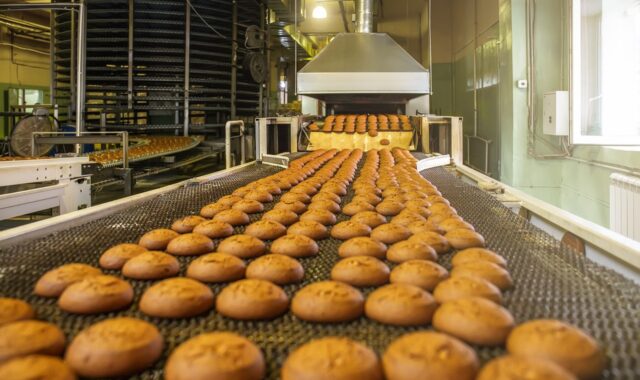
Public directory information points to a broad packaging equipment range rather than one specialized machine type. The listed categories are common in food, beverage, chemical, and general consumer goods packaging plants, where a line may combine filling, sealing, conveying, labeling, capping, shrink wrapping, and secondary packaging.
For buyers, the important point is that category names do not prove machine suitability. A powder filling machine for free-flowing spice powder is a different project from one for sticky nutraceutical blends. A liquid filler for edible oil is not the same as one for foaming detergents or particulate sauces.
| Machine family | Typical role in a packaging line | Key buyer checks |
|---|---|---|
| Powder and granule filling machines | Meter dry products into pouches, bottles, jars, or containers | Product flow behavior, target weight range, accuracy tolerance, dust control, changeover method, and cleaning access |
| Liquid filling machines | Fill bottles, pouches, cups, or cans with low- or high-viscosity liquids | Viscosity range, foaming behavior, particulates, nozzle design, pump type, drip control, and fill accuracy |
| Continuous band sealers and VFFS machines | Seal pre-made bags or form, fill, and seal film packs | Film structure, seal width, temperature control, coding provision, bag size range, and heat-seal validation method |
| Conveyors and elevators | Move containers, pouches, or bulk product between machines | Line speed, product stability, washdown need, guarding, reject stations, and controls interface |
| Capping, seaming, vacuum, and shrink equipment | Finish or protect primary and secondary packages | Cap or can specification, torque or seam inspection method, vacuum target, shrink film compatibility, and spare part availability |
This table is not a product specification for SS Automation & Packaging Machines. It is a qualification framework for interpreting supplier listings and requesting the right technical details before placing an order.
Why automation and controls matter as much as the machine frame
Packaging machinery is often compared by stainless construction, speed, and price. In daily production, however, the control system usually has just as much influence on reliability. A filling or sealing machine depends on sensors, PLC logic, HMI screens, drives, motors, pneumatic actuators, weighing systems, temperature controllers, and safety interlocks working together.
A line that looks stable during a demonstration can still create downtime if recipe management is weak, alarm messages are vague, or operators cannot complete changeovers consistently. For broader coverage of industrial controls and machine automation topics, see the automation and controls section.
Controls questions for a filling or sealing line
- Does the machine use a documented PLC and HMI platform that local technicians can support?
- Can operators store recipes for different fill weights, bag sizes, products, and seal temperatures?
- Are alarm messages specific enough to guide troubleshooting, or do they only show generic faults?
- Can the machine exchange signals with upstream and downstream equipment, such as conveyors, labelers, checkweighers, metal detectors, or reject systems?
- Are temperature, speed, fill count, batch count, and fault history available for production records?
- Does the supplier provide electrical drawings, I/O lists, pneumatic diagrams, and a clear spare parts list?
For small and mid-sized plants, controls simplicity can be more valuable than an oversized feature set. The best choice is usually a control package that operators can understand, maintenance staff can diagnose, and management can expand later without rebuilding the entire line.
Market context in 2026
Packaging automation demand is being shaped by labor pressure, SKU growth, flexible production, and the need for more consistent quality. PMMI, the Association for Packaging and Processing Technologies, reported in 2026 that the U.S. packaging machinery market reached an estimated 11.7 billion dollars in shipment value in 2025, with food accounting for about 44 percent of the total.
That figure is U.S.-specific and should not be treated as a direct measure of demand for any one Indian supplier. It does, however, help explain why buyers worldwide are paying closer attention to filling, sealing, inspection, and end-of-line automation.
The same market direction is also changing what buyers expect from smaller and mid-market machine suppliers. Price still matters, but it is rarely enough on its own. Buyers increasingly ask for compact footprints, faster changeovers, better operator guidance, cleanability, remote support options, and clearer documentation. PMMI’s recent industry reporting has also highlighted the role of automation in workforce challenges, while noting that advanced functions such as predictive maintenance may be adopted more slowly than technology headlines suggest.
For a buyer evaluating SS Automation & Packaging Machines or any similar supplier, the core question is not only whether the machine can run. It is whether the machine can be supported, adjusted, cleaned, and integrated over years of production.
Safety and compliance checks before purchase
Machine safety should be reviewed before price negotiation is complete. Packaging equipment includes pinch points, moving belts, heated sealing jaws, rotary tooling, compressed air, electrical cabinets, and sometimes stored energy in pneumatic or hydraulic systems. In the United States, OSHA’s lockout/tagout rule, 29 CFR 1910.147, is a key reference for controlling hazardous energy during servicing and maintenance. Other countries and regions have their own legal frameworks, but the principle is similar: workers need documented ways to isolate energy, verify zero energy, and service machinery without unexpected startup.
If a packaging line includes robots or collaborative robot cells, buyers should also ask how the system aligns with recognized robot safety standards. The Association for Advancing Automation announced the revised ANSI/A3 R15.06-2025 standard for industrial robots and robot systems, reflecting updated expectations for robot safety and cell-level use. Even when a project is not legally required to follow a U.S. standard, these references are useful because they show what a mature risk assessment and safeguarding discussion should include.
Mechanical and hygienic design
Stainless steel construction is useful in many food, beverage, and pharmaceutical-related environments, but stainless steel alone does not make a machine hygienic. Buyers should check whether the design avoids product traps, allows tool-free or quick-access cleaning, protects bearings and electrical components from moisture, uses suitable contact materials, and supports the plant’s sanitation chemicals. For washdown areas, component ratings, cable routing, enclosure selection, and drainage matter as much as the visible frame material. See also: industrial safety.
Documentation to request
- General arrangement drawing with dimensions, infeed height, discharge height, and utility points
- Electrical schematic, pneumatic schematic, PLC I/O list, and HMI screen list
- Operating manual, preventive maintenance schedule, and lubrication chart
- Recommended spares list with part numbers and lead times
- Guarding layout, emergency stop locations, and safety interlock description
- Lockout points and energy isolation procedure
- Factory acceptance test plan and acceptance criteria
When documentation is missing or vague, the risk may not appear on day one. It often appears later, when a sensor fails, a temperature controller needs replacement, an operator leaves, or a new product requires a changeover that was never properly documented.
How to compare SS Automation & Packaging Machines with alternative suppliers
A structured comparison helps buyers avoid decisions based only on the lowest quotation or the most polished demonstration video. Whether the supplier is SS Automation & Packaging Machines, another Indian packaging machinery maker, or an overseas OEM, the same evaluation logic applies.
- Define the product window. Provide minimum and maximum fill weights, density, particle size, viscosity, temperature, foaming tendency, and sensitivity to crushing or aeration.
- Define the package window. Include pouch, bottle, jar, can, cap, film, label, carton, and case specifications with tolerances.
- Set realistic speed requirements. Ask for sustainable output per hour after changeovers, cleaning, and rejects, not only peak cycles per minute.
- Clarify accuracy and inspection. Decide whether the line needs checkweighing, metal detection, vision inspection, barcode verification, or reject confirmation.
- Evaluate changeover. Ask which parts need tools, which settings are recipe-based, how long the changeover takes, and whether sample packs are required afterward.
- Confirm utility and environment limits. Review power supply, air consumption, temperature, humidity, dust, washdown, and floor space constraints.
- Request proof of similar applications. Prefer documented application references, factory videos with comparable products, or a paid trial using your actual material.
- Review service coverage. Ask who handles installation, commissioning, operator training, spare parts, remote support, and warranty response.
- Control payment risk. Use clear milestones tied to drawings, build progress, factory acceptance testing, dispatch, installation, and final acceptance.
If public information shows inconsistent names, old website references, or incomplete directory profiles, treat that as a reason to verify identity directly. Ask for current registration details, tax information where applicable, factory address, authorized bank details, and written confirmation from a company email account before paying deposits.
Common fit and mismatch scenarios
Based on the categories commonly associated with SS Automation & Packaging Machines in public listings, the company may be relevant to buyers exploring standard or semi-custom filling, sealing, conveyor, capping, and packaging line modules. It may be especially worth shortlisting when the buyer has clearly defined products and needs practical equipment for powders, granules, liquids, pouches, bottles, cans, or secondary packaging.
Buyers should be more cautious if the project involves highly regulated pharmaceutical validation, aseptic filling, very high-speed beverage lines, complex robotics, aggressive washdown, explosive dust atmospheres, or full digital traceability. Smaller suppliers can serve some demanding applications, but buyers need evidence: documented engineering capability, risk assessments, certificates, qualified components, software control practices, and service commitments. Without that evidence, a low purchase price can become expensive through downtime, rework, or compliance gaps.
Frequently asked questions
Is SS Automation & Packaging Machines the same as Inpak?
Some public business databases associate SS Automation & Packaging Machines with the name Inpak. Buyers should confirm this directly with the supplier rather than assuming that all listings refer to the same current legal entity, brand, or operating website.
What should I ask before buying a filling or sealing machine?
Ask for product-specific trials, fill accuracy data, seal quality criteria, speed assumptions, electrical and pneumatic drawings, spare parts lists, warranty terms, and a written factory acceptance test plan. A supplier that can answer these questions clearly is usually easier to work with after installation.
Are stainless steel packaging machines always better?
Not always. Stainless steel is valuable for corrosion resistance, washdown, and hygienic environments, but it can add cost without solving every problem. The right design depends on product contact, cleaning method, moisture exposure, chemical exposure, and regulatory expectations.
Should I buy a single machine or a complete integrated line?
A single machine can be appropriate when the plant already has compatible conveyors, inspection equipment, and operators who can manage manual transfer. A complete line is better when throughput, consistency, labor reduction, or traceability depends on coordinated motion and controls across several machines.
What should be tested during factory acceptance?
Factory acceptance should use representative product and packaging materials whenever possible. The test should check output rate, fill or seal quality, reject handling, alarm behavior, changeover steps, cleaning access, safety devices, documentation, and spare parts before the machine leaves the factory.
Bottom line for buyers
SS Automation & Packaging Machines appears in public listings as a packaging machinery supplier connected with filling, sealing, conveying, wrapping, capping, and related equipment categories. That makes it relevant to buyers researching practical packaging automation options, but listing information alone is not enough for a purchase decision.
The next step is a disciplined technical inquiry: define the product and package, request drawings and controls details, verify safety and service support, test with real materials, and compare the supplier against alternatives using the same acceptance criteria. In packaging automation, the best machine is not just the one that runs in a video. It is the one that can be installed, operated, cleaned, maintained, and supported reliably in the buyer’s own production environment.