How to choose an industrial sweeper for safer facility floors
Why sweepers are a safety decision, not just a cleaning purchase
An industrial sweeper is useful when a facility needs repeatable removal of dust, metal chips, packaging debris, pallet fragments, sand, grit, and outdoor track-in without sending workers across large floor areas with brooms. The safest choice is not simply the largest hopper or the fastest travel speed. It is the machine that fits the debris, floor condition, pedestrian traffic, ventilation, and dust hazard. For many sites, that means comparing walk-behind, ride-on, and compact rider formats; reviewing filtration; setting cleaning routes; and documenting maintenance. OSHA and NIOSH guidance on housekeeping, respirable crystalline silica, combustible dust, and mobile equipment supports the same practical lesson: floor cleaning should reduce exposure and slip or trip risk, not move dust from the floor into the breathing zone.
This guide fits into broader industrial safety planning because sweeping affects traffic control, air quality, fire prevention, ergonomics, and housekeeping audits. A sweeper should be selected as part of a risk-based cleaning program, not treated as a stand-alone equipment purchase.
What an industrial sweeper actually does
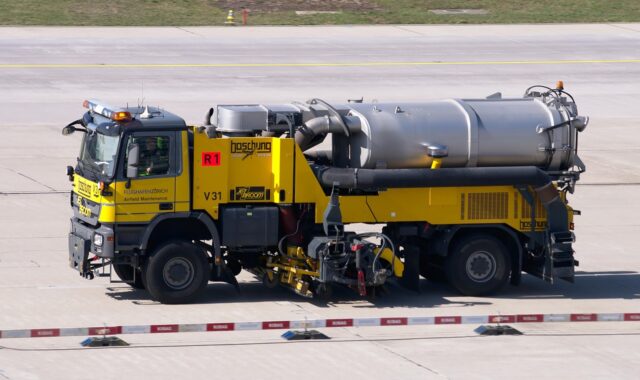
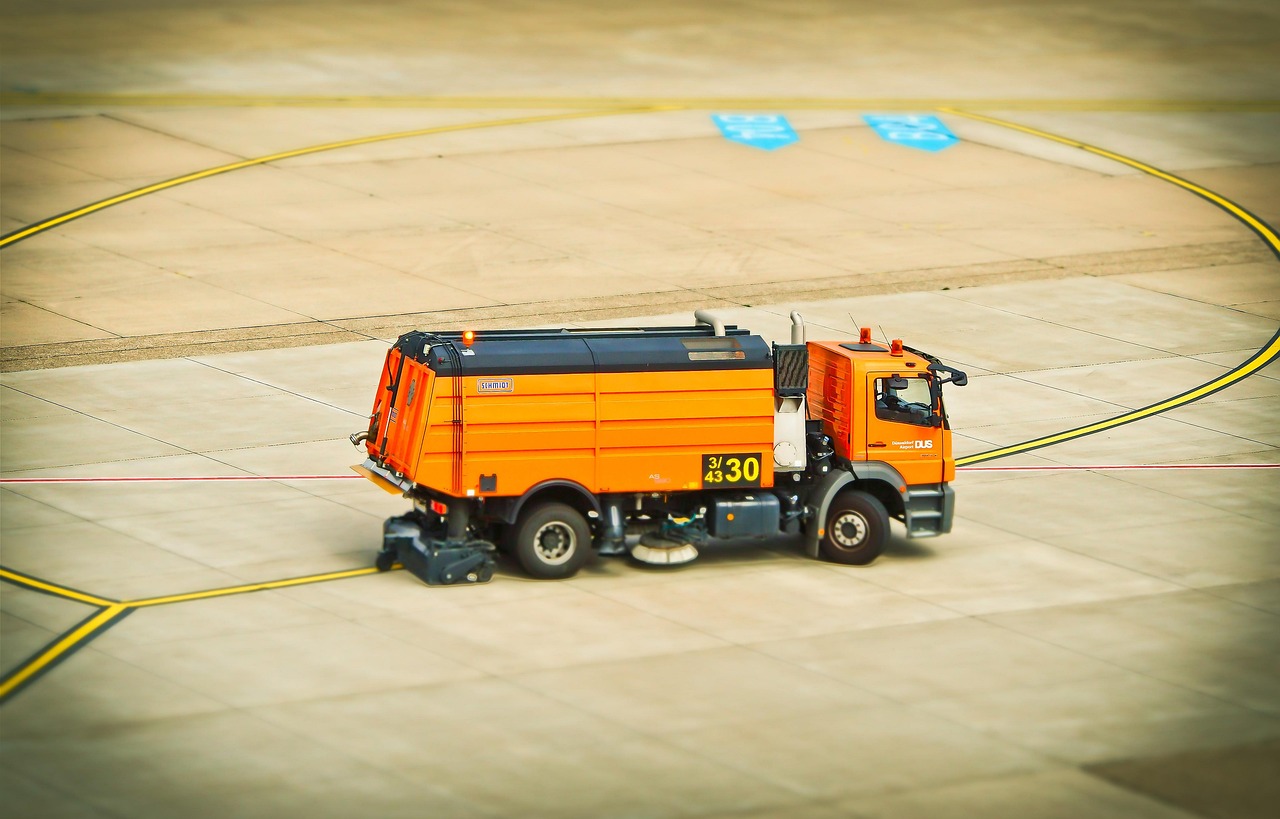
An industrial sweeper removes loose dry debris from hard surfaces using brushes, airflow, and a collection hopper. A side broom usually pulls debris away from racks, walls, dock edges, and equipment bases. A main broom then lifts the material into the hopper, while a vacuum fan and filter system help control dust generated by the brushing action. Some machines are dedicated sweepers. Others combine sweeping and scrubbing functions for sites that need both dry debris pickup and wet floor cleaning.
The difference between a sweeper and a scrubber matters. A scrubber applies solution, agitates the floor, and recovers liquid. A sweeper is designed primarily for dry debris. Using the wrong machine can create avoidable hazards. A scrubber may push bulky debris into squeegees and drains. A dry sweeper used on damp slurry may clog filters, cake the hopper, and leave residue behind. Facilities with both dry and wet contamination often need a staged process: remove loose debris first, then scrub if the floor requires washing.
Common applications include warehouses, distribution centers, metalworking shops, plastics plants, food packaging areas, parking structures, foundry support areas, fabrication shops, and loading docks. The exact model should depend on the material being collected. Fine powders, combustible dusts, oily chips, sharp metal swarf, and ordinary packaging waste do not behave the same way inside a machine.
Match the sweeper type to the facility
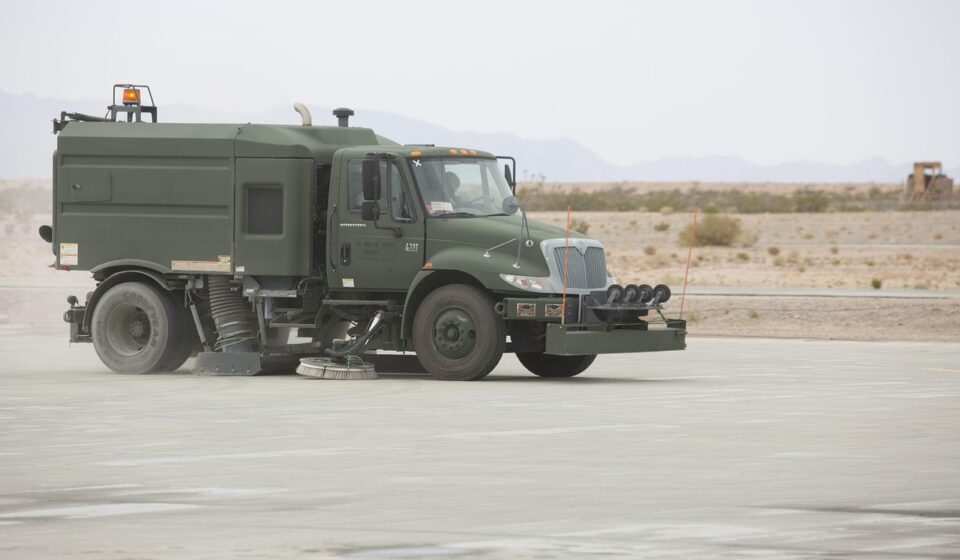
The first decision is the operating format. A walk-behind sweeper may be safer and more economical in narrow aisles, small production cells, mezzanines, and areas with frequent pedestrian movement. A ride-on industrial sweeper can cover larger areas with less operator fatigue, but it also introduces vehicle movement, blind spots, turning radius limits, battery or fuel handling, and traffic-management needs. A compact rider can work well where a full-size ride-on unit is too large but cleaning frequency is too high for manual sweeping.
| Facility condition | Practical sweeper choice | Safety point to check |
|---|---|---|
| Narrow aisles or congested work cells | Walk-behind or compact rider | Turning clearance, pedestrian separation, and edge protection |
| Large warehouse or distribution floor | Ride-on industrial sweeper | Traffic route, visibility, horn, lights, and operator training |
| Fine nuisance dust | Sweeper with effective dust control and suitable filters | Filter condition, seal integrity, and dust discharge during emptying |
| Silica-containing dust | HEPA-filtered vacuuming, wet methods, or exposure-minimizing equipment | OSHA silica housekeeping restrictions and exposure assessment |
| Combustible particulate solids | Equipment reviewed for the specific dust hazard | Dust hazard analysis, ignition control, and housekeeping thresholds |
| Outdoor yard, dock, or parking structure | Rugged ride-on sweeper with suitable tires and hopper capacity | Surface slope, drainage, weather, visibility, and vehicle interaction |
Productivity claims should be treated as a starting point rather than a guarantee. A theoretical cleaning rate assumes steady movement, broad open lanes, minimal stops, and a defined sweeping width. Real-world performance is reduced by turns, obstructions, battery changes, hopper dumping, filter cleaning, traffic delays, and areas that require slow passes. A useful trial measures how long the machine takes to clean the actual route, not just how quickly it moves across an open floor.
Safety criteria that matter more than headline productivity
Dust capture and filtration
Dust control is often the most important technical question in an industrial sweeper selection. A sweeper with weak filtration can make a floor look cleaner while sending fine particles into the air. That is a poor trade-off in any occupied facility and a serious issue where dust may contain silica, metals, chemicals, allergens, or combustible materials. NIOSH silica guidance emphasizes wet methods, ventilation controls, vacuums, and HEPA filtration as ways to reduce dust exposure. OSHA silica rules also restrict dry sweeping or dry brushing where it could contribute to respirable crystalline silica exposure unless wet sweeping, HEPA-filtered vacuuming, or other exposure-minimizing methods are not feasible.
For a purchasing team, the filter specification should be reviewed alongside the debris profile. Ask what particle range the filter is designed to capture, how the filter is sealed, how it is cleaned, and whether the operator is exposed when emptying the hopper. If a facility has silica-containing dust, powdered metals, pharmaceutical dust, food dust, or other hazardous particulate, involve safety, industrial hygiene, maintenance, and environmental staff before selecting a machine.
Traffic control and visibility
A ride-on industrial sweeper is mobile equipment operating around pedestrians, forklifts, pallet jacks, dock traffic, racks, doors, and blind corners. Its route should be planned like any other powered equipment route. Controls may include marked cleaning lanes, restricted operating times, speed limits, mirrors, flashing lights, backup alarms where appropriate, and rules for operating near dock edges or mezzanine openings. Operators should slow down before intersections and avoid sweeping through active picking zones when pedestrian traffic is heavy.
Visibility is especially important because a sweeper often works close to walls, rack uprights, and stored material. Side brooms help draw debris from edges, but they also increase the machine footprint. Before deployment, check whether the operator can see pedestrians near the front corners and whether mirrors or cameras are needed for reversing or tight turns.
Floor condition, slope, and edge risk
Sweepers are affected by floor cracks, expansion joints, dock plates, drain grates, uneven concrete, loose mats, ramp transitions, and wet patches. A brush that performs well on smooth polished concrete may not pick up debris effectively on rough outdoor pavement. A hopper that is easy to empty on level ground may become unstable if dumped on a slope. Before buying, walk the route and mark problem areas: steep ramps, potholes, low overhead clearances, narrow turns, pedestrian doors, and areas where debris accumulates under racks or conveyors.
Edge protection matters at loading docks, pits, platform openings, and exterior yards. Operators should not be expected to sweep right to an unprotected drop-off. If debris collects near hazardous edges, the process may need barriers, spotters, long-handled tools, vacuum attachments, or a different cleaning method.
Regulatory and standards context to consider
No single rule makes every industrial sweeper application safe. The relevant requirements depend on the material, workplace, machine design, and jurisdiction. In the United States, OSHA housekeeping requirements, hazard communication rules, respiratory protection rules, powered equipment rules, silica standards, and combustible dust enforcement may all be relevant in different settings. Employers should also consider state-plan requirements where applicable.
For respirable crystalline silica, OSHA standard 29 CFR 1910.1053 for general industry includes housekeeping provisions that limit dry sweeping and compressed-air cleaning where those activities could contribute to exposure. OSHA has also clarified that drivable powered sweepers equipped with HEPA filters can be considered HEPA-filtered vacuuming for silica housekeeping purposes when they effectively remove dirt and dust. Non-HEPA sweepers may still be used in some circumstances if they are operated and maintained to minimize exposure, but that conclusion depends on the actual dust and conditions.
For combustible dust, the issue is not just cleanliness. A sweeper can help reduce settled dust, but it can also disperse dust if the wrong equipment or method is used. As of late 2026, NFPA lists NFPA 660 as the active consolidated standard for combustible dusts and particulate solids, with the 2025 edition combining several former combustible dust standards. Facilities handling wood dust, grain dust, powdered metals, sulfur, plastics, sugar, starch, or other combustible particulate solids should not select a sweeper without considering dust hazard analysis, ignition sources, bonding and grounding where relevant, electrical classification, and safe dust disposal. See also: automation and controls.
For ride-on equipment, OSHA powered industrial truck rules may be relevant depending on the machine and workplace classification, and many employers apply similar controls even when a sweeper is not treated as a forklift. At minimum, a facility should require documented operator instruction, practical evaluation, route-specific hazard review, pre-use inspection, and refresher training after unsafe operation, incidents, near misses, or major changes in equipment or layout.
A practical selection checklist for an industrial sweeper
A structured checklist helps prevent a purchasing decision from being driven by catalog specifications alone. Use the following questions before requesting quotes or scheduling a trial.
- Debris profile: What will be collected most often: dust, sand, shrink-wrap scraps, wood fragments, metal chips, glass, pellets, food residue, or mixed debris?
- Dust hazard: Could the dust contain silica, combustible particulate, hazardous chemicals, biological material, heavy metals, or allergens?
- Floor type: Is the surface sealed concrete, rough concrete, asphalt, epoxy, tile, outdoor pavement, or a mixed route?
- Cleaning width: Can the machine pass through the narrowest aisle, door, gate, or equipment gap with side brooms deployed?
- Traffic pattern: Will cleaning occur during production, during shift change, after hours, or in a segregated route?
- Power source: Is battery charging space available, or does the application require LPG, diesel, or gasoline equipment with ventilation and fuel controls?
- Filter system: What filter type is used, how is it cleaned, and how does the machine prevent dust release during operation and hopper emptying?
- Dumping method: Can the hopper be emptied without awkward lifting, dust clouds, or contact with sharp debris?
- Maintenance access: Can brushes, belts, skirts, filters, seals, batteries, and wear parts be inspected without excessive disassembly?
- Documentation: Are manuals, inspection forms, preventive maintenance intervals, and training materials available in a form the site can use?
A site trial should include the dirtiest normal area, not the easiest open floor. Observe dust at the exhaust and around the hopper. Check whether the sweeper leaves trails at turns, pushes debris away from side brooms, scatters light packaging, or struggles with cracks and joints. Ask operators and maintenance staff for feedback before making the final selection.
Maintenance and operating controls after purchase
An industrial sweeper is only as safe as its maintenance program. Brushes wear down, skirts lose contact with the floor, filters load with dust, seals crack, batteries degrade, tires lose traction, and warning devices fail. A machine that performed well during commissioning may create airborne dust or leave debris behind months later if inspections are informal.
A basic pre-use inspection should confirm that the brakes, steering, horn, lights, warning devices, guards, tires, brushes, hopper, filter indicators, and emergency controls are in usable condition. Operators should also check for fluid leaks, unusual vibration, damaged cords or battery connectors, and blocked filter cleaning mechanisms. Defects that affect safe operation should be reported and corrected before the machine returns to service.
Training should be site-specific. A short equipment demonstration is not enough for a busy industrial floor. Operators need to understand route limits, pedestrian right-of-way, safe speed, slope restrictions, battery or fuel procedures, dust controls, hopper dumping, filter cleaning, lockout expectations during maintenance, and what to do if they encounter unknown powder, chemical spills, hot work debris, or sharp scrap. If the facility changes layout, introduces a new dust source, or changes production material, the sweeper program should be reviewed again.
Housekeeping metrics should also be realistic. Instead of measuring only whether the floor looks clean, track dust accumulation in known problem areas, near-miss reports involving debris or sweeping routes, filter-change intervals, operator inspection completion, and repeat areas where the sweeper cannot remove material effectively. These indicators show whether the machine is reducing risk or simply shifting work from one crew to another.
Frequently asked questions
Is an industrial sweeper enough for silica dust?
Not by itself. If dust may contain respirable crystalline silica, the cleaning method must minimize exposure. OSHA silica provisions restrict dry sweeping where it could contribute to exposure unless wet sweeping, HEPA-filtered vacuuming, or other exposure-minimizing methods are not feasible. A HEPA-equipped sweeper may be appropriate in some settings, but the facility should verify effectiveness and exposure conditions rather than assuming any sweeper is compliant.
Should a warehouse choose a walk-behind or ride-on sweeper?
Choose based on route size, aisle width, pedestrian traffic, debris volume, and operator fatigue. Walk-behind units often suit smaller or congested areas. Ride-on sweepers are better for large routes, but they need stronger traffic controls, operator evaluation, charging or fueling procedures, and more formal maintenance planning.
Can a sweeper replace manual housekeeping?
No. A sweeper can reduce manual broom work and improve consistency, but it cannot reach every corner, overhead surface, machine base, rack beam, or spill location. Manual tools, vacuums, wet methods, spill response, and scheduled deep cleaning may still be necessary.
How often should sweeper filters and brushes be serviced?
Follow the manufacturer’s manual as the minimum, then adjust based on dust load, operating hours, floor roughness, and inspection results. A dusty facility may need more frequent filter cleaning and brush replacement than the standard interval suggests. Declining pickup performance, visible dust discharge, streaking, and unusual noise are signs that service is overdue.
What is the most overlooked safety issue when buying an industrial sweeper?
The most overlooked issue is the dust itself. Buyers often compare width, hopper capacity, and battery runtime first, while filtration, dust disposal, combustible dust risk, and silica exposure receive less attention. A safe selection process starts with the material being collected and the people who may be exposed during sweeping and dumping.