Industrial crane safety hazards, inspections, and controls
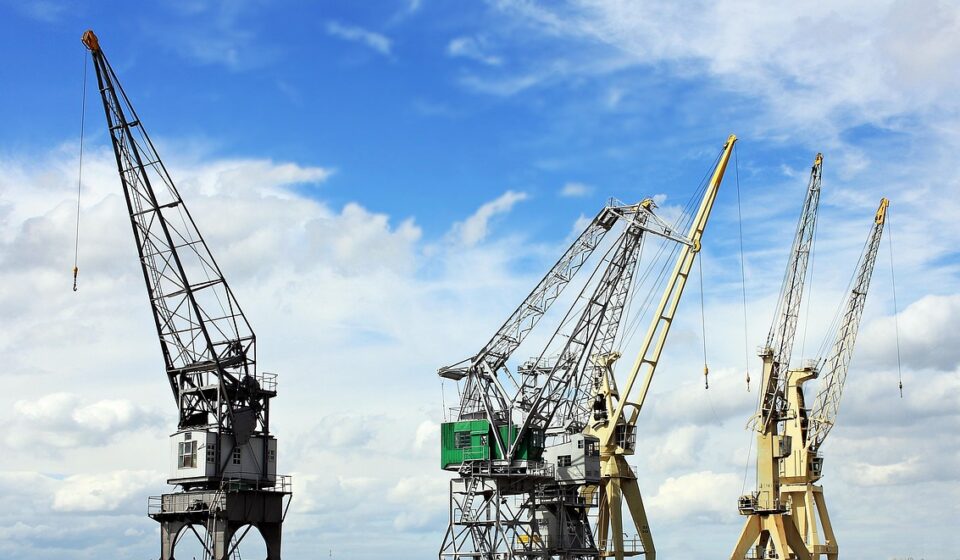
Industrial crane safety starts before the lift
An industrial crane can move loads that are too heavy, hot, awkward, or hazardous for manual handling. It also concentrates risk into a few decisions: capacity, rigging, travel path, communication, and maintenance. A safe lift does not begin when the operator touches the controls. It begins when the team verifies the crane rating, understands the load, checks the hoist and rigging, keeps people out of the danger zone, and stops the job when site conditions change.
For industrial safety teams, the objective is not only regulatory compliance. The objective is repeatable control of suspended loads, stored energy, pinch points, and human error across every shift. This article focuses on practical safety controls for overhead cranes, gantry cranes, jib cranes, workstation cranes, hoists, and mobile cranes used around industrial facilities. For broader plant risk topics, see the industrial safety section.

What counts as an industrial crane in safety planning
The phrase industrial crane is often used broadly, but safety planning has to be specific. A bridge crane moving steel coils across a bay, a gantry crane serving a maintenance area, a jib crane lifting parts into a machine, and a mobile crane setting equipment outdoors do not create the same hazards. They may also fall under different rules, consensus standards, owner requirements, and inspection practices.
In the United States, OSHA’s general industry rules include requirements for overhead and gantry cranes, while construction crane work is addressed in 29 CFR 1926 Subpart CC. ASME B30 standards are widely used as consensus safety references for different crane and rigging categories, including overhead and gantry cranes, mobile cranes, hoists, hooks, slings, and below-the-hook devices. The practical point for a facility is straightforward: do not manage every crane as if it were the same machine. Match the procedure, inspection scope, training, and lift planning level to the crane type and the task.
A small workstation crane can still injure someone if the load swings into a worker, a hook latch is damaged, or the supporting structure is overloaded. A large mobile crane can introduce additional risks involving ground bearing pressure, outriggers, power lines, changing radius, and assembly or disassembly. Safety programs should define which crane types are present, where each crane is used, who may operate it, and which tasks require formal lift planning.
High-risk failure points to control
Rated capacity and load information
The first failure point is often not the crane itself. It is the assumption that the load is known. Operators and supervisors need a reliable load weight, the correct center of gravity, and confirmation that the crane, hoist, sling, lifting device, and attachment points are all rated for the planned lift. The rated capacity must be visible and legible, especially on overhead and gantry cranes. If a crane has multiple hoists, each hoist rating should be treated separately rather than assumed to match the bridge or runway capacity.
Capacity also changes with configuration. Mobile cranes are strongly affected by boom length, radius, counterweight, outrigger setup, ground conditions, and whether the lift is made over the front, side, or rear. Overhead cranes are less affected by radius, but they can still be overloaded by side pulling, shock loading, dragging a stuck load, or using below-the-hook devices that reduce available capacity.
Rigging and below-the-hook equipment
Rigging is where many ordinary lifts become unsafe. Slings, shackles, eyebolts, spreader beams, lifting magnets, clamps, and custom fixtures should be selected for the actual load geometry and inspected before use. Sling angle matters because shallow angles increase tension. Sharp edges can cut synthetic slings. Improperly loaded hooks can bend or fail. A lifting fixture made for one part may not be safe for a modified part with a different center of gravity.
Facilities should avoid informal rigging habits, such as wrapping a chain around a load without verifying the method, using damaged slings because the lift is short, or allowing production pressure to override rejection criteria. If rigging hardware is removed from service, it should be physically segregated or tagged so it cannot return to use by mistake.
The line of fire under and around the load
A suspended load should be treated as stored energy. The danger zone includes the area directly below the load, the potential swing path, pinch points between the load and fixed objects, and the travel route of the crane. Workers guiding a load by hand may be exposed to crush injuries if the load shifts, rotates, or contacts a structure. Tag lines can help, but they do not replace a planned path and clear hand positioning.
One practical improvement is to mark or communicate a temporary exclusion zone before the lift starts. In a busy plant, the route may cross forklift aisles, welding bays, storage racks, or pedestrian paths. The safest lift path is usually the shortest controlled route that avoids people, energized equipment, unstable stacks, and unnecessary travel over workstations.
Power lines and electrical contact
For outdoor industrial crane work, overhead power lines need specific attention. OSHA’s construction crane rules require employers to determine whether any part of the equipment, load line, or load could get within the regulated distance of a power line during the work. Depending on voltage, the controls may include maintaining clearance, using warning lines or barricades, assigning a dedicated spotter, de-energizing and grounding the line, or other protective measures.
Electrical contact is especially dangerous because workers on the ground may be injured through the crane, load, rigging, or tag line. A lift plan should treat the entire crane and load system as capable of entering the electrical hazard zone, not only the boom tip.
Inspections should not become paperwork
Inspection is one of the strongest defenses against crane incidents, but only if it is treated as a decision-making process. A checklist completed after the lift, copied from yesterday, or signed without looking at the equipment creates a false sense of control.
For cranes used in construction, OSHA requires visual inspections before or during each shift by a competent person, documented monthly inspections, and annual inspections by a qualified person. For general industry overhead and gantry cranes, OSHA separates inspection intervals into frequent and periodic categories, with the exact scope depending on service severity and equipment condition. ASME standards and manufacturer instructions may add more detailed expectations.
| Safety area | What to verify | Why it matters |
|---|---|---|
| Before-use condition | Controls, brakes, limit devices, hooks, wire rope or chain, unusual noise, leaks, warning devices, and visible structural damage | Finds obvious defects before the crane places a load over people or equipment |
| Rigging condition | Sling tags, cuts, broken wires, deformation, heat damage, chemical damage, missing latches, and correct hardware size | Prevents failure at the connection between the crane and the load |
| Work area | Travel path, floor conditions, lighting, obstructions, overhead hazards, pedestrian traffic, and communication method | Controls hazards that are not part of the crane but can still cause an incident |
| Maintenance status | Open defects, lockout status, overdue inspections, repairs, modifications, and manufacturer restrictions | Prevents unsafe operation of equipment that should be removed from service |
Inspection findings should lead to action. A damaged hook latch, birdcaged wire rope, missing capacity marking, malfunctioning limit device, cracked weld, or unknown modification should not be normalized. If a defect could affect safe operation, the crane should be removed from service until qualified personnel evaluate and correct the issue. See also: automation and controls.
Operator, signalperson, and rigger roles must be clear
Crane safety depends on people understanding where their authority begins and ends. The operator controls the equipment, but may not be able to see the load, landing area, signalperson, or hazards along the route. A signalperson is needed when the operator’s view is obstructed, when the operator cannot safely judge the load path, or when site conditions require directed movement. The rigger controls how the load is attached and balanced. Supervisors and lift planners control the conditions under which the lift is allowed to proceed.
Training should match the crane and the task. A worker who operates a pendant-controlled bridge crane in a warehouse needs different knowledge than a mobile crane operator making a critical lift outdoors. Both, however, need to understand load control, emergency stop procedures, communication, capacity limits, and when to refuse a lift. For construction crane work, OSHA’s operator qualification and certification requirements are more formal and should be reviewed for the specific equipment and jurisdiction.
Hand signals, radios, or other communication methods should be agreed on before the load is lifted. Only one person should give movement signals unless an emergency stop is required. Everyone involved should understand that any worker who sees an immediate hazard can call for a stop.
A practical pre-lift checklist for industrial crane work
A useful pre-lift review does not need to be long for routine lifts, but it should be specific enough to catch the hazards that matter. For non-routine, high-value, blind, tandem, personnel, near-power-line, or high-consequence lifts, a written lift plan is usually appropriate.
- Confirm the exact load weight, center of gravity, and lifting points.
- Verify the capacity of the crane, hoist, rigging, and below-the-hook device for the planned configuration.
- Inspect hooks, latches, slings, chains, wire rope, controls, brakes, and visible structural components.
- Check that the load path is clear of people, stored materials, vehicles, overhead obstructions, and energized equipment.
- Confirm the communication method and identify the signalperson when needed.
- Control the landing area before the load arrives, including blocking, cribbing, or stands if required.
- Use a trial lift when appropriate to confirm balance, rigging security, brake function, and load control.
- Stop the lift if the load shifts, the crane behaves unexpectedly, wind or visibility changes, or any person enters the danger zone.
The checklist should be treated as a field tool, not a file cabinet document. If workers routinely bypass it, the form may be too generic, supervisors may be rewarding speed over control, or the facility may not have made stop-work authority credible.
Building a stronger crane safety program
A strong industrial crane program connects engineering, maintenance, operations, and safety. Engineering should confirm that runway beams, foundations, anchors, lifting fixtures, and below-the-hook devices are suitable for the loads being handled. Maintenance should manage inspections, lubrication, repairs, parts replacement, and lockout. Operations should plan workload so employees are not pushed toward shortcuts. Safety should verify that training, procedures, audits, and incident learning are changing behavior in the work area.
Incident reviews should look beyond the immediate act. If a load was carried over a worker, ask why the route allowed exposure. If a sling failed, ask whether the inspection process, storage practice, edge protection, or purchasing specification was weak. If an operator exceeded capacity, ask whether the load weight was available and whether production targets encouraged risk. Crane incidents are rarely caused by one bad decision; they usually reveal a chain of missing controls.
Metrics can help, but they should not be limited to injury counts. Better leading indicators include overdue crane inspections, unresolved defects, the number of rejected slings, the percentage of workers trained for assigned crane tasks, completed lift plan reviews, and audit findings about people under suspended loads. These measures show whether risk is being controlled before an injury occurs.
Frequently asked questions
How often should an industrial crane be inspected?
The answer depends on crane type, use, environment, and the applicable regulation or standard. Many programs include before-use or shift checks, more detailed periodic inspections, and annual inspections. Construction crane work has specific OSHA inspection requirements, while overhead and gantry cranes in general industry are managed through frequent and periodic inspection categories. Manufacturer instructions and ASME guidance should also be considered.
Is an overhead crane operator required to be certified?
Certification requirements depend on the crane type and work setting. OSHA has formal operator qualification and certification requirements for many cranes used in construction. General industry overhead crane operation is typically managed through employer training, evaluation, and authorization, but employers still need to ensure operators are competent for the equipment and tasks they perform.
What is the most common mistake in routine crane lifts?
One common mistake is treating routine lifts as low risk without checking the load path, rigging condition, and nearby workers. Familiarity can hide changing conditions, such as a heavier part, worn sling, blocked aisle, new obstruction, or worker entering the area under the load.
When should a lift be treated as critical?
A lift should receive extra planning when failure could cause serious injury, major equipment damage, process interruption, environmental release, or public exposure. Tandem lifts, lifts near power lines, blind lifts, high-value equipment moves, lifts over operating equipment, and lifts involving unusual rigging often justify a written plan and additional review.
What should happen when a crane defect is found?
If the defect could affect safe operation, the crane should be removed from service, tagged or locked out as appropriate, and evaluated by qualified personnel. The equipment should not return to service until the issue is corrected and any required inspection or function test is completed.