Assembly line process design for efficient industrial production
What an assembly line process must accomplish
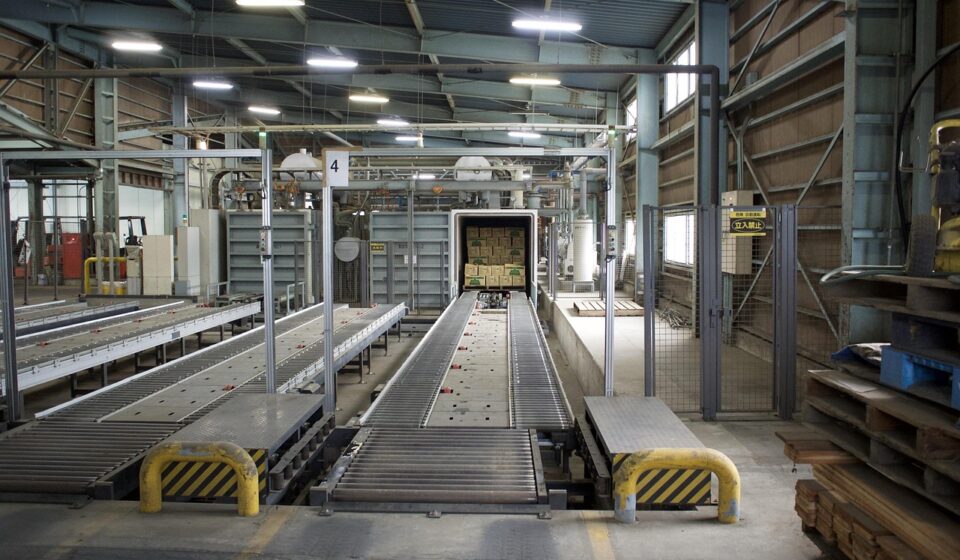
An assembly line process is a controlled sequence of workstations that turns materials, parts and information into a finished product at a repeatable pace. A strong line is not defined only by conveyors, robots or operators. It is defined by how clearly work is divided, how each station is balanced against demand, how defects are detected, how material reaches the point of use, and how safely equipment can be operated and maintained.
For industrial plants, the purpose is to make flow visible enough that supervisors can see whether demand, capacity, quality and safety are aligned. That is why assembly planning belongs within broader process systems thinking, rather than being treated as a stand-alone layout exercise.
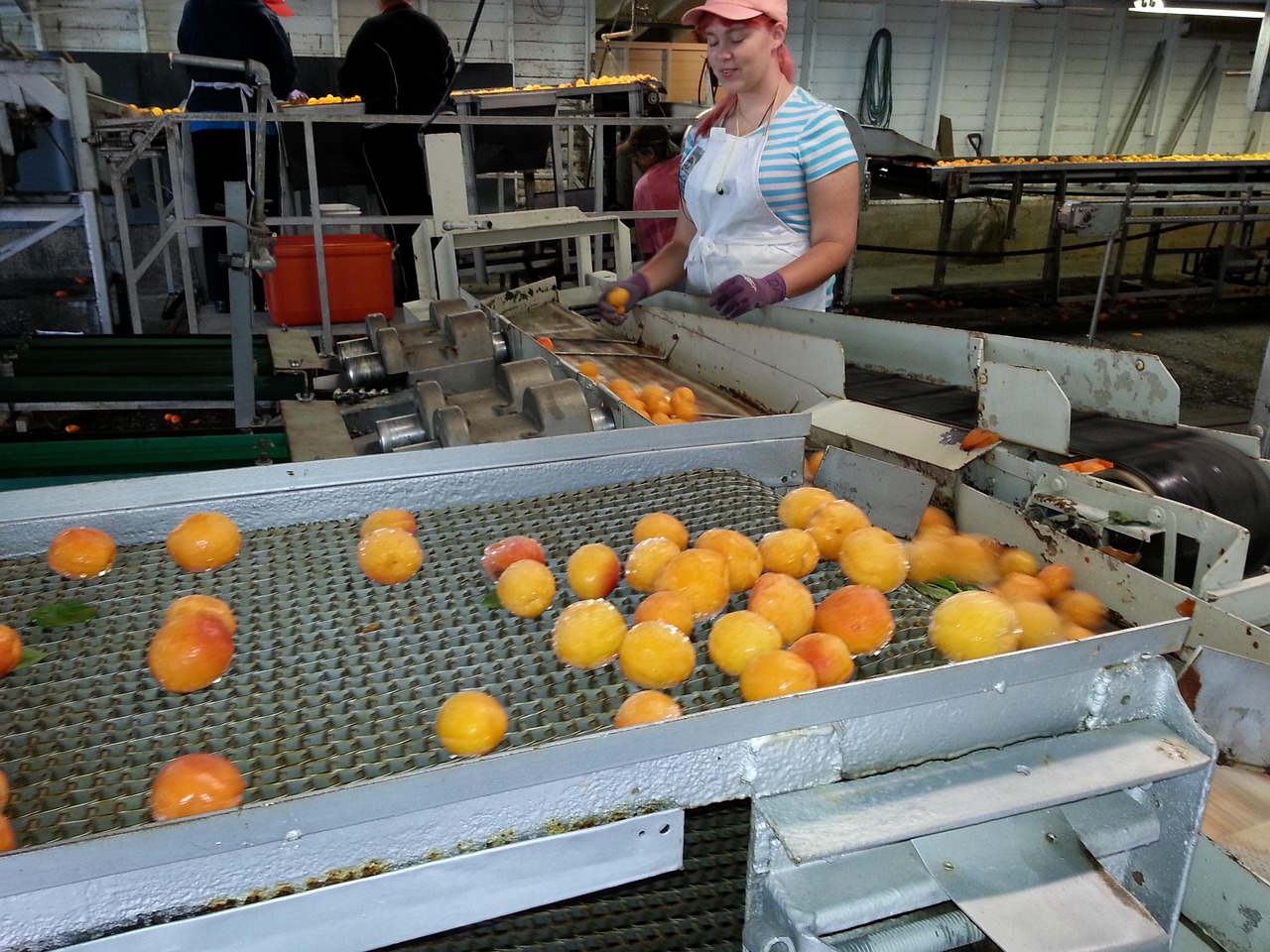
The practical challenge is that an assembly line must handle several conditions at the same time. Customer demand can change. Parts may arrive late. Workers need standardized methods. Machines require maintenance. Quality requirements may differ by product. A useful design starts with the product family and demand profile, then converts that information into station work, material flow, controls and improvement routines.
The process flow from demand to finished goods
A typical assembly line process is better understood as a chain of decisions than as a single engineering drawing. The same logic applies to manual lines, semi-automated lines and highly automated cells, although the equipment and control methods will differ.
- Define product family and demand. The line should be designed around products that share similar routing, tooling, skill and test requirements. If products vary too widely, a single fixed line may create excessive changeovers or hidden queues.
- Map the work sequence. Each assembly step should show inputs, work content, tools, quality checks, data capture and handoff to the next station.
- Set the target pace. The production rate is translated into takt time, cycle time targets and planned staffing or automation capacity.
- Assign tasks to stations. Work elements are grouped so that each station can complete its work within the target cycle, while allowing for ergonomic limits, tool access and quality verification.
- Design material presentation. Parts, fasteners, packaging and consumables should arrive at the point of use in the right quantity and orientation, without creating excess work-in-process.
- Add quality and safety controls. Inspection points, error-proofing, guarding, interlocks, lockout procedures and operator instructions should be part of the process design, not afterthoughts.
- Measure and improve. Output, downtime, defects, rework, changeover time and bottleneck behavior should feed daily improvement routines.
This flow matters because a line that looks efficient in layout software can still underperform if the real constraint is late material, unclear work instructions, unsafe maintenance access, poor test feedback or an unbalanced station.
Key design choices that determine line performance
Takt time, cycle time and throughput
Takt time is commonly defined as available production time divided by customer demand. The Lean Enterprise Institute describes it as a way to match production with demand, often called the heartbeat of a lean production system. In practical terms, if customer demand requires one finished unit every two minutes, the line must be designed so that its limiting station can support that pace under realistic operating conditions. (lean.org)
| Term | What it answers | Why it matters |
|---|---|---|
| Takt time | How often the customer needs one unit | Sets the target rhythm for line design |
| Cycle time | How long a station or process actually takes | Shows whether work can meet takt |
| Throughput | How many good units the line produces in a period | Shows actual output after losses |
| Work-in-process | How much unfinished work is between steps | Reveals flow interruptions and hidden delays |
| First-pass yield | How many units pass without rework | Connects quality performance to flow |
The important distinction is that takt time is demand-based, while cycle time is process-based. A line can appear busy and still miss demand if one station regularly exceeds takt. Conversely, a line may meet takt but carry too much work-in-process because upstream processes are producing ahead of downstream capacity.
Line balancing and bottleneck control
Line balancing assigns work content across stations so that no single station becomes a chronic constraint. In a simple line, this may mean moving a task from an overloaded station to an underloaded one. In a mixed-model line, it may require sequencing logic, shared operators, flexible tooling or parallel stations for high-variation work.
A bottleneck should be identified from actual observation and data, not from assumptions. The constraint may be a manual fastening step, a curing or test cycle, an automated machine, a quality approval gate, a material replenishment route or a software-controlled data handoff. Once the constraint is clear, improvement should protect it from starvation, reduce unnecessary work at that point, and avoid pushing more unfinished work into the line than the downstream process can absorb.
Material presentation and changeover
Material handling is often where assembly line process designs succeed or fail. A station can be balanced on paper and still lose time if operators walk for parts, search for tools or unpack material in the work zone. Point-of-use storage, kitting, standardized containers, visual reorder signals and part orientation can reduce non-value-added motion.
Changeover strategy is just as important. A high-volume, low-variety line may justify dedicated fixtures and narrowly defined station work. A high-mix line may need modular tooling, recipe-driven work instructions, barcode verification and quick-change fixtures. The better choice depends on demand variability, product architecture, quality risk and the cost of downtime during model changes.
Quality and safety controls should be built into the line
Quality control in an assembly process should not depend only on final inspection. ISO describes ISO 9001 as covering the establishment, maintenance and continual improvement of a quality management system, including planning and controlling operational processes, evaluating performance and driving improvement. For assembly lines, this supports a process view: define requirements, control the work, monitor results and correct root causes when failures occur. (iso.org)
Effective quality controls may include torque verification, fixture sensors, part-presence detection, barcode scanning, go/no-go gauges, automated test records and escalation rules when defects are found. These controls should be placed as close as practical to the point where an error can occur. The farther a defect travels downstream, the more expensive and disruptive it becomes to find, isolate and correct.
Safety must also be designed into the process. In the United States, OSHA’s lockout/tagout standard applies to the control of hazardous energy during servicing and maintenance of machines and equipment. OSHA requires energy control procedures to be developed, documented and used when covered servicing or maintenance work is performed. This is directly relevant to assembly lines with conveyors, presses, robots, pneumatic actuators, electrical panels, hydraulic systems or stored-energy hazards. (osha.gov)
Good line design considers safe access before installation: where technicians will stand, how guards open, how energy isolation points are labeled, how jams are cleared, and how operators escalate abnormal conditions. Safety improvements added after production starts are often more expensive and less integrated than controls designed with the process. See also: automation and controls.
Automation, data and the digital thread
Automation should be selected after the assembly process is understood. Robots, indexing conveyors, automated screwdriving, machine vision and test systems can improve consistency, but they can also lock in a poor process if tasks, tolerances, part presentation and quality criteria are not stable. A useful rule is to simplify and standardize the work first, then automate the parts of the process where automation reduces variation, ergonomic burden, safety risk or cycle-time constraints.
Digital information is now part of line design. NIST’s digital thread work focuses on manufacturing information that connects design, manufacturing and inspection, including product and manufacturing information used to communicate allowable tolerances to manufacturing and inspection systems. For assembly operations, that concept points to stronger linkage between bills of materials, work instructions, tooling settings, inspection data and traceability records. (nist.gov)
Cybersecurity also becomes operationally important as assembly lines rely on industrial control systems. NIST’s manufacturing cybersecurity guidance describes a discrete manufacturing workcell as representing assembly line production and recommends risk assessment before choosing capabilities such as behavioral anomaly detection, application allowlisting, file integrity checking, change control and user authentication. (csrc.nist.gov)
| Data layer | Examples | Process value |
|---|---|---|
| Product data | BOM, revision, configuration | Prevents wrong-part and wrong-version errors |
| Work data | Instructions, torque values, recipes | Standardizes execution across shifts |
| Quality data | Test results, defects, rework reason codes | Supports root-cause analysis |
| Equipment data | Downtime, alarms, cycle counts | Identifies bottlenecks and maintenance needs |
| Traceability data | Serial numbers, batch records, operator IDs | Supports containment and customer response |
The practical takeaway is straightforward: smart manufacturing is not only about collecting more data. It is about connecting data to decisions that protect flow, quality and safety.
How to diagnose and improve an existing assembly line
Improvement should begin at the line, not in a conference room. A practical review compares the designed process with the actual work. The reviewer should observe several complete cycles, record station times, note waiting and walking, check defect loops, and confirm whether operators have the parts, tools and information they need.
| Observed symptom | Likely process issue | Improvement direction |
|---|---|---|
| One station always has a queue | Station cycle time exceeds line pace | Rebalance tasks, add tooling, reduce motion or add capacity |
| Operators frequently leave stations | Poor material presentation or tool availability | Improve kitting, point-of-use storage and replenishment |
| Finished units need repeated rework | Quality check occurs too late | Add error-proofing and earlier verification |
| Line stops are hard to explain | Weak downtime coding or unclear escalation | Standardize reason codes and response rules |
| Changeovers take longer than planned | Internal and external setup work is mixed | Prepare materials offline and simplify fixture changes |
| Maintenance access interrupts production | Equipment service needs were not designed into layout | Review guarding, access, isolation and maintainability |
Toyota’s public description of its production system emphasizes Just-in-Time principles such as making what is needed, when it is needed, in the amount needed, preventing goods and information from being held up, and producing at the pace of sale. Those principles are not a copy-and-paste template for every plant, but they remain useful when evaluating whether an assembly line is synchronized with real demand. (global.toyota)
For many plants, the highest-return improvements are not dramatic capital projects. They are small, verified changes: moving a bin closer, splitting a task, changing the inspection point, improving fixture repeatability, clarifying abnormal-condition response, or making downtime data more accurate. The test is whether the change improves flow without hiding quality or safety risk.
Practical checklist for assembly line process planning
- Group products by routing, work content, tooling and quality requirements before selecting the line concept.
- Calculate takt time from realistic available production time and current demand, then compare it with measured station cycle times.
- Design station work so that operators can complete tasks safely and consistently without excessive reach, walking or searching.
- Place quality checks close to the point of possible error and define clear containment rules for defects.
- Design material flow separately from operator work so replenishment does not interrupt assembly cycles.
- Confirm maintainability, guarding, energy isolation and jam-clearing methods before equipment is released for production.
- Use automation where the process is stable enough to benefit from repeatability, data capture or ergonomic improvement.
- Connect production data to daily decisions, including bottleneck review, downtime response, defect reduction and changeover planning.
Frequently asked questions
What is the main purpose of an assembly line process?
The main purpose is to create repeatable flow from parts to finished goods while controlling time, quality, material movement and safety. A good assembly line makes problems visible quickly so they can be corrected before they create large amounts of rework or delay.
How is takt time different from cycle time?
Takt time is based on customer demand and available production time. Cycle time is the actual time needed for a station or process to complete its work. If a station’s cycle time is consistently longer than takt time, that station will limit the line’s ability to meet demand.
When should a plant automate an assembly step?
Automation is most useful when the task is repeatable, quality requirements are clear, parts can be presented consistently, and the benefit outweighs added complexity. If the manual process is unstable, automation may reproduce the same problems at higher cost.
What is the most common weakness in assembly line design?
A frequent weakness is treating layout as the whole process. The physical line may look organized, but performance depends on station balance, material replenishment, quality feedback, maintenance access, safety controls and accurate data.
How can an existing line be improved without major capital spending?
Start with observation and measured cycle times. Many improvements come from rebalancing work, improving point-of-use material, reducing walking, clarifying work instructions, moving quality checks upstream and improving downtime response before buying new equipment.