Industrial safety glasses selection guide for ANSI Z87.1 workplace eye protection
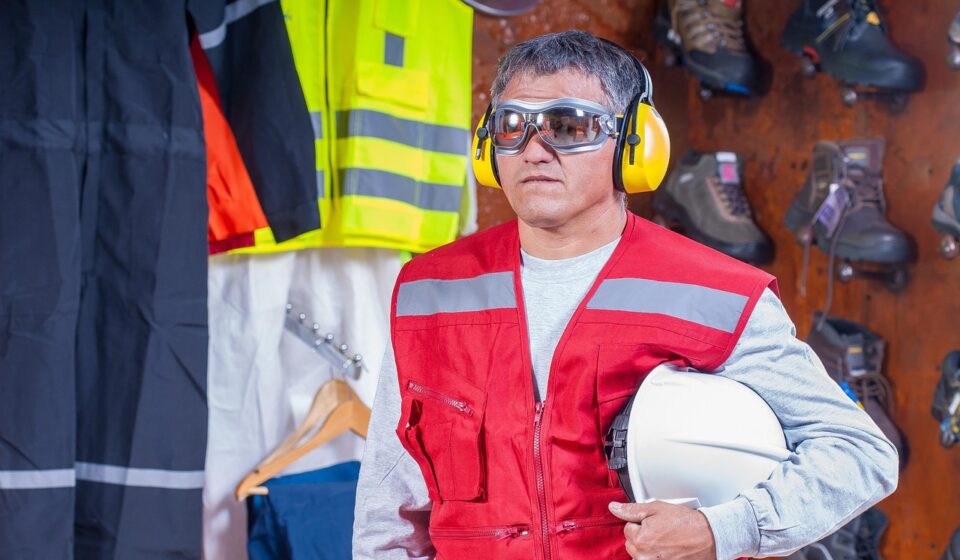
Industrial safety glasses are protective eyewear used to reduce eye injuries from flying particles, dust, splashes, glare and other task-specific hazards. For U.S. workplaces, the practical starting point is OSHA’s eye and face protection rules and ANSI/ISEA Z87.1 markings. Compliance, however, is only one part of the selection process. The right eyewear must match the hazard, fit the worker, work with other PPE and remain clear enough to be worn throughout the task. This guide explains how safety teams, supervisors and buyers can evaluate industrial safety glasses without assuming that every product marked “Z87” is suitable for every job.
For more workplace PPE and industrial risk-control topics, visit the industrial safety section.
Why industrial safety glasses need a hazard-first selection process
Eye protection selection should start with the task, not the product catalog. OSHA’s general PPE rule requires employers to assess the workplace, identify hazards that require PPE, select PPE that protects against those hazards and choose PPE that properly fits each affected worker. OSHA’s eye and face protection standard for general industry requires appropriate protection when workers are exposed to hazards such as flying particles, molten metal, liquid chemicals, acids or caustic liquids, chemical gases or vapors and potentially injurious light radiation.
NIOSH describes common workplace eye injury mechanisms as striking or scraping from particles, penetration from nails or slivers, chemical burns and thermal burns. That distinction matters. Impact-rated safety glasses may be appropriate for some flying-particle hazards, but they may not be enough for chemical splash, fine dust, biological exposure, welding radiation or high-heat work.
A hazard-first approach also helps prevent a common procurement error: buying one low-cost style for an entire facility and assuming it covers machining, chemical transfer, maintenance, welding support and outdoor work. Industrial safety glasses may be part of the solution in several of those areas, but the required lens, side protection, markings and use of goggles or a face shield can differ by task.
What ANSI Z87.1 means on safety glasses
ANSI/ISEA Z87.1 is the U.S. consensus standard used for occupational and educational eye and face protection devices. As of September 29, 2026, ISEA lists ANSI/ISEA Z87.1-2025 as the current edition, and ISEA announced its publication on January 8, 2026. ISEA described the 2025 update as focusing on clearer product markings, updated performance language and stronger alignment with related eye and face protection standards.
OSHA’s current general industry and construction rules still identify earlier incorporated editions, including ANSI/ISEA Z87.1-2010, ANSI Z87.1-2003 and ANSI Z87.1-1989 (R-1998). OSHA also allows protective devices that the employer demonstrates are at least as effective as devices constructed under one of the incorporated standards. That distinction is important: a newer ANSI/ISEA edition may be the current consensus standard, while OSHA incorporation by reference can lag behind. Employers should verify applicable OSHA, state-plan and project requirements before updating written PPE specifications.
Common markings buyers should understand
Markings help show the type of protection a device was designed and tested to provide. The exact marking format depends on the standard edition and the protector type, but the following terms are commonly used in eye protection selection discussions.
| Marking or term | What it generally indicates | Selection note |
|---|---|---|
| Z87 | Basic impact protection under ANSI/ISEA Z87.1 | Useful baseline, but not enough for every industrial hazard. |
| Z87+ | High-impact protection | Often specified where flying particles, chips or fragments are credible hazards. |
| D3 | Splash and droplet protection | Usually associated with goggles rather than ordinary open safety glasses. |
| D4 | Dust protection | Consider for dusty work where particles can enter around ordinary spectacles. |
| D5 | Fine dust protection | Often requires better enclosure and fit than standard safety glasses provide. |
| W plus shade number | Welding filter shade | Choose according to the welding or cutting process and exposure level. |
| U, R or L plus scale number | Ultraviolet, infrared or visible light filtering | Use when optical radiation or glare is part of the assessed hazard. |
The key point is straightforward: markings do not make one protector universal. They help connect the product to the hazard assessment.
Matching glasses, goggles and face shields to workplace hazards
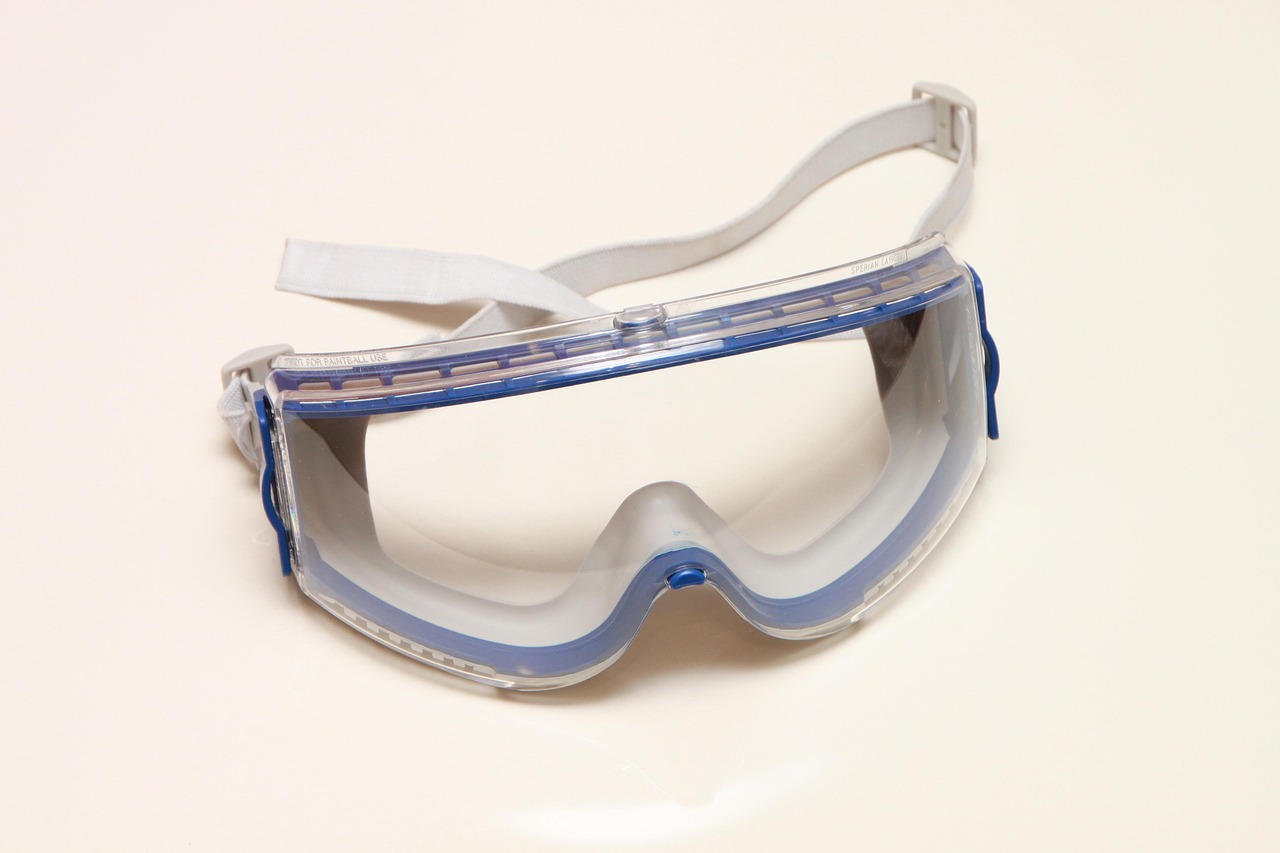
Industrial safety glasses are usually spectacles with impact-resistant lenses and side protection. They are common in manufacturing, assembly, warehouse, maintenance and construction tasks because they are lightweight and easy to wear. Their main limitation is that they do not seal tightly to the face.
Goggles provide a more enclosed design and are often the better choice for splash, irritating mist, dust or fine dust hazards. CDC/NIOSH guidance for infection control also notes that safety glasses provide impact protection but do not offer the same level of splash or droplet protection as goggles. For chemical transfer, pressure washing, cleaning, plating, lab work or dusty demolition, goggles may be required even when workers prefer glasses.
Face shields protect more of the face, but they normally do not replace primary eye protection. ISEA’s eye and face selection guidance commonly treats face shields as secondary protection worn over spectacles or goggles for hazards such as splash, molten metal, heat or optical radiation. In practical terms, a worker grinding overhead may need Z87+ safety glasses under a face shield, while a worker handling corrosive liquid may need chemical splash goggles under a face shield.
| Hazard | Likely minimum starting point | When to add more protection |
|---|---|---|
| Flying chips, fragments or particles | Z87+ safety glasses with side protection | Add a face shield for heavy grinding, overhead work or high particle volume. |
| Liquid chemical splash | Indirect-vented or non-vented splash goggles | Add a face shield when face exposure is also credible. |
| Dusty work | Goggles marked for dust protection | Use fine-dust protection where small particles bypass loose-fitting eyewear. |
| Welding and cutting support | Filtered lenses or welding eye protection matched to the process | Use welding helmets or shields over safety glasses or goggles where required. |
| Outdoor glare or UV exposure | Safety-rated tinted or UV-filtering lenses | Do not substitute ordinary sunglasses for occupational safety eyewear. |
| Biological splash or spray | Goggles or face protection selected for exposure route | Check whether a biological hazard standard or facility infection-control rule applies. |
Fit, comfort and compatibility determine whether PPE is actually worn
The most protective eyewear on paper fails if it fogs, pinches, blocks visibility or interferes with other PPE. OSHA’s construction eye protection rule explicitly addresses comfort, fit, durability, cleanability and the need not to unduly interfere with wearer movement. OSHA’s general PPE training rule also requires workers to understand when PPE is necessary, what PPE is necessary, how to don, doff, adjust and wear it, its limitations and its care.
Fit should be checked with the worker in the postures used during the actual task. A pair of glasses that seems fine at a desk may gap at the brow when the worker bends, ride up under a hard hat, or lose side coverage when worn with a respirator. Side shields are especially important where flying objects are present. OSHA requires side protection when flying-object hazards exist, and detachable side protectors are acceptable when they meet the relevant requirements.
Prescription eyewear and contact lenses
Regular prescription glasses are not a substitute for safety-rated eye protection. OSHA requires workers who wear prescription lenses during eye-hazard operations to use eye protection that incorporates the prescription or can be worn over prescription lenses without disturbing the proper position of either the prescription lenses or the protective lenses. Over-the-glass safety glasses may be suitable for some impact hazards, but goggles or inserts may be needed when splash, dust, respirator fit or full-face coverage is involved.
Contact lenses do not provide impact, splash or infection-control protection. They may be worn with appropriate protective eyewear if workplace rules allow, but they do not reduce the need for assessed PPE.
Lens coatings and visibility
Anti-fog and anti-scratch coatings are not cosmetic extras in many facilities. Fogging can lead workers to remove eyewear during a task, while scratched lenses reduce clarity and can hide hazards. For humid environments, temperature changes, respirator use or physically demanding work, anti-fog performance may be a key selection factor. For abrasive dust or dirty handling, replacement schedules and storage practices are just as important as coating claims. See also: automation and controls.
A practical specification checklist for safety teams
Before buying or approving industrial safety glasses, safety teams can use a short specification checklist. The goal is not to create unnecessary paperwork. It is to connect purchase decisions to actual hazards and defensible requirements.
- Define the task and exposure. Identify whether the main hazard is impact, splash, dust, optical radiation, heat, biological exposure or a combination.
- Confirm the required standard and markings. Specify the needed ANSI/ISEA Z87.1 marking and any project, state-plan or customer requirements.
- Decide whether glasses are enough. If liquid, fine dust, mist or facial exposure is credible, evaluate goggles, face shields or full-face respiratory protection.
- Check side protection. Require side protection for flying-object hazards and verify that it stays in place during the task.
- Review lens properties. Choose clear, tinted, shaded, UV-filtering, infrared-filtering or welding lenses based on the exposure, not preference alone.
- Test compatibility. Try the eyewear with hard hats, hearing protection, respirators, face shields and prescription eyewear.
- Offer more than one fit option. Different face shapes may need different bridge styles, temple lengths, gaskets or adjustable features.
- Set cleaning and replacement rules. Remove damaged, contaminated or badly scratched eyewear from service.
- Train workers on limitations. Make clear when safety glasses must be upgraded to goggles, shields or task-specific protection.
This checklist also helps purchasing teams avoid vague specifications such as “safety glasses, clear lens.” A stronger specification might include high-impact marking, wraparound side protection, anti-fog coating, compatibility with hard hats and suitability for indoor assembly work with intermittent flying-particle exposure.
Common mistakes when buying industrial safety glasses
The first mistake is treating price as the main selection criterion. Low unit cost can disappear quickly if workers remove eyewear because it fogs or fits poorly, or if the eyewear is used for hazards it was never designed to address.
The second mistake is assuming that a face shield alone is enough. For many industrial tasks, a face shield is secondary protection, and safety glasses or goggles are still needed underneath. This is especially relevant in grinding, splash and molten-metal scenarios.
The third mistake is confusing ordinary eyewear with occupational eye protection. Normal sunglasses, fashion glasses and everyday prescription eyewear do not become industrial safety glasses simply because they cover the eyes.
The fourth mistake is ignoring changes in the work process. New tools, higher line speeds, different chemicals, added compressed air, robotic cells or revised cleaning procedures can change the eye hazard. PPE specifications should be reviewed when the task changes, not only after an incident.
The fifth mistake is overlooking cleaning and storage. Reusable eyewear should remain sanitary and reliable. Scratched, cracked, chemical-damaged or contaminated eyewear should be replaced according to site procedures and manufacturer instructions.
Frequently asked questions
Are industrial safety glasses required to be ANSI Z87.1 marked?
In many U.S. occupational settings, OSHA’s eye and face protection rules connect compliance to ANSI Z87.1 editions incorporated by reference or to devices the employer can demonstrate are at least as effective. In practice, buyers should specify appropriate ANSI/ISEA Z87.1 markings and verify any state, project or customer requirements.
What is the difference between Z87 and Z87+?
Z87 generally indicates basic impact protection, while Z87+ indicates high-impact protection. Where tools, machines or materials can generate chips, fragments or flying particles, Z87+ is often the more relevant starting point. The full hazard assessment still matters.
Can safety glasses replace chemical splash goggles?
Usually not. Safety glasses provide impact protection but do not seal tightly to the face. For liquid splash, droplets, irritating mist or many chemical-handling tasks, properly selected goggles are typically more appropriate, often with a face shield when the face is also exposed.
Do workers need safety glasses under a face shield?
Often yes. A face shield may protect the face from certain splashes, sparks or flying material, but many tasks still require primary eye protection underneath. The exact combination should be based on the hazard assessment and applicable standard requirements.
How often should industrial safety glasses be replaced?
There is no single replacement interval for every workplace. Replace eyewear when lenses are scratched enough to affect vision, frames are cracked or loose, markings are unreadable, coatings fail, contamination cannot be cleaned properly, or the eyewear no longer fits securely.
Bottom line for industrial safety programs
Industrial safety glasses work best when they are selected as part of a complete eye and face protection program. Start with the hazard assessment, confirm the required ANSI/ISEA Z87.1 performance and markings, decide whether glasses alone are enough, and test real-world fit with the other PPE workers use. The most reliable eyewear program is not the one with the longest product list. It is the one that makes the correct protection easy to identify, comfortable to wear and clear enough to keep on throughout the job.