Fire & safety equipment checklist for industrial workplaces

What fire & safety equipment should cover in an industrial workplace
Fire & safety equipment in an industrial facility should support three goals: reduce the chance of a fire, detect and control small incidents early, and protect people during evacuation or emergency response. A useful checklist therefore goes well beyond extinguishers. It connects fire protection equipment, emergency communication, personal protective equipment, spill response, first aid, eyewash or shower stations, inspection records and employee training into one workable system.
In the United States, OSHA rules such as 29 CFR 1910.157 for portable fire extinguishers, 29 CFR 1910.38 and 1910.39 for emergency and fire prevention planning, and 29 CFR 1910.132 for PPE hazard assessment provide important reference points. NFPA 10 is also widely used for portable extinguisher selection, placement, inspection and maintenance. Local fire codes and the authority having jurisdiction may add further requirements.
For industrial managers, safety officers and procurement teams, the key question is not simply, “What equipment should we buy?” It is, “What equipment is justified by the site’s hazards, and can employees find, use and maintain it when conditions are stressful?”
Start with a hazard assessment, not a shopping list
A reliable equipment plan begins with a documented hazard assessment. Under OSHA’s general PPE requirements, employers must assess the workplace to determine whether hazards are present, or are likely to be present, that require PPE. The same discipline is useful for fire equipment: identify the hazards first, then select the controls.
Map fire load, ignition sources and process hazards
Industrial facilities often contain several fire profiles in one building. A fabrication area may include welding sparks and combustible dust. A maintenance room may store oils, aerosols and solvents. A battery charging station may introduce electrical and thermal risks. A packaging line may accumulate cardboard, plastic wrap and pallets. A paint booth, laboratory or chemical storage room can require more specialized controls.
Rather than treating the site as one uniform space, divide it into risk zones. For each zone, list likely fuel sources, ignition sources, occupied hours, access limitations, ventilation conditions and whether employees are expected to fight incipient-stage fires or evacuate immediately. This mapping will influence extinguisher class, alarm coverage, emergency lighting, spill response equipment, PPE and employee training.
Consider people movement and emergency routes
Fire protection equipment is only effective if employees can reach it without moving into a more dangerous area. Review aisles, mezzanines, loading docks, locked rooms, exterior yards, shift changes and contractor traffic. OSHA’s nonmandatory guidance for emergency action planning recommends that evacuation routes and safe areas be clearly understood, and that employees know their roles in different emergency scenarios.
Facilities with multiple employers, shared floors or landlord-controlled systems should also coordinate emergency plans. Conflicting alarms, blocked egress paths or unclear assembly points can undermine even well-equipped buildings.
Core fire protection equipment by risk area
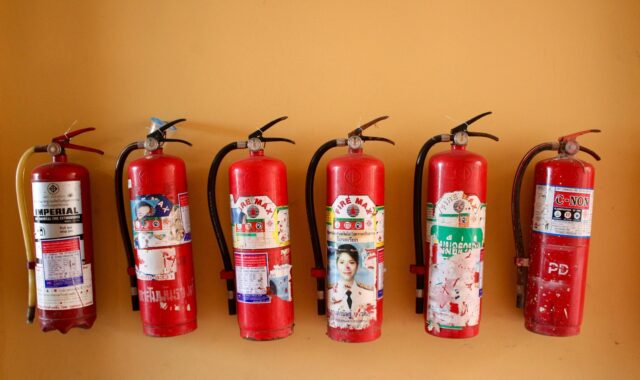
Portable extinguishers are often the most visible fire protection item, but they are only one part of a larger system. The equipment below should be evaluated according to the facility’s processes, occupancy, local code requirements and emergency response plan.
| Equipment category | Typical industrial use | Selection notes |
|---|---|---|
| Portable fire extinguishers | First-line response to limited-size fires | Select by anticipated fire class, hazard severity and travel distance. OSHA requires Class A extinguishers within 75 feet of employee travel distance and Class B extinguishers within 50 feet of the Class B hazard area when provided for employee use. |
| Fire alarm and notification equipment | Alerting employees to evacuate or take assigned actions | Signals should be recognizable, audible or visible in high-noise areas, and coordinated with emergency action plans. |
| Sprinkler, standpipe or hose systems | Fixed protection for buildings, storage and process areas | Design, inspection and impairment management should be handled under applicable fire codes and qualified service arrangements. |
| Fire blankets and hot work controls | Welding, cutting, grinding and temporary repair work | Use as part of a hot work permit system, with combustible material control and fire watch procedures where required. |
| Spill kits and absorbents | Liquid leaks involving oils, coolants, solvents or corrosives | Match absorbent type to the material. Chemical compatibility matters more than kit appearance. |
| Emergency eyewash and shower equipment | Areas where eyes or body may be exposed to injurious corrosive materials | OSHA 1910.151(c) requires suitable facilities for quick drenching or flushing within the work area when corrosive exposure is possible. ANSI/ISEA Z358.1 is commonly referenced for detailed design and operation guidance. |
| Emergency lighting and exit signs | Evacuation during power loss, smoke or low visibility | Check visibility from workstations, storage aisles, stairwells and exterior discharge routes. |
For more workplace risk-control topics, visit the industrial safety section.
Placement, inspection and maintenance points that are easy to miss
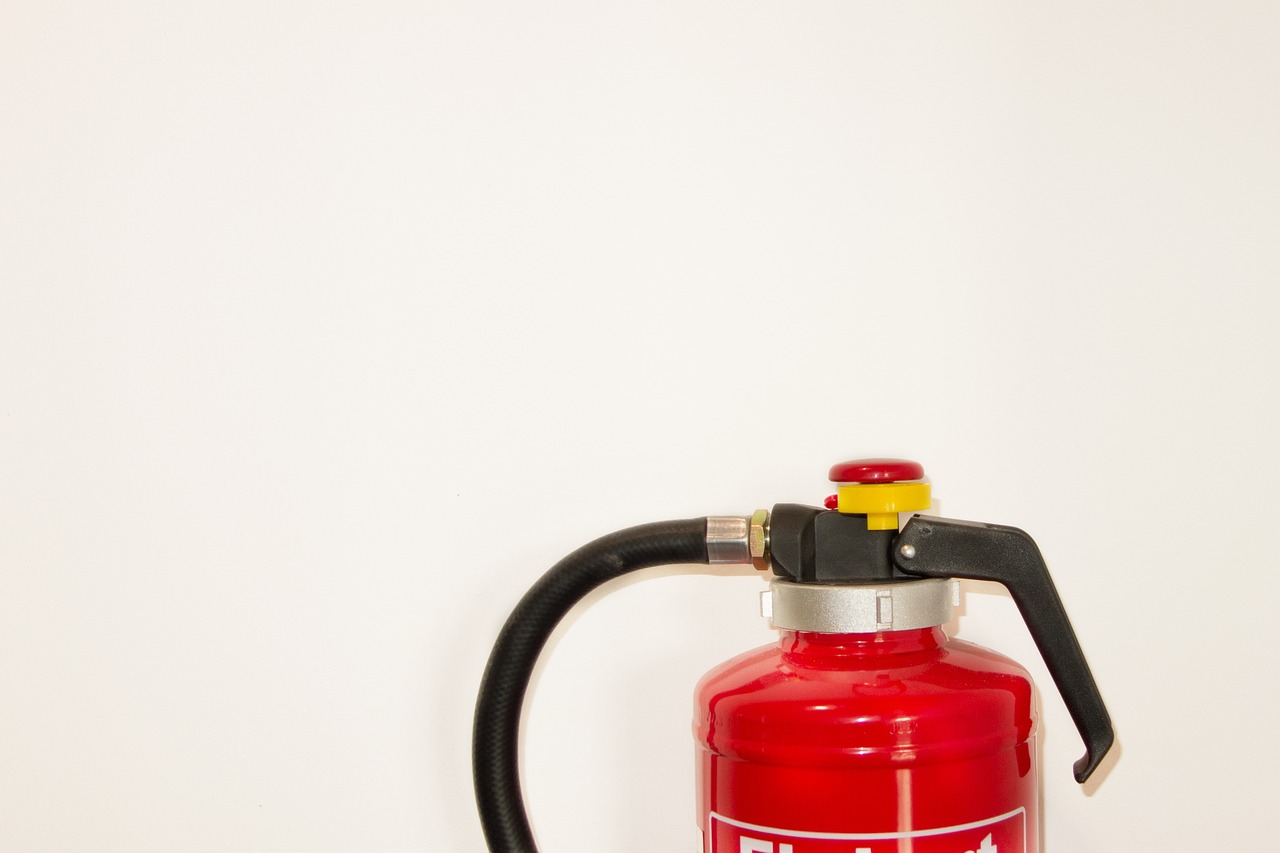
Many facilities buy appropriate equipment but lose protection through poor placement or weak maintenance. OSHA’s portable extinguisher rule requires extinguishers to be mounted, located and identified so they are readily accessible without exposing employees to possible injury. An extinguisher hidden behind pallets, blocked by a parked forklift or kept inside a locked office may fail the practical test even if it appears on a floor plan.
- Keep access clear. Extinguishers, alarm pull stations, electrical panels, eyewash stations and exits should not be blocked by raw materials, finished goods or temporary storage.
- Match equipment to the hazard. A general ABC extinguisher may be suitable for many ordinary areas, but combustible metals, commercial cooking, energized equipment or flammable liquid hazards may require different protection.
- Control signage and visibility. Equipment should be easy to identify in normal lighting and during a stressful event. Floor markings, wall signs and cabinet labels can help when they do not create confusion.
- Account for travel distance. In long production bays, mezzanines and outdoor yards, measured walking distance may be greater than it appears on a plan.
- Plan for equipment removed from service. OSHA requires alternate equivalent protection when portable extinguishers are removed for maintenance or recharging.
Inspection frequency should be built into the facility calendar. OSHA requires portable extinguishers or hose used in lieu of extinguishers to be visually inspected monthly, and portable extinguishers must receive an annual maintenance check. Certain extinguishers also have six-year maintenance or hydrostatic testing intervals depending on type. Inspection tags are not a decoration; they are evidence that the equipment remains ready and has not been overlooked.
Safety equipment beyond extinguishers
Industrial safety equipment should also protect workers before and after a fire or chemical incident. A facility may have compliant extinguishers but still expose employees to preventable injuries if PPE, first aid and emergency washing equipment are incomplete.
Personal protective equipment
PPE should follow the task hazard assessment. Typical industrial PPE may include safety glasses, face shields, gloves, chemical-resistant aprons, flame-resistant clothing, hard hats, safety footwear, hearing protection, respiratory protection and high-visibility garments. High-visibility apparel is often selected with reference to ANSI/ISEA 107, while flame-resistant clothing may involve separate standards depending on arc flash, flash fire or thermal exposure risks. See also: automation and controls.
A common mistake is treating PPE as a substitute for engineering or administrative controls. PPE is essential, but it depends on correct selection, fit, training, inspection and employee behavior. If a solvent transfer station regularly splashes, the better question is not only “Which goggles?” but also “Can the transfer method be enclosed, slowed, shielded or redesigned?”
First aid, eyewash and emergency showers
Where employees may be exposed to injurious corrosive materials, quick drenching or flushing equipment must be located within the work area for immediate emergency use. In practice, the facility should review safety data sheets, chemical concentration, transfer method, employee travel path, doorways, stairs and obstacles. A portable eyewash bottle may be useful for immediate response in some contexts, but it should not be assumed to replace required emergency eyewash or shower facilities where the hazard calls for continuous flushing.
Spill response and housekeeping equipment
Combustible waste, oil-soaked rags, cardboard accumulation and leaking containers can turn ordinary work areas into fire risk zones. OSHA’s emergency planning guidance emphasizes control of combustible waste materials. Facilities should provide appropriate waste containers, absorbents, overpack containers and housekeeping tools, then assign ownership for routine removal. Good housekeeping is not cosmetic; it directly affects fire load and emergency access.
Documentation, training and replacement decisions
Equipment decisions should be documented in a way that supervisors can actually use. A practical fire & safety equipment file should include the hazard assessment, floor plans, extinguisher locations, inspection logs, maintenance records, emergency action plan, fire prevention plan, PPE matrix, training records and corrective action history.
Training must match the emergency strategy. If all employees are expected to evacuate immediately and no extinguishers are provided for employee use, the plan and training should make that clear. If certain employees are authorized to use extinguishers, they need instruction on the principles of extinguisher use, hazards of incipient-stage firefighting and the limits of their role. OSHA requires extinguisher education upon initial employment and at least annually thereafter when extinguishers are provided for employee use; designated employees using firefighting equipment as part of an emergency action plan require appropriate training upon assignment and at least annually.
Replacement decisions should be based on condition, standard requirements and serviceability, not simply age. Remove equipment from service when it is damaged, corroded, discharged, missing parts, past required test intervals or no longer suitable for the hazard. When processes change, such as adding lithium battery storage, new solvents, combustible metal work, automated charging systems or denser racking, the equipment plan should be reviewed rather than waiting for the next annual audit.
A practical checklist for facility reviews
Use this checklist during safety walks, procurement reviews or pre-audit preparation. It is not a substitute for local code review, but it helps connect equipment with real site conditions.
- Have fire hazards been mapped by area, process and shift?
- Are extinguishers selected for the anticipated class of fire and level of hazard?
- Do extinguisher locations meet applicable travel-distance expectations and remain unobstructed?
- Are monthly visual inspections and annual maintenance checks documented?
- Is alternate protection arranged when equipment is removed for service?
- Are emergency action and fire prevention plans current and available to employees?
- Do employees know whether they should evacuate or attempt incipient-stage response?
- Are alarm signals, exit routes and assembly areas clear to employees, visitors and contractors?
- Has PPE been selected from a documented hazard assessment rather than habit?
- Are eyewash and shower facilities suitable for corrosive exposure areas and free of access barriers?
- Are spill kits compatible with the materials stored or transferred nearby?
- Are housekeeping responsibilities assigned for combustible waste, pallets, dust and oily rags?
- Are changes in materials, layouts, equipment or staffing triggering a safety review?
Frequently asked questions
Is a portable fire extinguisher enough for an industrial fire safety program?
No. A portable extinguisher is only one control. A complete program should include hazard assessment, prevention, alarms, evacuation procedures, emergency lighting, PPE, first aid or eyewash equipment where needed, inspection records and employee training. Fixed suppression systems and local fire code requirements may also apply.
How often should industrial fire extinguishers be checked?
Under OSHA 29 CFR 1910.157, portable extinguishers provided for employee use must be visually inspected monthly and receive an annual maintenance check. Additional maintenance and hydrostatic testing intervals depend on the extinguisher type and condition.
Who should choose fire & safety equipment for a facility?
The decision should involve safety personnel, operations, maintenance, supervisors and qualified fire protection or code professionals when needed. Procurement should not select equipment on price alone because class of fire, chemical compatibility, employee exposure, local code and serviceability all affect suitability.
When should the equipment plan be reviewed?
Review the plan after layout changes, new materials, process changes, new storage arrangements, incident findings, maintenance problems, code updates or changes in employee emergency roles. A routine annual review is useful, but high-risk changes should trigger review immediately.