Cooling process design for reliable industrial process systems
What a cooling process must accomplish
In an industrial plant, a cooling process moves heat away from equipment, fluids, products or enclosed spaces so the wider operation can stay within safe, repeatable limits. The aim is not simply to make something colder. A well-designed cooling process helps protect product quality, reduce thermal stress on equipment, limit fouling and corrosion, and keep pumps, heat exchangers, chillers, towers and controls working as one system. The design question is practical: how much heat must be removed, at what temperature, by which medium, and within what limits for cost, water use and risk?
For many industrial process systems, cooling decisions are made too late. Piping layout, heat exchanger selection, tower capacity, water treatment and control logic are sometimes treated as separate choices. In operation, they behave as one loop. A small change in flow rate, water chemistry or ambient wet-bulb temperature can affect the entire system.
A useful cooling design starts with four basic requirements:
- The heat load that must be removed under normal and peak operating conditions.
- The target supply and return temperatures required by the process.
- The heat rejection method, such as a cooling tower, dry cooler, chiller, once-through water system or hybrid arrangement.
- The operating constraints, including water availability, energy cost, site climate, Legionella risk, discharge limits and maintenance capability.
Core stages of an industrial cooling loop
Cooling systems differ by industry, but most industrial loops follow the same basic sequence: heat is absorbed, carried, rejected and controlled. Understanding these stages helps operators diagnose performance problems without immediately blaming a single piece of equipment.
- Heat pickup: A process fluid, machine jacket, condenser, reactor, compressor or production line transfers heat to a coolant through direct contact or through a heat exchanger surface.
- Coolant circulation: Pumps move water, glycol solution, oil or another heat-transfer fluid through piping and equipment at a flow rate high enough to maintain the required heat transfer.
- Heat rejection: The absorbed heat is released to air, another water stream, a refrigerant circuit or the atmosphere.
- Water management: In open evaporative systems, evaporation, drift, makeup water and blowdown must be balanced to control mineral concentration and biological growth.
- Feedback control: Sensors, valves, variable-speed drives and control logic adjust flow, fan speed, bypass position or chiller staging as loads and weather change.
Heat transfer before heat rejection
The first performance limit is often not the cooling tower or chiller. It may be the heat exchanger surface, coolant velocity, fouling layer, blocked strainer or process-side contamination. If the heat exchanger cannot transfer heat efficiently from the process into the coolant, increasing tower fan speed or lowering a chiller setpoint may waste energy without correcting the real problem.
Heat rejection equipment choices
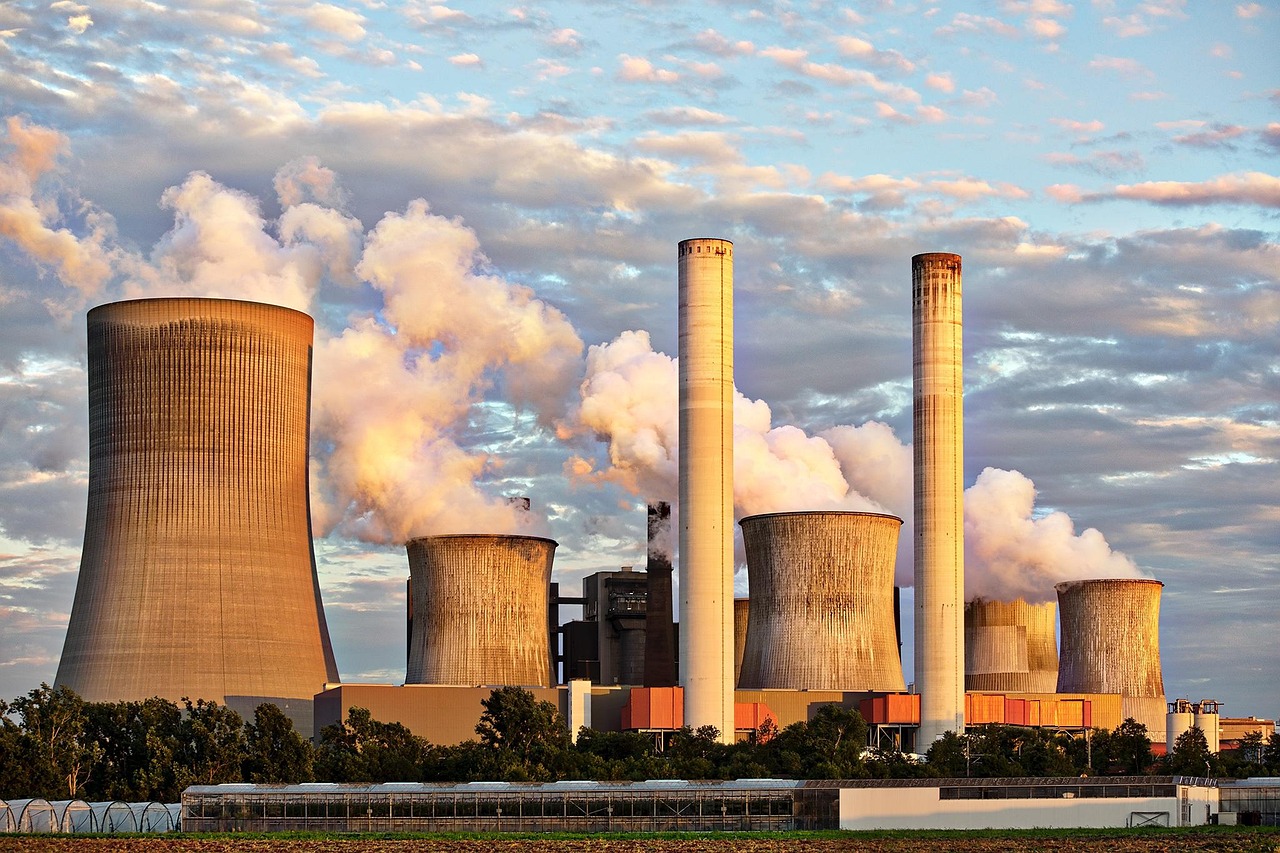
Evaporative cooling towers are common where water is available and low leaving-water temperatures are needed. Dry coolers reduce water consumption but depend more heavily on dry-bulb air temperature, which can limit performance in hot weather. Chilled water systems provide tighter temperature control but usually require more electrical energy. Hybrid systems combine methods to reduce water use, manage plume or maintain capacity during seasonal changes.
Key variables that decide cooling performance
Cooling performance can and should be measured. Operators should avoid judging a system only by whether the final process temperature looks acceptable on a normal day. A more useful approach is to track the variables that show why the system is stable, marginal or beginning to drift toward failure.
| Variable | Why it matters | Typical operating question |
|---|---|---|
| Heat load | Defines the amount of energy the cooling process must remove. | Is the system sized for peak production and seasonal conditions? |
| Supply and return temperature | Shows whether the process is receiving coolant at the required condition. | Is the temperature difference consistent with design assumptions? |
| Flow rate | Controls heat transfer, pump energy and equipment pressure drop. | Is the system overpumped, underpumped or unbalanced? |
| Approach temperature | Compares cooled water temperature with ambient wet-bulb temperature in evaporative systems. | Is the tower performing close to its realistic weather limit? |
| Water chemistry | Affects scaling, corrosion, biological growth and heat-transfer efficiency. | Are conductivity, pH, hardness and treatment residuals within the site plan? |
| Controls | Determines whether fans, pumps, valves and chillers respond smoothly to load changes. | Are setpoints coordinated, or are devices fighting each other? |
Range and approach are especially important for cooling towers. Range is the temperature drop across the tower. Approach compares the leaving water temperature with the entering air wet-bulb temperature. A smaller approach usually requires more tower surface, airflow or evaporation. It is not a free gain. If a specification demands very cold water during hot and humid weather, the plant may need larger equipment, staged cooling or refrigeration assistance.
Water, energy and treatment trade-offs
Evaporative cooling is effective because a portion of the circulating water evaporates and carries heat away. The trade-off is that dissolved minerals remain in the system and become more concentrated. To control this concentration, some water is intentionally discharged as blowdown and replaced with makeup water. For this reason, water efficiency and water treatment cannot be separated from thermal performance.
Guidance from the U.S. Federal Energy Management Program describes cycles of concentration as a key parameter for cooling tower operation. The same guidance notes that many systems operate at two to four cycles, while six or more may be possible depending on water quality and site conditions. It also gives a practical benchmark: raising cycles from three to six can reduce cooling tower makeup water by about 20 percent and blowdown by about 50 percent. EPA WaterSense guidance makes the same general point, while emphasizing that the maximum achievable cycles are facility-specific because makeup water chemistry, treatment control and equipment materials all matter.
The design lesson is straightforward. Higher cycles can save water, but only if scaling, corrosion and biological control remain within acceptable limits. Pushing cycles without monitoring conductivity, hardness and microbial risk can reduce blowdown while increasing fouling, heat-transfer loss and maintenance cost.
Energy trade-offs are just as important. A plant can lower coolant temperature by running more fans, more pumps or more chiller capacity, but the additional electrical demand may not improve production. In many systems, variable-speed drives, reset schedules and properly staged equipment deliver better results than fixed high-speed operation. Water-side economizing can also reduce mechanical refrigeration during suitable outdoor conditions when the system has the right heat exchanger and controls.
Single-pass cooling deserves special attention. Federal efficiency guidance warns that single-pass systems can use far more water than recirculating tower systems. For industrial sites still using once-through cooling for small equipment, vacuum pumps, compressors or laboratory devices, replacement with recirculating, air-cooled or other efficient technology is often one of the clearest water-reduction opportunities.
Safety and compliance factors in cooling process planning
A cooling process can create health and compliance risks if it generates aerosols, stores warm water or allows stagnant areas to develop. Cooling towers and evaporative condensers are the most visible examples because they combine water, air movement and surfaces where deposits or biofilms may form.
The U.S. Centers for Disease Control and Prevention states that Legionella can grow and spread in both open- and closed-circuit cooling tower systems. ASHRAE Standard 188 establishes minimum requirements for legionellosis risk management in building water systems, and ASHRAE Guideline 12 provides additional guidance for managing the risk in systems that include cooling towers and related equipment. For industrial operators, the practical implication is not limited to buildings with comfort HVAC. Any evaporative cooling equipment that can generate aerosols should be considered within a documented water management approach.
A responsible cooling plan should include: See also: automation and controls.
- Documented operating ranges for temperature, conductivity, pH and treatment residuals.
- Routine inspection for basin sediment, scale, corrosion, algae, blocked fill and spray distribution problems.
- Procedures for startup, shutdown, cleaning and disinfection after idle periods.
- Clear responsibility for sampling, chemical feed adjustment and alarm response.
- Coordination with local regulations where cooling tower registration, testing or reporting rules apply.
Safety also includes mechanical and process hazards. Poor cooling can overheat bearings, degrade lubricants, increase pressure in condensers, affect reactor control or create unstable product temperatures. These risks are often more expensive than the cooling equipment itself.
Common design mistakes and practical checks
Most cooling problems are not caused by one bad component. They usually appear when design assumptions, maintenance practices and operating reality no longer match. The following checks can help identify weak points before they become production losses.
Designing only for average conditions
Average weather and average production load are not enough. Cooling systems must be checked against peak heat load, high wet-bulb temperature, fouled heat-transfer surfaces and partial equipment availability. A system that works only on clean-equipment assumptions may fail during the period when production demand is highest.
Ignoring the process side of the heat exchanger
Cooling water may be within specification while the product or machine still runs hot. The cause may be process-side fouling, poor mixing, low velocity, vapor binding or an undersized exchanger. Temperature readings on both sides of the exchanger are more useful than a single supply temperature.
Overcooling to compensate for poor control
Lower setpoints can hide control problems, but they increase energy and water use. A better approach is to tune valves, reset schedules, pump staging and fan control so the system responds smoothly to real load changes.
Separating water treatment from operations
Water treatment is sometimes managed as a chemical supply task rather than an operating control. That approach is risky. Blowdown rate, makeup quality, basin cleanliness, temperature and cycles of concentration all affect treatment success.
Underestimating maintenance access
Cooling equipment needs inspection, cleaning and service. If strainers, basin sections, chemical feed points, sensors or fill areas are hard to reach, the system will eventually receive less maintenance than the design requires.
Frequently asked questions
What is the difference between a cooling process and a refrigeration cycle?
A cooling process is the broader system used to remove heat from industrial equipment or materials. It may use cooling water, air cooling, chilled water, glycol, oil or direct refrigeration. A refrigeration cycle is one possible method within that system, using compression, condensation, expansion and evaporation of a refrigerant to move heat.
How can operators reduce water use in a cooling tower system?
The main steps are to measure makeup and blowdown, control cycles of concentration within water-quality limits, repair leaks and overflow, maintain proper chemical treatment, clean heat-transfer surfaces and avoid unnecessary overcooling. Higher cycles can reduce blowdown, but only when scaling, corrosion and biological risks remain controlled.
When is a dry cooler a better option?
A dry cooler may be preferable where water is scarce, discharge is restricted, plume is a concern, or the required coolant temperature is not close to the site air temperature during peak conditions. It may not be suitable when the process needs temperatures below what ambient dry-bulb conditions can reliably support.
What should be monitored in an industrial cooling loop?
At minimum, operators should track supply and return temperature, flow rate, pressure drop, pump and fan status, conductivity, pH, treatment residuals, makeup water, blowdown, ambient conditions and alarms. The exact list depends on the equipment type and risk profile, but the goal is to connect thermal performance with water, energy and maintenance data.
Putting the cooling process into operation
A reliable cooling process is built from matched decisions, not isolated equipment purchases. Heat load, temperature targets, water chemistry, control logic, maintenance access and safety requirements need to be considered together. The strongest systems are easy to measure, easy to clean and realistic about climate, water quality and operating variation. For industrial sites, that approach reduces unplanned downtime while giving operators clearer choices when they need to balance production stability, water consumption and energy cost.