How to choose linear actuators for industrial production systems
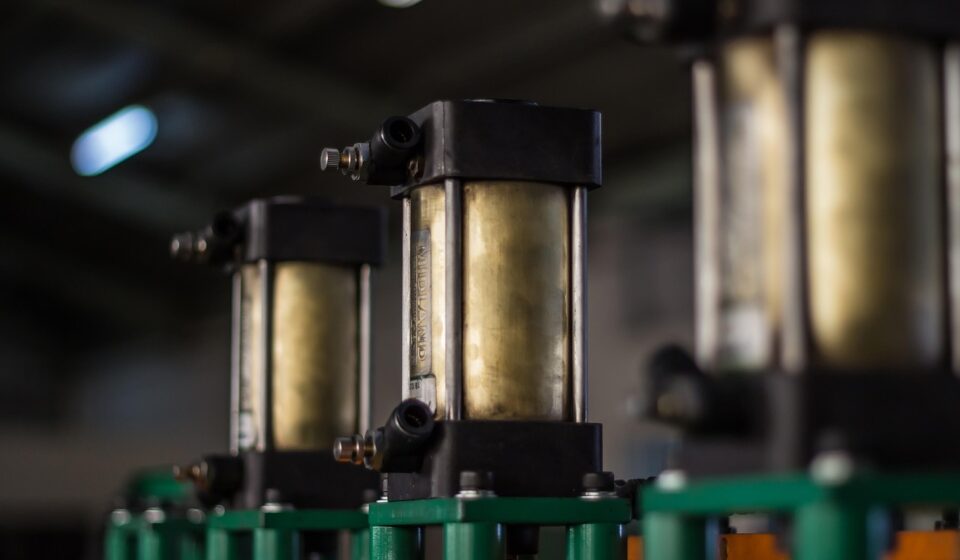
Linear actuators provide controlled straight-line motion for pushing, pulling, lifting, indexing, clamping, opening and positioning. In production equipment, the main selection issue is not whether a linear actuator can move the load, but which actuation method fits the duty. Electric, pneumatic and hydraulic designs can all perform linear motion, but they differ in force density, controllability, speed, cleanliness, maintenance needs and safety requirements. A sound selection process starts with load, stroke, speed, duty cycle, environment and control architecture, then checks guarding, stored energy and lifecycle cost before purchase.
What linear actuators do in a production system
A linear actuator converts supplied energy into linear displacement. In industrial equipment, that movement may be as simple as opening a diverter gate or as demanding as positioning a tool head through thousands of controlled cycles per shift. The actuator is usually only one part of the motion axis. Mounting brackets, linear guides, sensors, controllers, valves, drives, power supplies and safety devices often determine whether the axis performs reliably in production.
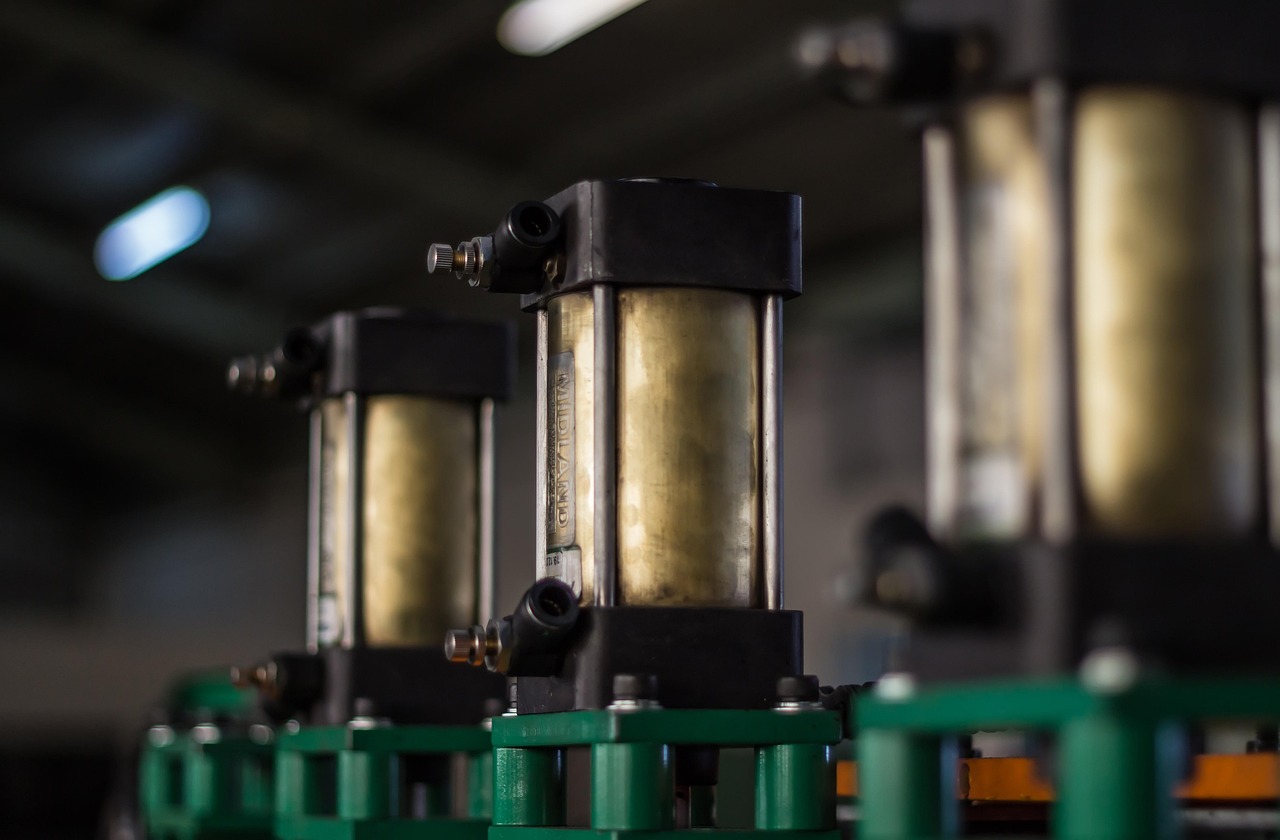
Common uses include packaging changeovers, conveyor stops, reject mechanisms, fixture clamping, press loading, valve and damper control, inspection positioning, pallet transfer and machine tending. In each case, the actuator has to fit both the mechanical task and the wider production cell. A cylinder that moves quickly on a bench may still fail in service if it is exposed to side load, washdown chemicals, abrasive dust or misaligned fixtures.
For this reason, linear actuator selection should be treated as a system decision rather than a simple component substitution. Replacing a pneumatic cylinder with an electric unit, for example, may improve programmable positioning, but it can also require new drives, feedback wiring, thermal checks and updated safety validation.
Electric, pneumatic and hydraulic options compared
The three most common industrial categories are electric linear actuators, pneumatic cylinders and hydraulic cylinders. Each has a distinct technical profile.
Electric linear actuators usually combine a motor with a screw, belt, rack or linear motor mechanism. They are often selected when the axis needs intermediate positions, recipe-based motion, controlled acceleration, feedback, repeatability or integration with servo and PLC systems. Ball screws and roller screws are common where thrust and positioning accuracy matter, while belt-driven axes are often used for longer strokes and higher travel speeds.
Pneumatic actuators use compressed air to move a piston or carriage. They are widely used because they are simple, fast and cost-effective for repetitive end-to-end motion. Pneumatics are especially practical when a facility already has compressed-air infrastructure and the application does not require many controlled intermediate positions. Their limitations usually come from air compressibility, leakage, noise, air preparation and less precise speed or position control under changing loads.
Hydraulic actuators use pressurized fluid to generate high force in a compact package. They remain important in presses, heavy handling, forming equipment and other force-intensive machinery. Their advantages are force density, robustness and smooth power delivery, but they also require attention to fluid cleanliness, seals, hoses, filters, leak control and energy isolation.
| Selection factor | Electric actuator | Pneumatic actuator | Hydraulic actuator |
|---|---|---|---|
| Typical strength | Programmable position, speed and force control | Simple, fast and economical repetitive motion | High force in a compact actuator |
| Typical limitation | Higher upfront cost and drive integration effort | Limited intermediate positioning without added controls | Fluid maintenance, leakage risk and stored-energy concerns |
| Best-fit motion | Multi-position, recipe-driven or precision movement | Two-position stops, clamps, gates and ejectors | Heavy pressing, lifting, clamping and forming |
| Maintenance focus | Screw, bearings, belts, lubrication, motor and feedback | Air quality, seals, valves, tubing and leakage | Seals, hoses, filters, oil condition and pump unit |
| Control approach | Drive, servo, stepper, encoder or integrated controller | Directional valves, flow controls, sensors and regulators | Directional or proportional valves, pumps and feedback loops |
A 2023 engineering study in Scientific Reports compared hydraulic, pneumatic and electric linear actuation under controlled conditions with similar loads and a common input-power limit. The useful takeaway for production design is that no actuator technology is universally superior. The right choice depends on the duty profile, control requirement, energy source, mechanical layout and acceptable maintenance burden.
Key sizing questions before specifying an actuator
Actuator sizing should begin with the mechanical job, not with a catalog page. At minimum, the engineering team should define force, stroke, speed, duty cycle, mounting arrangement and environmental limits.
Load, force and safety margin
The required force is not just the weight of the load. It may include friction, acceleration force, gravity direction, tooling weight, seal drag, process force and unexpected resistance from product variation. A vertical axis also needs a safe holding strategy during power loss. For long-stroke compression applications, column buckling and rod deflection must be checked. For off-center loads, a guided actuator or separate linear guide may be required so the actuator rod is not forced to carry bending moments it was not designed for.
Stroke, speed and cycle rate
Stroke length determines travel, but it also affects stiffness, overhang, cable routing and available installation space. Speed requirements should include acceleration and deceleration, not only average travel time. A fast actuator with poor deceleration can create impact loads at the end of stroke, increasing wear and noise. Duty cycle also matters because repeated motion generates heat in motors, drives, seals and bearings. A unit that survives occasional movement may overheat or wear quickly in continuous production.
Accuracy, repeatability and feedback
Accuracy describes how close the actuator gets to the commanded position. Repeatability describes how consistently it returns to the same point. Many production tasks need repeatability more than absolute accuracy. Pneumatic cylinders with end sensors may be sufficient for a gate or clamp, while inspection, dispensing or assembly may require encoder feedback and closed-loop electric motion. Depending on the technology, feedback options can include reed switches, proximity sensors, potentiometers, encoders, linear transducers or pressure sensing.
Environment and installation constraints
Temperature, moisture, dust, washdown, corrosion, vibration and hazardous-area requirements can change the actuator choice. Food, pharmaceutical and clean manufacturing may place additional emphasis on surface finish, lubricant control and cleanability. Outdoor or heavy industrial environments may require robust sealing, protective boots, stainless hardware or special coatings. Cable bend radius, hose routing and maintenance access should be reviewed before the mechanical design is finalized.
Safety and compliance considerations
Linear motion can create crush, shear, pinch and trapping hazards. The risk is not limited to large hydraulic cylinders. Small electric and pneumatic axes can also injure operators if they move unexpectedly, restart after a fault or trap hands near fixtures. Safety review should therefore be part of actuator selection, not a late-stage addition. See also: automation and controls.
ISO 12100 is commonly used as a framework for machinery risk assessment and risk reduction. In the United States, OSHA machine-guarding requirements emphasize protecting operators from hazards created by moving machine parts, including points of operation, ingoing nip points and rotating or moving components. These references do not size the actuator for a specific machine, but they frame the questions that designers and employers need to answer: what hazards exist, who can be exposed, how severe could the harm be, and what safeguards reduce the risk?
Practical safeguards may include fixed guards, interlocked gates, light curtains, two-hand controls, safe torque off, pressure dump valves, rod locks, mechanical stops, limit switches and controlled restart logic. Lockout and tagout planning is also important because hydraulic and pneumatic systems can retain stored energy, while electric axes can move if drives are energized or gravity is not restrained. A risk assessment should consider normal operation, setup, cleaning, jam clearing, troubleshooting and maintenance.
Lifecycle cost is more than purchase price
The lowest-cost actuator on the purchase order is not always the lowest-cost axis on the production line. Lifecycle cost includes energy use, spare parts, downtime, changeover time, maintenance labor, training and the cost of quality losses when motion becomes inconsistent.
Pneumatic solutions often win on simple hardware cost and fast installation, especially in plants that already use air systems. However, compressed air generation, leaks and poor air preparation can raise operating cost. Electric actuators often cost more upfront, but they can reduce air consumption, enable recipe control and provide diagnostic data. Hydraulic systems can be economical for high-force work, but fluid maintenance, filtration and leak prevention must be included in the ownership model.
The business case should also account for flexibility. If a production line frequently changes product sizes, an electric actuator with stored motion profiles may reduce manual adjustments. If the motion is fixed for years and only needs full-in and full-out positions, a pneumatic cylinder may remain the practical choice. If the process demands very high force in a constrained envelope, hydraulics may be difficult to replace without redesigning the machine.
A practical actuator selection checklist
Before requesting quotes or approving a design, document the following items. This checklist helps prevent common mismatches between catalog ratings and real operating conditions.
- Required push and pull force, including friction, acceleration and process loads.
- Stroke length, usable travel, end-of-stroke clearance and mechanical stops.
- Required speed, acceleration, deceleration and cycle rate.
- Duty cycle per minute, hour and shift, including peak production periods.
- Load orientation, side loads, moment loads and guide requirements.
- Positioning needs, including end-position sensing, intermediate positions and feedback resolution.
- Control system interface, such as PLC I/O, fieldbus, servo drive, valve manifold or safety controller.
- Power and energy source availability, including compressed air, hydraulic power unit or electrical supply.
- Environmental exposure, washdown, dust, temperature, corrosion and ingress protection needs.
- Required safeguards, emergency stop behavior, safe restart and maintenance energy isolation.
- Expected service access, spare parts strategy and acceptable downtime.
For broader context on automation, equipment integration and industrial line design, see the production systems section.
Frequently asked questions
What is the difference between a linear actuator and a linear guide?
A linear actuator creates motion and force. A linear guide supports the load and controls straight-line travel. Some actuators include integrated guides, but many rod-style cylinders are not designed to carry side loads. If the load is offset, heavy or cantilevered, separate guidance may be needed.
Are electric linear actuators always more efficient than pneumatic actuators?
Not always. Electric actuators can be efficient because they use energy mainly during motion and offer precise control. Pneumatic efficiency depends heavily on compressor efficiency, leakage, pressure settings and duty cycle. For a simple high-speed two-position movement, pneumatics may still be practical; for frequent variable positioning, electric motion may provide stronger operational benefits.
When should a production system use hydraulics?
Hydraulics are most attractive when the machine needs high force, rugged construction or compact power density. They are common in pressing, forming, heavy lifting and clamping. The trade-off is the need to manage fluid cleanliness, leaks, hose condition, filtration and safe release of stored pressure.
What information should be prepared before contacting actuator suppliers?
Prepare the load, stroke, speed, duty cycle, mounting orientation, operating environment, control requirements, available power sources and safety constraints. Drawings or sketches showing load direction and side forces are especially helpful because many actuator failures come from misalignment rather than insufficient rated force.
Can one actuator type replace another without redesigning the machine?
Sometimes, but not always. A like-for-like replacement is easiest when the motion, mounting envelope and controls remain similar. Switching from pneumatic to electric, or from hydraulic to electric, often affects wiring, controls, guarding, software, maintenance procedures and operator training. Treat the change as a system modification, not only a component swap.