Kalka Automation and Power Controls and what industrial buyers should verify
What the public information indicates
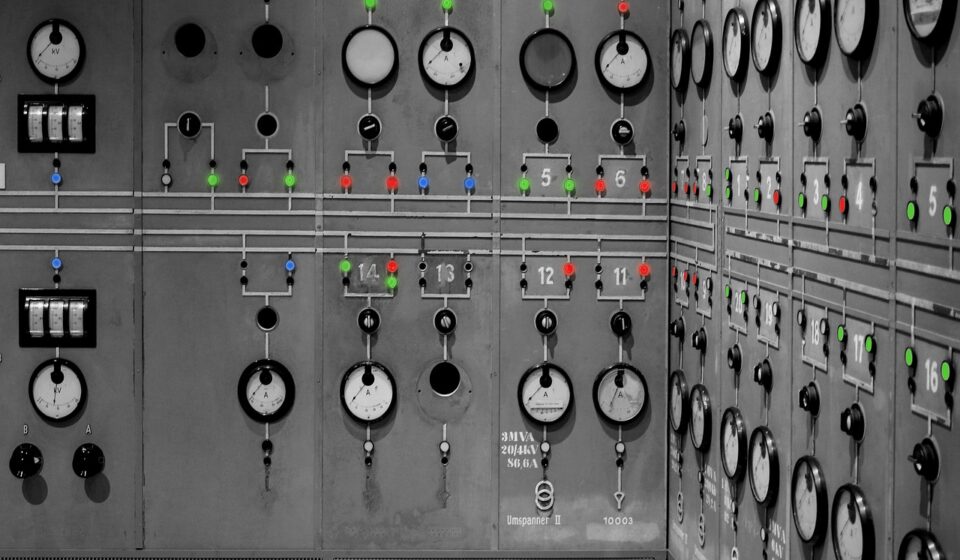
Kalka Automation and Power Controls, also presented publicly as KAPCON, is associated with industrial electrical panels and automation-related solutions in India. Public business profiles describe the company in connection with power control centre panels, motor control centre panels, AMF panels, APFC panels, PLC panels, distribution boards and process automation services.
For industrial buyers, the practical issue is not only whether the company appears in supplier listings. The more important question is what can be verified before a project depends on its panels for power distribution, motor control or automation. This article reviews the public information available as of October 2026, explains the main product categories, and outlines checks for engineering, procurement and maintenance teams. For related industrial control topics, see the automation and controls section.
The search intent behind the keyword “kalka automation and power controls” is likely both navigational and evaluative. A reader may be trying to identify the company, understand what it supplies, compare it with other panel builders, or prepare a vendor qualification checklist. Public directory entries are useful starting points, but they are not audited technical documentation. Buyers should therefore request project-specific evidence before issuing a purchase order.
Public profile summary and what each source can support
Public profiles for Kalka Automation and Power Controls are broadly consistent: they link the company to industrial electrical panels and automation services in the Noida and Greater Noida industrial region. The level of detail, however, varies by source. A LinkedIn company profile describes KAPCON as an electrical and electronics manufacturing organization and lists product categories such as PCC, MCC, AMF and APFC panels. TradeIndia presents the business as a manufacturer and supplier from Greater Noida, with PLC panels among the listed products. ExportersIndia lists a wider group of offerings, including LT control panels, distribution boards, PLC automation control panels, PCC panels, AMF panels, APFC panels and process automation services. Delhi labour registration data also shows an entry for Kalka Automation And Power Controls as a commercial establishment connected with electrical goods, equipment and supplies.
| Public source type | What it indicates | How buyers should use it |
|---|---|---|
| Professional profile | Associates KAPCON with electrical and electronics manufacturing, automation and panel categories. | Useful for orientation, but not a substitute for technical approval. |
| Industrial marketplace listing | Shows PLC panel and electrical panel supplier positioning. | Good for initial discovery; request catalogues, drawings and references directly. |
| Supplier directory listing | Lists LT panels, distribution boards, PLC automation panels, PCC, AMF and APFC panels. | Helpful for product scope, but product claims must be checked against quotations and test reports. |
| Registration or government data | Can support business existence and activity category. | Useful for due diligence, but it does not prove engineering capability or compliance. |
The main information gap is common with small and mid-sized industrial suppliers. Directory pages often describe product families without publishing type-test evidence, factory inspection procedures, component make lists, short-circuit ratings, enclosure protection ratings or software architecture. Those details matter far more than a listing headline when a panel will operate a pump house, HVAC system, process line, generator changeover, power distribution room or manufacturing cell.
What the listed panel categories mean
The product names associated with Kalka Automation and Power Controls are common in industrial power distribution and control. Understanding these terms helps buyers frame the right technical questions and avoid treating all panels as interchangeable metal enclosures.
Power control centre panels
A power control centre, often called a PCC panel, is generally used for low-voltage power distribution and control within an industrial or commercial electrical system. In a typical project, the PCC may receive power from a transformer, generator or main incomer and distribute it to feeders, motor control centres or downstream panels. Key design items include busbar rating, fault level, incomer and feeder protection, metering, segregation, ventilation, earthing, cable entry and maintainability.
Motor control centre panels
A motor control centre, or MCC, groups motor starters, feeders and protection devices in one assembly. MCC design depends on motor ratings, duty cycle, starting method, overload protection, interlocking, local and remote control requirements, and maintenance access. If variable frequency drives are included, the buyer should also consider harmonic mitigation, heat dissipation, cable routing, EMC practices and bypass requirements.
PLC automation panels
A PLC automation control panel houses the programmable controller, I/O modules, relays, terminal blocks, power supplies, communication devices and human-machine interface hardware needed to run an automated process. The enclosure is only one part of the deliverable. The logic, input and output list, communication protocol, alarm philosophy, historian or SCADA interface, commissioning documentation and change-control method are equally important.
AMF and APFC panels
An AMF panel, or automatic mains failure panel, supports changeover between utility supply and generator supply when the main supply fails. It requires careful attention to sensing, timing, interlocks and generator start-stop logic. An APFC panel, or automatic power factor correction panel, switches capacitor banks to improve power factor. For APFC systems, buyers should check capacitor duty, detuning reactors where needed, contactor or thyristor switching, harmonic conditions and ventilation.
Standards and compliance context for panel buyers
Public listings mention product categories, but procurement teams need to connect those categories with applicable standards. For low-voltage switchgear and controlgear assemblies, IEC 61439 is a widely used international reference for definitions, service conditions, construction requirements, technical characteristics and verification requirements. In India, BIS has adopted IS/IEC 61439 parts for low-voltage switchgear and controlgear assemblies, including general rules and power switchgear and controlgear assemblies. India also has the Central Electricity Authority safety and electric supply regulations, with the 2023 regulations forming an important safety framework for electrical installations.
The relevant standard depends on the project location and scope. A panel installed in India may be reviewed against Indian standards, project specifications, local inspector requirements and utility requirements. A panel exported to the United States may face different expectations, including NEC-related installation requirements and UL standards for industrial control panels or panelboards where applicable. A panel shipped to Europe or the Middle East may be specified around IEC, EN or local authority requirements. A directory listing should not be treated as evidence that one assembly will satisfy all compliance regimes.
For Kalka Automation and Power Controls, or any comparable panel builder, buyers should ask for a written compliance matrix. That matrix should state which standard applies to the assembly, which clauses are covered by design verification, which parts are routine tested, which components are certified, and which items are excluded. This is especially important for short-circuit withstand rating, temperature rise, dielectric properties, clearances, creepage distances, degree of protection, earthing continuity and documentation control.
Due diligence questions before sourcing from a panel builder
A sound procurement process separates marketing claims from verifiable engineering evidence. A buyer evaluating Kalka Automation and Power Controls should ask for documents tied to the exact panel being quoted, not only a generic brochure. See also: industrial safety.
- Company verification: Confirm legal name, current address, tax registration, authorized signatory and bank details through direct communication and official documents.
- Scope confirmation: Define whether the supply includes only fabrication, complete electrical design, PLC programming, site commissioning, integration with SCADA, operator training or annual maintenance support.
- Technical drawings: Request general arrangement drawings, single-line diagrams, control schematics, terminal plans, bill of materials, cable schedules and heat-loss calculations where relevant.
- Component list: Confirm make, model and rating of breakers, contactors, relays, PLCs, HMIs, meters, capacitors, fans, terminal blocks and wiring accessories.
- Testing evidence: Ask for routine test formats, factory acceptance test procedures, insulation resistance test records, functional test records and calibration certificates for test equipment.
- Software deliverables: For PLC panels, define whether source code, backup files, password policy, I/O map, logic description and commissioning report will be delivered.
- After-sales support: Clarify response time, spare parts availability, warranty conditions and whether support is available at the project location.
These checks are normal controls for electrical systems that affect uptime, safety and production continuity. A low-cost panel can become expensive if drawings are incomplete, components are substituted without approval, heat rise is ignored, or commissioning support is unavailable when production starts.
Where Kalka Automation and Power Controls may fit
Based on public supplier descriptions, Kalka Automation and Power Controls appears most relevant to buyers looking for custom or semi-custom industrial panels in categories such as PCC, MCC, PLC control, AMF, APFC and distribution boards. That positioning may fit factories, building utilities, water systems, generator applications, material handling systems and process plants that need local panel fabrication and control integration.
The fit is less certain where the project requires export-certified assemblies, highly standardized global documentation, hazardous-area certification, pharmaceutical validation packages, marine approvals, or a large multinational service network. This does not mean the company cannot support such work. It means the buyer should verify capability before assuming it. The higher the risk of downtime or safety exposure, the more detailed the vendor qualification should be.
Engineering teams should also evaluate whether the supplier can coordinate with consultants, electrical contractors, PLC programmers, original equipment manufacturers and site maintenance teams. Many panel projects run into trouble not because the enclosure is poorly built, but because responsibilities are unclear. For example, a pump automation panel may require coordination among the pump vendor, instrument supplier, civil contractor, power distribution contractor and plant operator. The purchase order should specify who owns interlocking logic, field wiring checks, loop testing, remote monitoring and final acceptance.
Practical procurement checklist
The following checklist can be used when evaluating Kalka Automation and Power Controls or any similar automation and power panel supplier.
| Checklist item | Why it matters | Evidence to request |
|---|---|---|
| Electrical ratings | Prevents undersized assemblies and unsafe operation. | Rated voltage, current, frequency, short-circuit rating and busbar details. |
| Environmental suitability | Controls heat, dust, humidity and corrosion risk. | Ingress protection rating, enclosure material, ventilation design and coating specification. |
| Protection coordination | Improves selectivity and reduces nuisance trips. | Breaker settings, relay settings, discrimination study or consultant approval. |
| Automation architecture | Ensures reliable control and future maintenance. | PLC model, I/O list, network diagram, HMI screens and backup procedure. |
| Factory acceptance testing | Finds defects before shipment and site installation. | FAT protocol, signed test report, photos and punch list closure. |
| Documentation package | Supports maintenance, troubleshooting and audits. | As-built drawings, manuals, test certificates, component datasheets and software backup. |
For international buyers, add one more step: confirm whether the panel will be acceptable to the authority having jurisdiction in the destination country. This should be settled before manufacturing, not after shipment. Differences in wire colour, labeling, component certification, short-circuit current rating, grounding practices and inspection rules can delay installation even when the panel functions correctly.
Frequently asked questions
Is Kalka Automation and Power Controls a manufacturer or a trading company?
Public listings describe Kalka Automation and Power Controls as a manufacturer and supplier, and some directories also use broader terms such as service provider or retailer. Buyers should confirm the exact scope for a specific order, including whether design, fabrication, programming, testing and commissioning are performed in-house or through partners.
What products are most commonly associated with the company?
The recurring product categories in public profiles include PCC panels, MCC panels, PLC automation control panels, AMF panels, APFC panels, LT control panels and distribution boards. These categories point to industrial power distribution and control rather than consumer electrical products.
Can a public marketplace listing prove technical compliance?
No. A marketplace listing can support initial supplier discovery, but compliance depends on project-specific design, components, testing, documentation and applicable local standards. Buyers should request drawings, test reports, compliance statements and component certificates before approval.
What should be checked first when evaluating a panel supplier?
Start with the electrical rating, short-circuit requirement, applicable standard, component list, enclosure environment, FAT procedure and after-sales support. These items have a direct effect on safety, reliability and maintainability.
Is the company suitable for overseas projects?
Public information alone is not enough to confirm suitability for overseas projects. If the panel will be installed outside India, the buyer should verify destination-country standards, certification requirements, documentation language, warranty support and local inspection acceptance before placing an order.