Industrial safety gloves selection guide for real workplace hazards
Why glove selection has to start with the task
Industrial safety gloves are not interchangeable. A glove that performs well for dry metal handling may break down quickly when exposed to a solvent. A chemical-resistant glove may protect against splash exposure but reduce grip or dexterity around sharp parts. The safer approach is to match the glove to the task, the hazard, the exposure time, and the work environment.
OSHA’s hand protection rule requires appropriate hand protection when employees’ hands are exposed to hazards such as harmful substance absorption, cuts, abrasions, punctures, chemical burns, thermal burns, and harmful temperature extremes. OSHA also states that glove selection should be based on the glove’s performance characteristics relative to the task, conditions, duration of use, and identified hazards. (osha.gov)
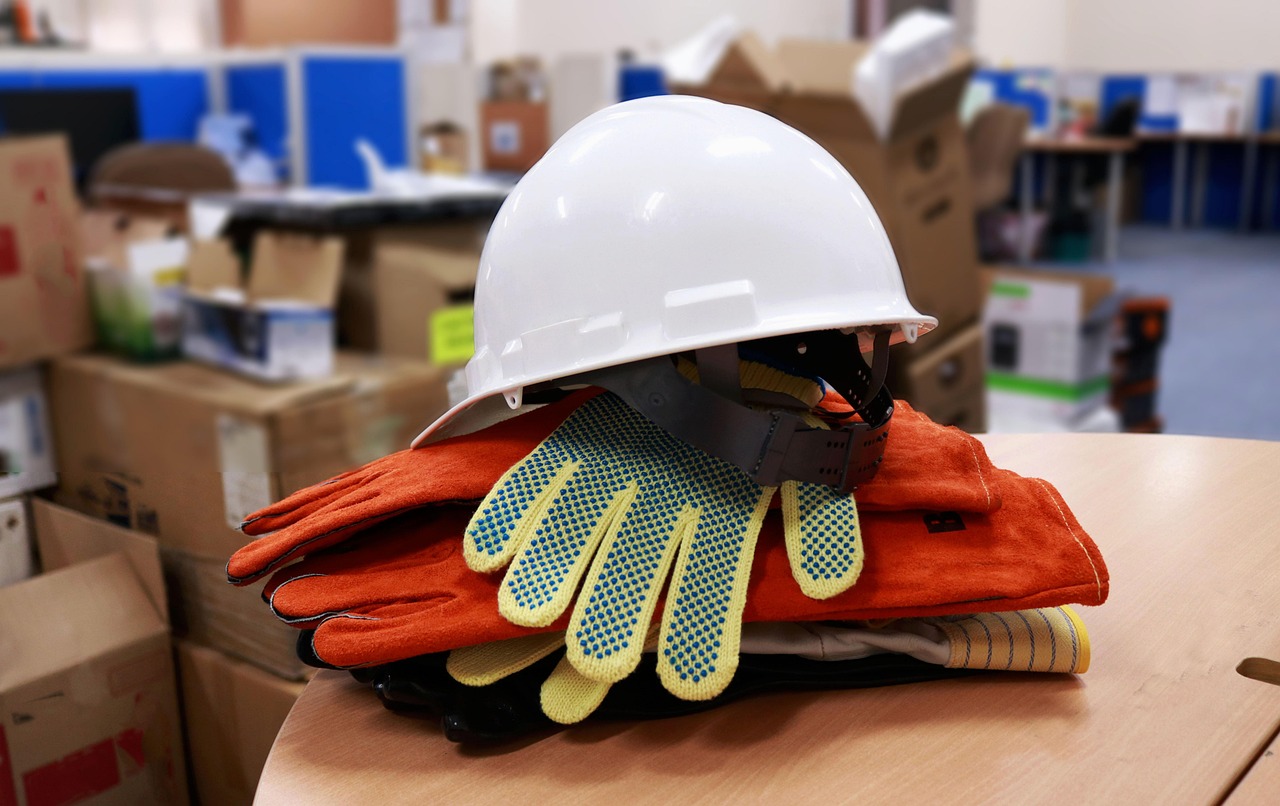
In practice, the question is not “Which glove is best?” but “Which glove is suitable for this job, this material, this exposure, and this worker?” This guide uses that task-first approach for safety managers, purchasing teams, maintenance supervisors, and industrial workers comparing hand protection options.
Common hazards that industrial safety gloves must address
A good glove program starts by identifying how hands may be injured or exposed during normal production, changeovers, maintenance, cleaning, emergency response, and non-routine work. OSHA’s general PPE requirements also require employers to assess the workplace for hazards that are present or likely to be present and to select PPE that protects affected employees from those hazards. (osha.prod.pace.dol.gov)
For glove selection, common industrial hazards usually fall into these categories:
- Cut and laceration hazards: sheet metal, glass, sharp plastic edges, knives, blades, scrap, burrs, cable, and packaging tools.
- Abrasion hazards: rough castings, blocks, lumber, wire rope, unfinished components, and repeated handling of coarse surfaces.
- Puncture hazards: nails, wire ends, staples, splinters, needles, sharp scrap, and irregular waste streams.
- Chemical hazards: solvents, oils, acids, alkalis, fuels, cleaning agents, resins, adhesives, and process chemicals.
- Thermal hazards: hot surfaces, cold rooms, outdoor winter work, welding-adjacent tasks, steam lines, and molten or heated materials.
- Grip and dexterity hazards: wet parts, oily components, vibration, small fasteners, rotating tools, and jobs where excess bulk can create a secondary risk.
Selection should also take injury history into account. The U.S. Bureau of Labor Statistics reported 2.5 million nonfatal workplace injuries and illnesses in private industry for 2024, a reminder that hand protection belongs within a broader injury-prevention system, not just a purchasing checklist. (bls.gov)
How standards help compare glove performance
Performance standards make glove comparison more objective, but they do not replace a hazard assessment. They help buyers understand what has been tested, how performance is classified, and whether a glove is intended for mechanical, chemical, thermal, or combined hazards.
ANSI/ISEA 105 for hand protection classification
In the United States, ANSI/ISEA 105 is one of the key standards used to classify hand and arm protection. The 2024 edition covers performance properties related to mechanical protection, chemical protection, heat and flame protection, and other characteristics. The ANSI webstore describes ANSI/ISEA 105-2024 as a revision of the 2016 edition and identifies performance ranges for cut resistance, puncture resistance, abrasion resistance, chemical permeation, degradation, ignition resistance, and vibration reduction. (webstore.ansi.org)
For cut protection, many industrial buyers focus on the familiar ANSI A1 through A9 cut levels. Higher numbers indicate greater measured cut resistance, but higher is not automatically better for every job. A glove with more cut protection may be thicker, warmer, less flexible, or harder to wear for a full shift. In repetitive assembly, the right balance of cut resistance and dexterity may reduce more real-world risk than a glove that looks stronger on paper but is removed because it slows the work.
EN 388 for mechanical risks
EN 388 is widely used on gloves sold in Europe and in global supply chains. It addresses protective gloves against mechanical risks such as abrasion, blade cut, tear, puncture, and, where applicable, impact. SATRA’s explanation of EN 388:2016+A1:2018 notes that the standard specifies requirements, test methods, marking, and information supplied for gloves against these mechanical risks. (satra.com)
For international operations, the practical takeaway is straightforward: do not compare gloves only by marketing names such as “heavy duty,” “cut resistant,” or “chemical resistant.” Compare the marked performance levels, the test standard, and the actual hazard being controlled.
Match the glove type to the hazard
The table below is a practical starting point. It is not a substitute for the glove manufacturer’s technical data, the chemical safety data sheet, or a site-specific PPE assessment.
| Hazard or task | Glove features to evaluate | Key cautions |
|---|---|---|
| Sharp metal, glass, blades, scrap | Cut rating, puncture rating, abrasion resistance, reinforced thumb crotch, coating grip | Do not assume high cut resistance means good needle or fine puncture protection. |
| Oily parts and general assembly | Nitrile or polyurethane coating, grip pattern, dexterity, breathability, abrasion rating | Too much coating can reduce ventilation and comfort during long shifts. |
| Chemical handling | Material compatibility, breakthrough time, permeation rate, degradation resistance, cuff length | No single glove material protects against all chemicals; check the chemical and mixture. |
| Hot surfaces or thermal contact | Contact heat rating, insulation, outer material, cuff coverage, dexterity under heat | Heat gloves may not provide chemical or cut protection unless tested for those hazards. |
| Cold storage or winter outdoor work | Insulation, waterproofing, grip in wet conditions, liner comfort, size with liners | Bulky gloves can reduce control of tools, switches, and small parts. |
| Cleaning, degreasing, or wet work | Chemical resistance, liquid barrier, cuff design, inner liner, replacement interval | Moisture trapped inside gloves can contribute to skin irritation if not managed. |
Chemical resistance needs special attention
Chemical glove selection is easy to oversimplify. “Nitrile,” “latex,” “neoprene,” “PVC,” and “butyl” describe glove materials, not universal protection. The same material can perform differently depending on thickness, formulation, chemical concentration, temperature, contact time, and whether the exposure is splash, intermittent handling, or immersion.
The UK Health and Safety Executive explains chemical glove selection using three important terms: breakthrough time, permeation rate, and degradation. It also advises basing glove selection for mixtures on the component with the shortest breakthrough time. (hse.gov.uk) CCOHS similarly emphasizes that contact duration, chemicals involved, glove material, glove thickness, and whether a glove is lined or unlined can all influence selection. (ccohs.ca)
For purchasing and safety review, this means teams should request product-specific chemical resistance data rather than relying on the material name alone. The safety data sheet for the chemical may identify recommended protective glove materials, but many SDSs are broad. When the SDS is not specific enough, use the glove manufacturer’s chemical compatibility data and document the basis for the choice.
Fit, comfort, and usability are safety factors
A glove that workers cannot wear correctly is not effective protection. Fit affects grip strength, dexterity, fatigue, and the likelihood that workers remove gloves during the task. A glove that is too tight can restrict movement and increase discomfort. A glove that is too loose can snag, reduce control, or make small parts harder to handle. See also: automation and controls.
Usability should be evaluated during real work, not only at a desk. A short field trial can reveal seam irritation, poor fingertip feel, coating wear, excessive sweating, loss of grip when oily, or difficulty donning and doffing. These issues matter because PPE depends on consistent human use. NIOSH’s hierarchy of controls places PPE after elimination, substitution, engineering controls, and administrative controls; PPE can reduce exposure, but it is generally less preferred than controls that remove or reduce the hazard before it reaches the worker. (cdc.gov)
That hierarchy does not make gloves unimportant. It means gloves should be part of a broader control plan. Deburring sharp edges, guarding cutting operations, using tools to hold parts, improving work positioning, or reducing chemical splash can all make gloves more effective and reduce reliance on worker behavior alone.
Inspection, replacement, and training
Even the right glove can fail if it is used beyond its serviceable life. Replacement timing should be based on visible condition, exposure severity, manufacturer instructions, and the consequences of failure. Disposable chemical gloves may need immediate removal after contamination. Cut-resistant gloves may need replacement when yarns are broken, coatings are worn through, or the glove no longer fits properly. Reusable chemical gloves may need a planned replacement interval even if the surface still looks acceptable.
A basic glove inspection should check for:
- cuts, punctures, tears, holes, or worn coating;
- stiffness, swelling, cracking, discoloration, or tackiness after chemical exposure;
- loss of grip or excessive smoothness on coated palms;
- contamination inside the glove;
- damaged cuffs, seams, or closures;
- poor fit after laundering or repeated use.
Training should be short, task-specific, and repeated when hazards, chemicals, tools, or glove models change. Workers should know which glove is required for each task, what the glove does not protect against, when to replace it, how to remove contaminated gloves, and who to notify when the selected glove interferes with safe work.
For broader workplace protection planning, see our industrial safety resources.
A practical selection workflow
Industrial glove selection is easier to manage when the process is documented. A practical workflow looks like this:
- Define the task: Include normal work, cleaning, maintenance, jam clearing, tool changes, and emergency steps.
- Identify the hazards: List mechanical, chemical, thermal, biological, electrical, and ergonomic concerns separately.
- Check higher-level controls: Ask whether the hazard can be eliminated, guarded, isolated, automated, substituted, or reduced before PPE is chosen.
- Select performance requirements: Define needed cut, puncture, abrasion, chemical, liquid, heat, cold, grip, and dexterity features.
- Review standards and data: Compare ANSI/ISEA 105, EN 388, chemical compatibility, and manufacturer data relevant to the task.
- Run a controlled trial: Test fit, comfort, grip, durability, and worker acceptance under actual conditions.
- Document the decision: Record the hazard, selected glove, limitations, replacement guidance, and training requirements.
- Review after change: Reassess when new materials, tools, chemicals, injury trends, or worker feedback indicate a gap.
This workflow also reduces one of the most common errors in glove purchasing: choosing one “standard plant glove” for too many jobs. Standardization can reduce cost and confusion, but over-standardization can leave workers under-protected for high-risk tasks or overburdened for precision work.
Frequently asked questions
Are higher cut-level gloves always safer?
No. Higher cut levels can be useful for sharp materials, but they may reduce dexterity, increase heat stress, or make fine handling more difficult. The safer choice is the cut level that controls the identified hazard while still allowing the worker to perform the task correctly.
Can one glove protect against both chemicals and cuts?
Some gloves are designed for combined hazards, but each protection claim should be verified. A chemical-resistant glove is not automatically cut-resistant, and a cut-resistant liner is not automatically a chemical barrier. Check both the mechanical rating and chemical compatibility data.
How often should industrial safety gloves be replaced?
There is no universal interval. Replacement depends on glove type, hazard severity, contamination, wear, manufacturer instructions, and inspection results. Disposable gloves may be single-use for contamination control, while reusable gloves require inspection and a defined replacement policy.
Who should decide which gloves workers use?
The decision should involve safety personnel, supervisors, purchasing staff, and workers who perform the job. Safety teams bring regulatory and technical knowledge, while workers can identify fit, grip, and usability problems that may not appear in a product specification.
What is the biggest mistake in glove selection?
The biggest mistake is choosing by product category or price before defining the hazard. A task-based hazard assessment should come first, followed by performance requirements, standards review, product testing, training, and periodic reassessment.