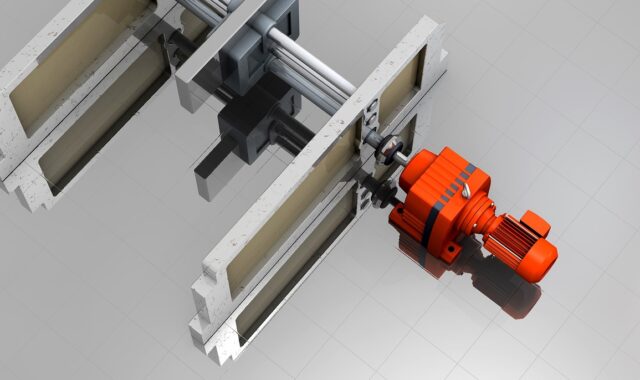
How SCADA and automation work together in industrial operations

How SCADA and automation work together
SCADA and automation are connected, but they are not the same layer of an industrial control environment. Automation handles direct control: reading sensors, executing PLC or controller logic, opening valves, starting and stopping motors, enforcing interlocks and keeping a process within defined limits. SCADA, short for supervisory control and data acquisition, gives operators a broader view of those automated assets through screens, alarms, trends, reports and remote supervisory commands. In practical terms, automation keeps the machine or process running; SCADA helps people monitor, coordinate and improve it across a production line, plant, utility network or distributed site portfolio.
That distinction matters because many project problems begin with a vague request to add SCADA when the real issue is unstable control logic, poor instrumentation, weak network design or missing operating procedures. A good plan defines which actions must stay local and deterministic, which information should move to supervisory systems, and which decisions require human approval. For broader industrial control coverage, see our automation and controls section.
The control stack behind a SCADA automation system
A SCADA project is not a single product or screen package. It is a stack of field devices, controllers, networks, servers, operator interfaces, databases and procedures. Each layer has a different time scale and risk profile. A pressure transmitter may update in milliseconds, a PLC scan may run continuously, an operator display may refresh every few seconds, and a production report may be reviewed once per shift.
| Layer | Typical role | Planning question |
|---|---|---|
| Field devices | Sensors, actuators, meters and drives that measure or change the physical process. | Is the measurement accurate, maintainable and located at the right control point? |
| PLC, RTU or controller | Executes local logic, sequencing, interlocks and equipment control. | Which decisions must continue safely if the supervisory network is unavailable? |
| HMI and SCADA | Displays status, alarms, setpoints, trends and supervisory commands. | What does the operator need to know now, and what should be recorded for later? |
| Historian and reports | Stores time-series data for troubleshooting, compliance, performance and maintenance. | Which tags need high-resolution history, and which only need event or summary data? |
| Business and analytics systems | Use selected OT data for planning, energy analysis, asset health or production visibility. | How will data move without weakening the control network boundary? |
The key design rule is to keep control authority as close to the process as practical. SCADA can start equipment, change approved setpoints or acknowledge alarms, but protective actions and critical sequences should not depend on a wide-area link, a dashboard application or a cloud service.
What changed in SCADA projects by 2026
SCADA systems were once treated mainly as control-room software. Modern projects now sit inside a broader OT strategy that includes cybersecurity, remote access, data governance, asset lifecycle planning and business reporting. This does not mean every control loop belongs in the cloud. It means industrial data is expected to support more decisions than it did in older isolated systems.
Several public references show this shift. NIST SP 800-82 Rev. 3, published on September 28, 2023, frames OT security around performance, reliability and safety requirements. NIST listed SP 800-82 Rev. 4 as an initial public draft dated September 21, 2026; that draft expands coverage of OT sectors and discusses IIoT and cloud convergence, asset management, network monitoring and zero trust principles. Because it is a draft, it should be treated as guidance under development rather than a final replacement for the 2023 revision.
Remote access and recovery have also become more formalized. NIST SP 1800-45, finalized in June 2026, documents secure remote access architectures for the water and wastewater sector. NIST SP 1339, also finalized in June 2026, emphasizes that OT backups should be created regularly, integrated with change management, tested and reviewed during recovery exercises. For SCADA and automation teams, the message is straightforward: connectivity is useful only when resilience, access control and restore capability are designed in from the start.
Architecture choices that matter before software selection
Keep fast control local
SCADA should supervise the control system; it should not become the only place where essential control logic resides. PLCs, RTUs and dedicated controllers should continue running safe local logic during a server failure, network outage or operator workstation restart. This is especially important for remote pump stations, substations, conveyors, furnaces, compressors and batch processes where an interruption can create safety, quality or environmental consequences.
Separate control, supervision and reporting
One common mistake is allowing reporting requirements to dictate the control architecture. Production dashboards, maintenance systems and enterprise applications may need selected data, but they rarely need direct access to controllers. A better pattern is to separate zones by function: control devices in the OT zone, SCADA and historians in a controlled supervisory layer, and business systems connected through a brokered boundary such as an industrial demilitarized zone. This approach aligns with the zone and conduit thinking used in ISA/IEC 62443 discussions.
Design the data model before the graphics
Operator graphics get attention, but tag naming, alarm philosophy, time synchronization and data context often determine whether the system remains useful after commissioning. Teams should define naming conventions, engineering units, scan rates, alarm priorities, retention periods and ownership for each major tag group. Without that discipline, a SCADA screen may look modern while still producing noisy alarms, duplicated tags and reports that operators do not trust.
Cybersecurity and governance should be part of the design
Industrial cybersecurity is no longer a separate checklist performed at the end of a SCADA project. It affects network topology, remote maintenance, user management, backups, procurement, patch testing and incident response. The ISA/IEC 62443 series is widely used for industrial automation and control system security because it gives asset owners, integrators and product suppliers a common language for risk-based requirements. In January 2025, ISA announced ANSI/ISA-62443-2-1-2024 as an update focused on organization-wide security program requirements for industrial automation and control systems. See also: industrial safety.
For a practical project team, the security plan should be specific enough to influence engineering drawings and commissioning tests. At minimum, the plan should cover:
- Asset inventory that links controllers, workstations, network devices, software versions and tag groups to an owner.
- Role-based access for operators, engineers, maintenance staff, vendors and administrators.
- Multi-factor authentication for remote access where technically feasible and operationally appropriate.
- Segmentation between IT, OT, remote access services and safety-related systems.
- Patch and vulnerability management that includes testing before production rollout.
- Backups for PLC programs, SCADA configurations, historian data, engineering workstations and server images.
- Event logging and monitoring that can help reconstruct what happened during an alarm, outage or suspected cyber incident.
The goal is not to copy IT security controls without adjustment. OT environments often have strict uptime, safety and vendor support constraints. A stronger approach is to document risk, apply layered controls, test recovery paths and make exceptions visible rather than informal.
A practical planning checklist for SCADA and automation projects
- Define the operating objective. State whether the project is for safety visibility, downtime reduction, energy tracking, remote operation, compliance records or production optimization.
- Map the process and assets. Identify controllers, instruments, panels, networks, workstations, software licenses and communication paths before choosing a platform.
- Classify control actions. Separate local automatic control, operator supervisory control, engineering changes and business reporting.
- Rationalize alarms. Decide which conditions require operator action, which should be logged only, and which indicate maintenance rather than process risk.
- Plan cybersecurity early. Include segmentation, account roles, remote access, backup, logging and vendor access in the design package.
- Test abnormal conditions. Commission not only normal operation, but also network loss, server restart, bad sensor values, power recovery and communication delays.
- Prepare the handover. Deliver drawings, tag lists, backup procedures, restore tests, operator training and change management rules.
This checklist helps prevent a SCADA project from becoming only a software installation. The strongest results come when controls engineers, operators, maintenance teams, IT security and management agree on the operating model before screens and reports are finalized.
Frequently asked questions
Is SCADA the same as industrial automation?
No. Industrial automation is the broader use of sensors, controllers, software and actuators to run equipment or processes with limited manual intervention. SCADA is a supervisory layer used to monitor and control automated assets, especially when operations cover multiple machines, process areas or remote sites.
Does every automated machine need SCADA?
No. A standalone machine may only need a local HMI and PLC if operators can safely monitor it at the equipment. SCADA becomes more valuable when teams need centralized alarms, historical data, remote visibility, coordinated control, audit records or multi-site supervision.
Can SCADA data be sent to cloud platforms?
Yes, but the architecture matters. Cloud analytics should normally receive selected data through controlled, segmented pathways rather than direct access to controllers. Critical control logic should remain local, and teams should define data ownership, latency expectations, outage behavior and cybersecurity controls before connecting external services.
Which standards and guidance are most relevant?
Common references include NIST SP 800-82 for OT security guidance, the NIST Cybersecurity Framework 2.0 for risk management structure, and ISA/IEC 62443 for industrial automation and control system security. The right mix depends on the industry, regulatory environment, risk level and system scope.
What should be upgraded first in an older SCADA system?
Start with risk and operational impact rather than appearance. High-value early improvements often include verified backups, asset inventory, unsupported software replacement, network segmentation, alarm cleanup, account management and documentation. New graphics are useful, but they should not hide unresolved control, security or recovery weaknesses.