PLC and automation in modern industrial control systems
What PLC and automation mean on the plant floor
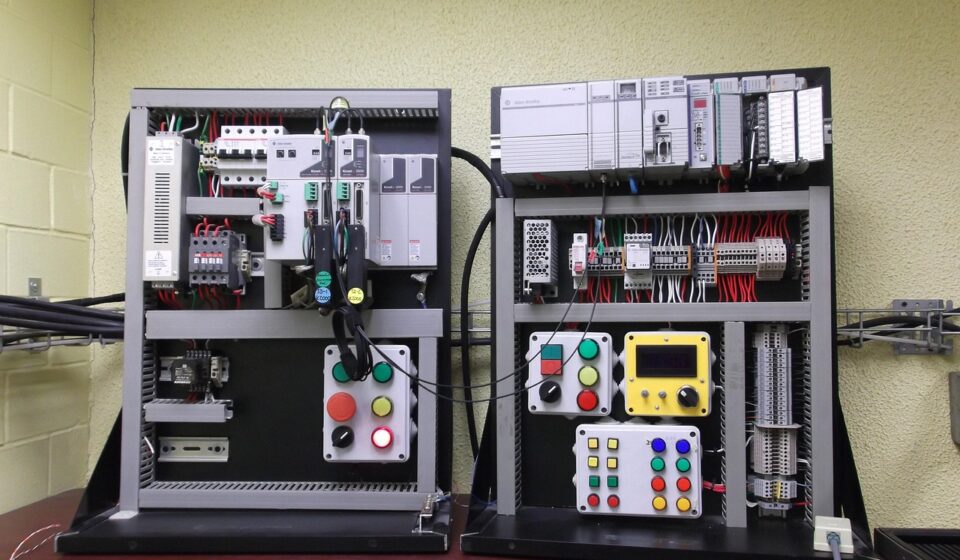
PLC and automation are often discussed together, but they are not the same thing. A programmable logic controller, or PLC, is the rugged industrial controller that reads inputs, runs control logic and drives outputs. Automation is the wider system of PLCs, sensors, actuators, drives, HMIs, SCADA software, networks, safety devices and production data that allows equipment to operate with less manual intervention. In many plants, the PLC remains the real-time decision point at machine level, while higher-level systems handle visualization, recipes, alarms, maintenance information and business context.
For engineers and plant managers, the question is not whether PLCs are still relevant. They are. The more useful question is how PLC-based control should be designed so it remains reliable, maintainable, connected and secure over its operating life. For related industrial control topics, see the automation and controls section.
Why PLCs still anchor industrial automation
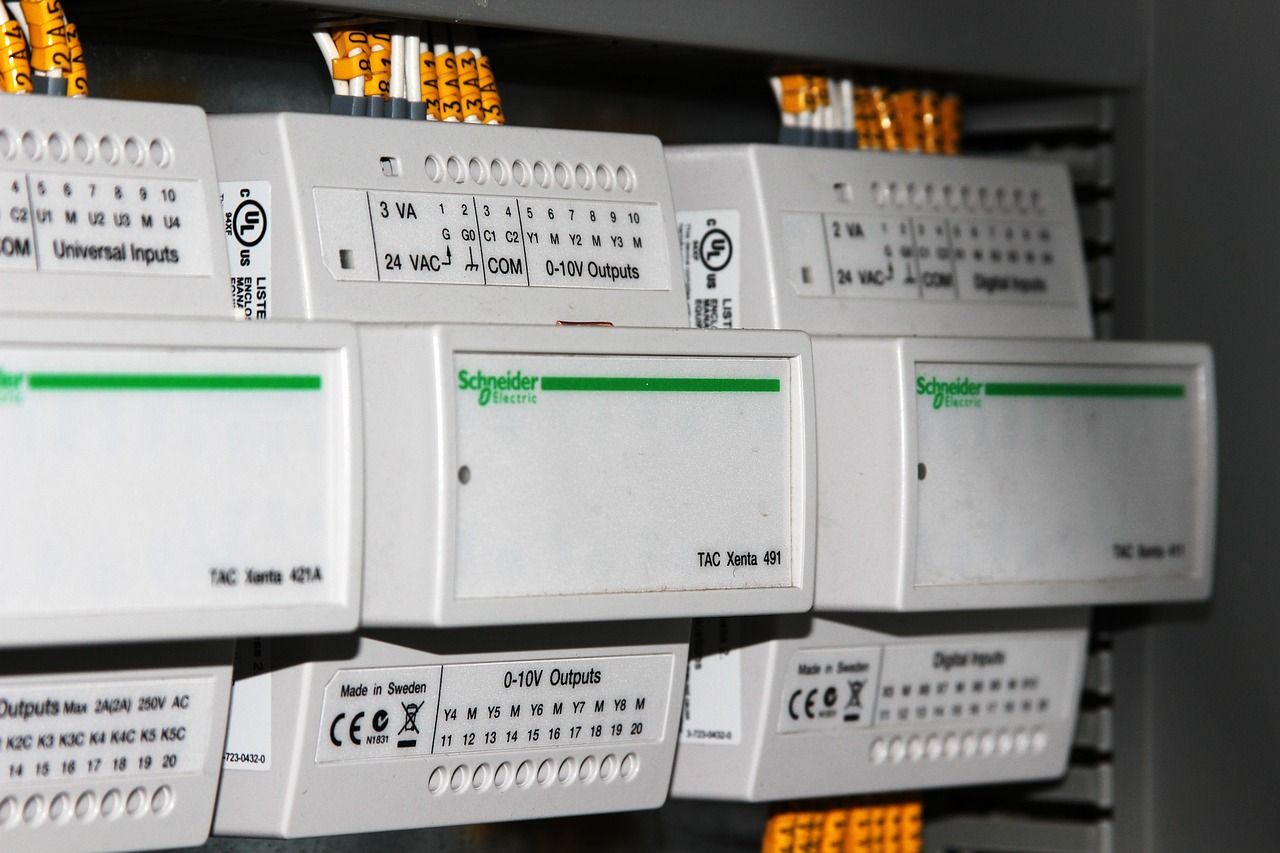
PLCs remain central because industrial control has requirements that general-purpose computing does not always meet. A production line may need predictable scan cycles, stable I/O behavior, electrical noise tolerance, long hardware availability and maintenance procedures that technicians can follow under time pressure. These requirements explain why many plants still place the PLC close to the machine, even when dashboards, historians and analytics run on servers or cloud platforms.
A PLC-based automation system is usually built around a simple loop: detect, decide and act. Sensors and field devices detect machine or process conditions. The PLC evaluates that information against programmed logic. Outputs then command valves, contactors, motors, servo drives, robots, alarms or interlocks. This loop may run many times per second, and its consistency is often more important than raw computing power.
This is also where many automation upgrades run into trouble during planning. Teams may focus on high-level visibility before confirming the health of the control layer. If input signals are noisy, naming conventions are inconsistent, logic is undocumented or spare I/O capacity is missing, a new monitoring platform will mainly expose existing weaknesses. A strong automation project starts with the PLC program, field wiring, network topology and maintenance workflow, not only with the dashboard.
How a PLC automation system is normally layered
A useful way to understand PLC and automation architecture is to separate the plant into layers. The exact design varies by industry, machine type and safety requirements, but the following model is common in discrete manufacturing, packaging, utilities and many hybrid processes.
| Layer | Main role | Typical components | Key design question |
|---|---|---|---|
| Field level | Detect physical conditions and move equipment | Sensors, switches, actuators, valves, VFDs, servo drives, remote I/O | Are signals accurate, protected and serviceable? |
| Control level | Execute deterministic machine or process logic | PLCs, PACs, safety controllers, motion controllers | Is control logic modular, tested and maintainable? |
| Operator level | Show status and support manual intervention | HMI panels, alarm displays, local operator stations | Can operators quickly understand faults and states? |
| Supervisory level | Coordinate multiple assets and collect operating data | SCADA, historians, batch systems, line monitoring software | Is data contextualized without overloading the PLC? |
| Operations and business level | Connect production to planning, quality and maintenance | MES, CMMS, ERP interfaces, analytics platforms | Which data is useful enough to justify integration? |
NIST guidance on operational technology describes OT as programmable systems and devices that monitor or directly control physical processes. That definition is useful because it places PLCs inside a broader operational environment rather than treating them as isolated controllers. The OPC Foundation’s OPC UA overview also frames modern industrial communication as a way to connect sensors, control systems, MES, ERP and IIoT applications through secure and reliable information exchange. Together, these references point to the same practical conclusion: the value of a PLC increases when its data is structured, trustworthy and usable by other systems.
Programming standards that shape PLC projects
PLC programming is not one universal language. The IEC 61131-3 standard defines programming languages and software concepts for programmable controllers. The current IEC 61131-3:2025 product information states that the suite includes structured text, ladder diagram and function block diagram, with sequential function chart elements used to structure programs and function blocks. It also notes technical changes from the 2013 edition, including UTF-8 strings and a detailed annex on features added, removed or deprecated.
For users, the standard matters for three main reasons. First, it gives engineering teams shared language when they discuss ladder logic, function blocks and structured text. Second, it supports more consistent training across vendor platforms. Third, it encourages modular program design, which can reduce long-term maintenance risk.
However, a standard does not remove all vendor differences. Instruction sets, libraries, development environments, licensing models, diagnostics and hardware features still vary. A program written for one platform may not move cleanly to another without engineering work. For that reason, portability should be treated as a design goal, not an assumption.
Common PLC programming approaches
- Ladder diagram remains familiar to many maintenance teams because it visually resembles relay logic and is often easier to troubleshoot online.
- Function block diagram is useful when control can be represented as interconnected functions, such as process loops, interlocks or reusable machine modules.
- Structured text is efficient for calculations, loops, data handling and more software-like control routines.
- Sequential function chart helps organize step-based sequences, machine states and transitions.
A maintainable PLC program often uses more than one approach. For example, a packaging machine may use ladder for service-friendly interlocks, function blocks for reusable actuator control and structured text for recipe handling or calculations. The right mix depends on the skills of the maintenance team as much as the preference of the original programmer.
Integration trends changing PLC automation
Industrial automation is becoming more connected, but connection should not be confused with control. PLCs are still usually responsible for time-critical control. Higher-level systems are better suited for reporting, analytics, scheduling, optimization and long-term data storage. Good architecture keeps these responsibilities clear.
OPC UA is one of the most important integration standards because it is designed for platform-independent communication, information modeling and secure data exchange across industrial systems. In practice, many plants use OPC UA to expose PLC or SCADA data to historians, MES platforms or edge gateways. Other protocols, including EtherNet/IP, PROFINET, Modbus TCP, IO-Link and MQTT, may also appear in the same environment depending on device type and project requirements.
The most useful integration trend is not simply collecting more tags. It is creating better context. A motor current value is more useful when it is tied to asset name, operating mode, batch, product code, alarm state and maintenance history. Without context, automation data becomes a large spreadsheet of numbers. With context, it can support downtime analysis, predictive maintenance, energy management and quality investigation. See also: industrial safety.
Where edge and cloud systems fit
Edge devices can collect, buffer and preprocess data near the production line. Cloud platforms can support fleet-level analytics, remote reporting and cross-site comparison. Neither should casually replace PLC control of safety-critical or time-sensitive functions. The safer pattern is to let the PLC control the machine, let edge systems organize and filter data, and let enterprise systems analyze trends that do not require millisecond response.
Cybersecurity is now part of PLC design
PLC security can no longer be treated as an IT-only issue added after commissioning. NIST SP 800-82 Revision 3, published as final in September 2023, focuses on securing operational technology while accounting for performance, reliability and safety requirements. NIST CSF 2.0, published on February 26, 2024, gives organizations a broader framework for managing cybersecurity risk. ISA/IEC 62443 provides a more automation-specific family of standards for industrial automation and control system security.
For PLC and automation projects, these sources support a practical shift in design thinking. The automation network should be segmented. Remote access should be controlled, logged and time-limited. PLC backups should be maintained and tested. Engineering workstations should be managed because they can become a path into controllers. Firmware and software changes should follow a documented process. Asset owners, integrators, suppliers and service providers all have responsibilities.
Security planning must also respect plant realities. Patching a controller or workstation may require downtime. Scanning an OT network too aggressively can disrupt fragile devices. A cybersecurity control that blocks emergency maintenance may create operational risk. The goal is not to copy office IT controls blindly. The goal is to reduce risk while preserving safe and reliable operation.
| Reference area | What it emphasizes | Practical impact on PLC projects |
|---|---|---|
| IEC 61131-3:2025 | Programming languages and software structure for programmable controllers | Use clear language choices, modular logic and documented program organization |
| NIST SP 800-82 Rev. 3 | OT security with attention to safety, reliability and performance | Design security around production constraints, not only IT policy |
| NIST CSF 2.0 | High-level cybersecurity outcomes for managing risk | Use governance, identification, protection, detection, response and recovery as planning categories |
| ISA/IEC 62443 | Lifecycle security for industrial automation and control systems | Assign security responsibilities across owners, integrators, suppliers and service providers |
| OPC UA | Secure and reliable industrial information exchange | Expose useful PLC data to supervisory and enterprise systems with better structure and context |
A practical PLC and automation selection checklist
Choosing a PLC platform or planning an automation upgrade should be based on lifecycle value, not only controller price. Hardware cost is usually a small part of the total cost once engineering, downtime, spares, training, documentation and support are included.
- I/O requirements: Count current and future digital, analog, high-speed, temperature, motion and safety signals.
- Scan time and performance: Confirm whether the process needs simple logic, coordinated motion, high-speed counting or complex data handling.
- Environmental rating: Consider temperature, vibration, electrical noise, washdown, hazardous areas and cabinet conditions.
- Network compatibility: Match PLC communication options to drives, remote I/O, robots, SCADA, historians and plant network standards.
- Programming maintainability: Select tools and languages that the site can support after the integrator leaves.
- Diagnostics: Favor platforms that make faults, I/O status, communication errors and program changes easy to trace.
- Cybersecurity features: Review user management, change control, secure communication, firmware support and backup procedures.
- Spare parts and lifecycle: Check availability, migration paths and compatibility with existing cabinets and field devices.
- Documentation discipline: Require tag lists, network drawings, program comments, alarm rationalization and recovery procedures.
The best PLC and automation design is usually the one that plant personnel can operate, troubleshoot and improve over time. Advanced features have limited value if only one specialist understands them. Conversely, a simple architecture may become expensive if it cannot scale, connect or meet security expectations. Balance is the core engineering decision.
Frequently asked questions
Is a PLC the same as automation?
No. A PLC is a controller used within an automation system. Automation includes the PLC plus sensors, actuators, drives, HMIs, SCADA, networks, safety devices, data systems and operating procedures. The PLC usually handles real-time control, while the wider automation system manages operation, visibility and coordination.
Are PLCs being replaced by industrial PCs or cloud control?
In some applications, industrial PCs, embedded controllers and edge systems take on more functions. However, PLCs remain widely used where deterministic control, rugged hardware, long service life and maintenance familiarity are important. Cloud systems are better suited for analytics and reporting than direct time-critical machine control.
Which PLC programming language is best?
There is no single best language for every project. Ladder diagram is often strong for maintenance visibility, function block diagram works well for reusable control objects, and structured text is efficient for calculations and data handling. A good project uses the language that fits the task and the people who will maintain it.
Why does cybersecurity matter for PLC automation?
PLCs can directly affect physical equipment. Unauthorized changes, poor remote access controls, unmanaged engineering workstations or weak backups can create downtime and safety risk. Cybersecurity for PLC systems should protect availability and integrity while respecting the operational constraints of industrial environments.
What is the first step in upgrading an older PLC system?
Start with an asset and risk review. Identify the controller model, firmware, I/O modules, networks, connected devices, program backups, spare parts, known faults and business impact of downtime. That information helps determine whether the best path is targeted improvement, staged migration or full replacement.